Nara's vermilion Fujiwara shrine, famous for thousands of bronze and stone lanterns lining a forested mountain approach.
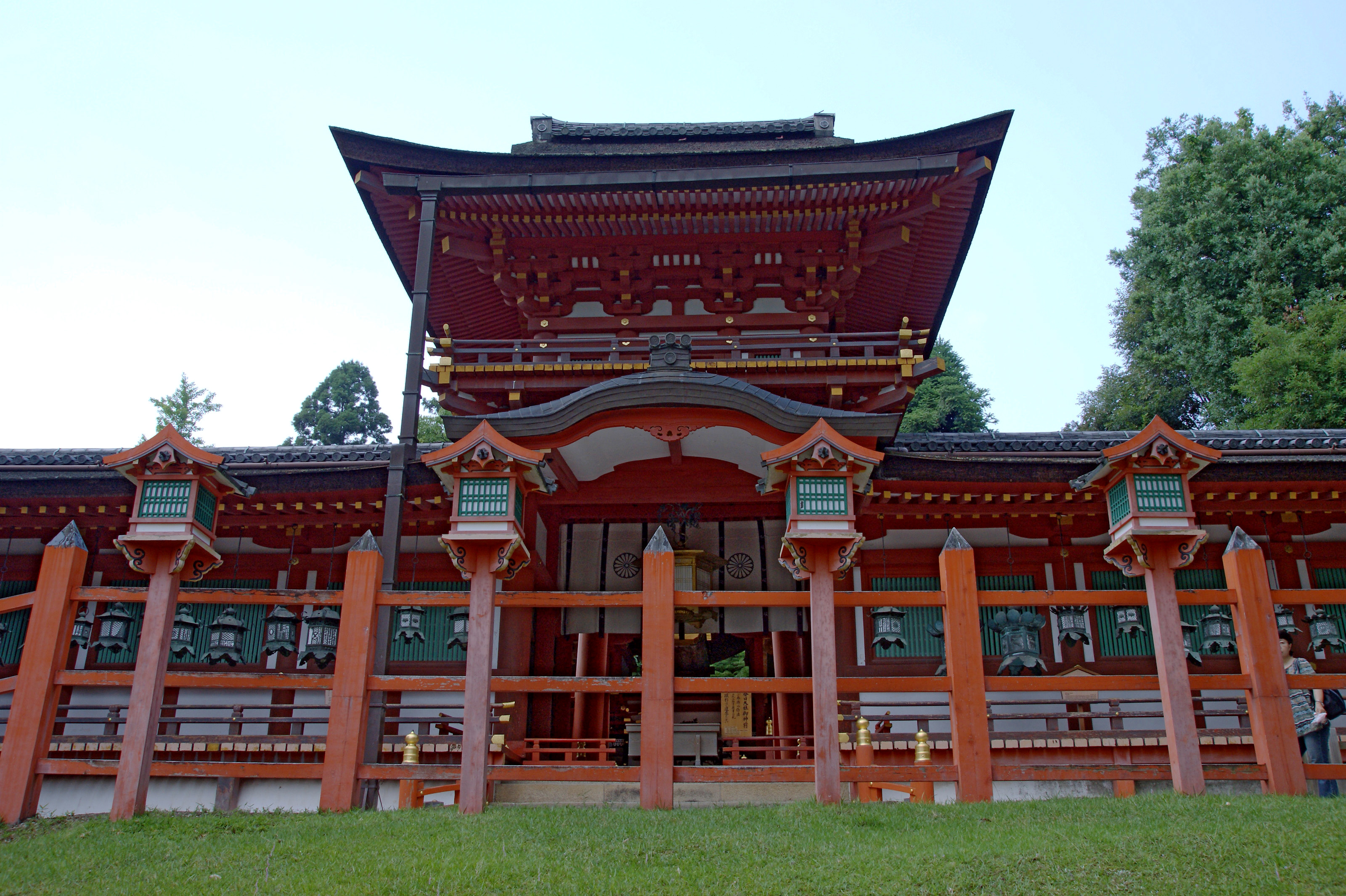
Kasuga Taisha is Nara's great Shinto shrine, a vivid splash of vermilion set deep in an ancient forest at the foot of Mount Kasuga. Established in 768 as the tutelary shrine of the Fujiwara clan, it enshrines four principal kami, among them the thunder deity Takemikazuchi, who by legend arrived in Nara riding a white deer. That myth is why the deer that roam the surrounding park have been considered sacred messengers of the gods for more than a thousand years, and why they wander freely to this day.
The shrine gives its name to an entire architectural style, Kasuga-zukuri, and its torii is among the oldest in Japan, helping to shape the form of shrine gates seen across the country. But what visitors remember most are the lanterns. More than 3,000 of them line the site: some 2,000 stone lanterns march up the forested approach in long mossy rows, while around 1,000 bronze lanterns hang from the eaves of the shrine buildings, donated over the centuries by worshippers. Twice a year, during the Setsubun Mantoro in early February and the Obon Mantoro in mid-August, every lantern is lit at once, and the whole hillside flickers with thousands of small flames in one of Japan's most atmospheric festivals.
Kasuga Taisha, together with the primeval Kasugayama Forest behind it, which has been protected from logging for over a millennium, is inscribed as part of the Historic Monuments of Ancient Nara UNESCO World Heritage Site. The outer grounds are free to explore, and simply walking the lantern-lined avenue beneath towering cedars, deer drifting between the stones, is the heart of the experience. For a small fee you can enter the inner precinct and its corridors; do not miss the Fujinami-no-ya, a darkened hall where dozens of bronze lanterns are kept eternally lit within a mirrored chamber, conjuring the festival glow on any ordinary afternoon.
The setting rewards slow visiting. Come early in the morning, when mist hangs in the cedars and the shrine's red columns catch the first light, and the deer far outnumber the people. Cherry blossoms soften the approach in spring, the forest is cool and green through summer, and autumn brings maples flaring red among the evergreens. Adjacent to the shrine, the Man'yo Botanical Garden grows plants mentioned in the eighth-century Man'yoshu poetry anthology and is especially lovely when its wisteria blooms in late April and May.
Kasuga Taisha lies about a 30-minute walk east from Kintetsu Nara Station, following the gentle uphill avenue of stone lanterns through Nara Park, so most visitors fold it into a longer loop that takes in Kofuku-ji and Todai-ji along the way. If the walk feels long, especially in summer heat, a Nara Kotsu bus runs to the Kasuga Taisha Honden stop near the entrance. Wear comfortable shoes: the forest paths are uneven, and the reward is one of the most sacred and beautiful corners of the old capital.
A local's tip
Pay to enter the inner corridor and find the dark Fujinami-no-ya hall, where dozens of bronze lanterns are kept permanently lit in a mirrored room - it recreates the magic of the twice-yearly lantern festivals any day of the year.
Best time to visit
Early morning, or the February and August lantern festivals when all lanterns are lit
Getting there
About a 30-minute walk east through Nara Park from Kintetsu Nara Station, following the stone-lantern avenue uphill. Alternatively take a Nara Kotsu bus to the Kasuga Taisha Honden stop. The approach passes through the deer park at the foot of Mount Kasuga.
Good to know
- Wi-Fi
- Restrooms
- Wheelchair access
Plan the whole trip offline
Kasuga Taisha is one of many places in the Real Japan app — with turn-by-turn directions, nearby spots and full offline maps you can use with no signal.