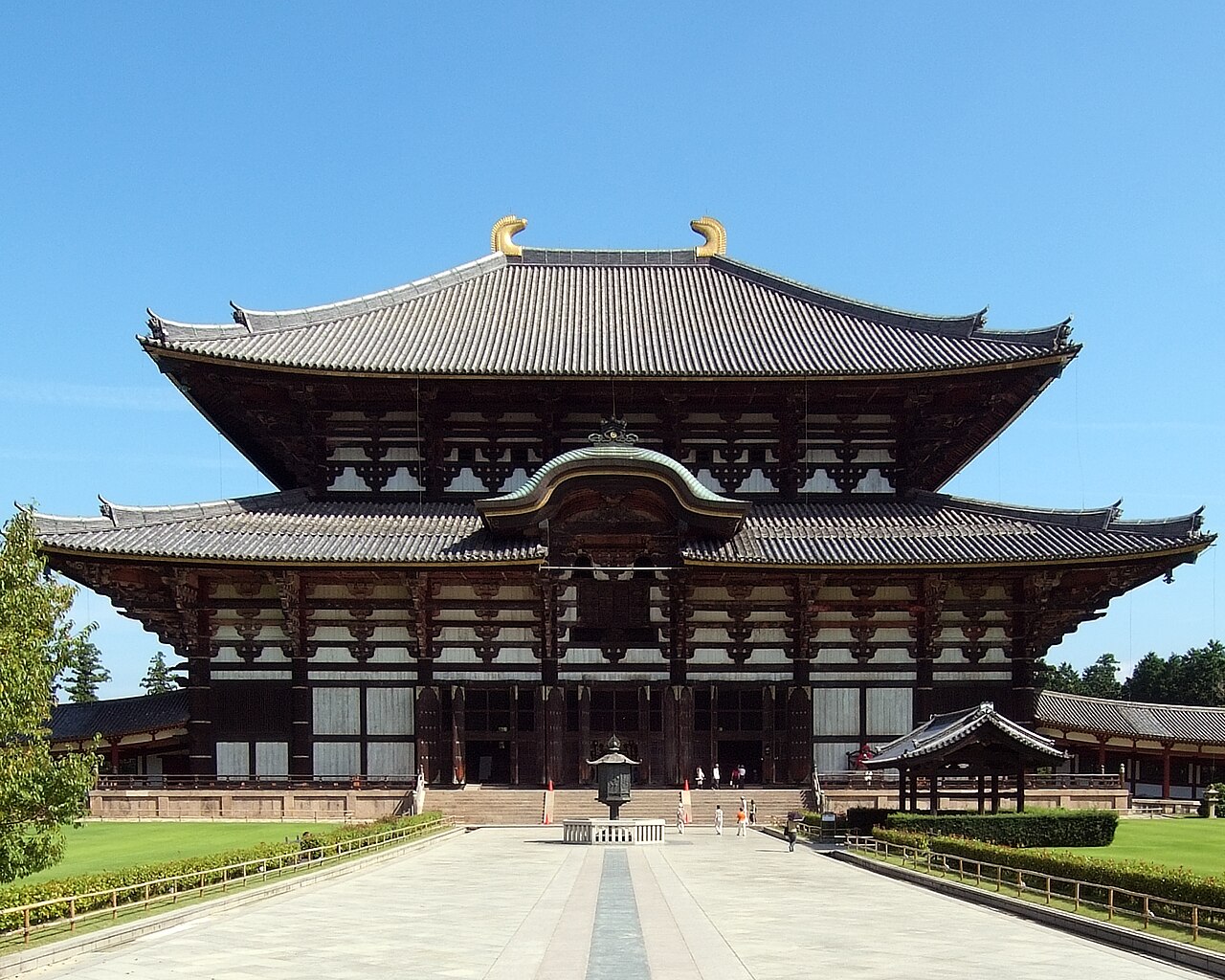
A hillside hall of Todai-ji whose wooden veranda gives a free, sweeping sunset view over Nara, famed for its March fire festival.
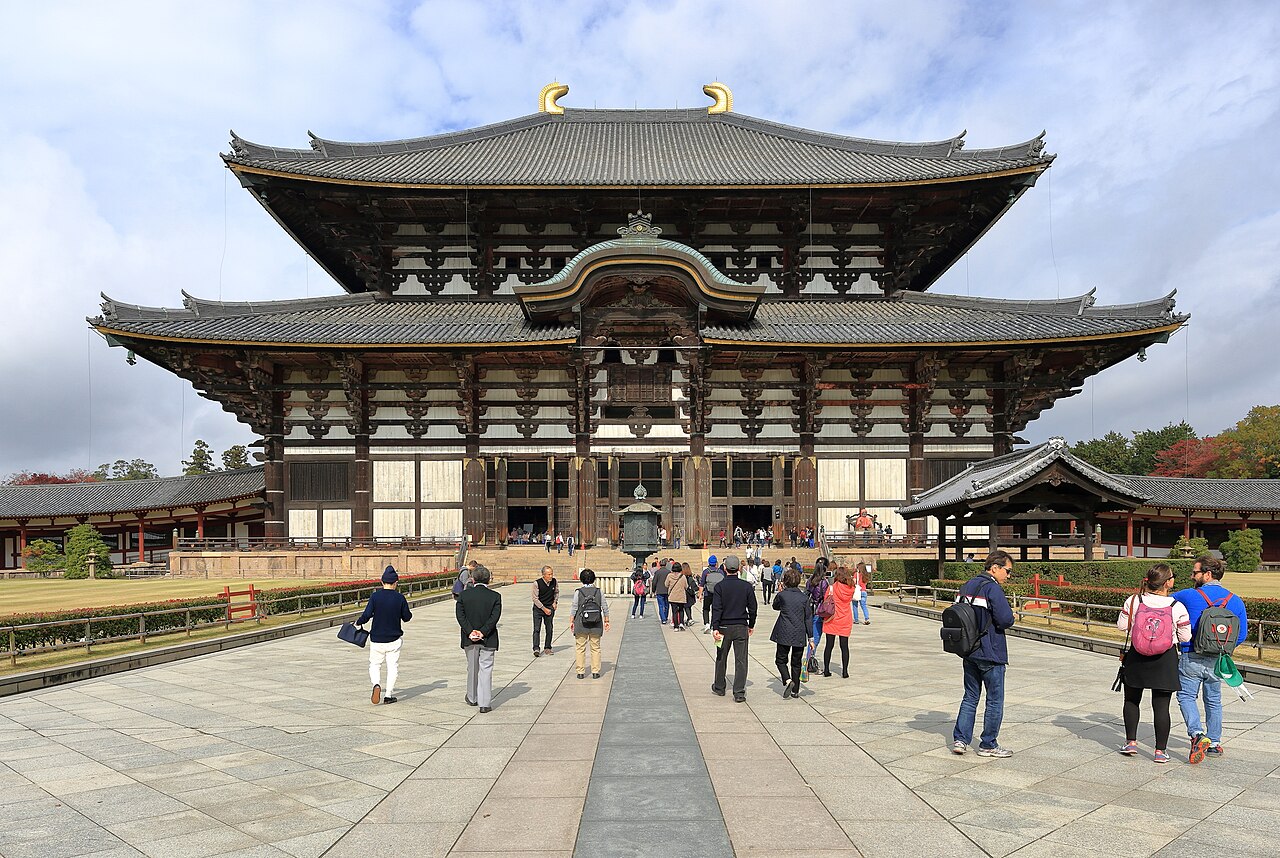
Nigatsu-do, the Hall of the Second Month, is one of the most atmospheric and rewarding corners of the great temple complex of Todai-ji in Nara, and one of the city's finest free viewpoints. Perched on the wooded hillside above and behind the Great Buddha Hall, it is a national treasure and an active place of worship, but for many visitors its greatest gift is the broad wooden veranda that projects from its front and looks out over the whole of Nara.
The hall is reached by a gently rising path from the main Todai-ji precinct, winding up past stone lanterns, earthen walls and smaller sub-temples in a way that already feels like a small pilgrimage. Because it sits apart from the crowds that throng the Great Buddha Hall, the approach and the hall itself are often peaceful, and the mood grows more magical toward the end of the day. From the veranda, supported on tall wooden pillars in a style reminiscent of Kyoto's Kiyomizu-dera, the view sweeps across the tiled roofs of Todai-ji, the greenery of Nara Park and the city beyond to the mountains on the horizon. At sunset the scene glows, and it is one of the best places in Nara to watch the light fade over the ancient capital, all without an entrance fee.
Nigatsu-do is most famous for Omizutori, the sacred water-drawing ceremony held over two weeks each March, a ritual that has been performed without interruption for well over a thousand years. Its most dramatic moments come at night, when priests carry enormous flaming torches along the veranda, scattering showers of sparks over the crowds gathered below as a blessing for the year ahead. Witnessing the great torches blazing against the dark hillside is an unforgettable spectacle and a living link to Nara's deep religious past.
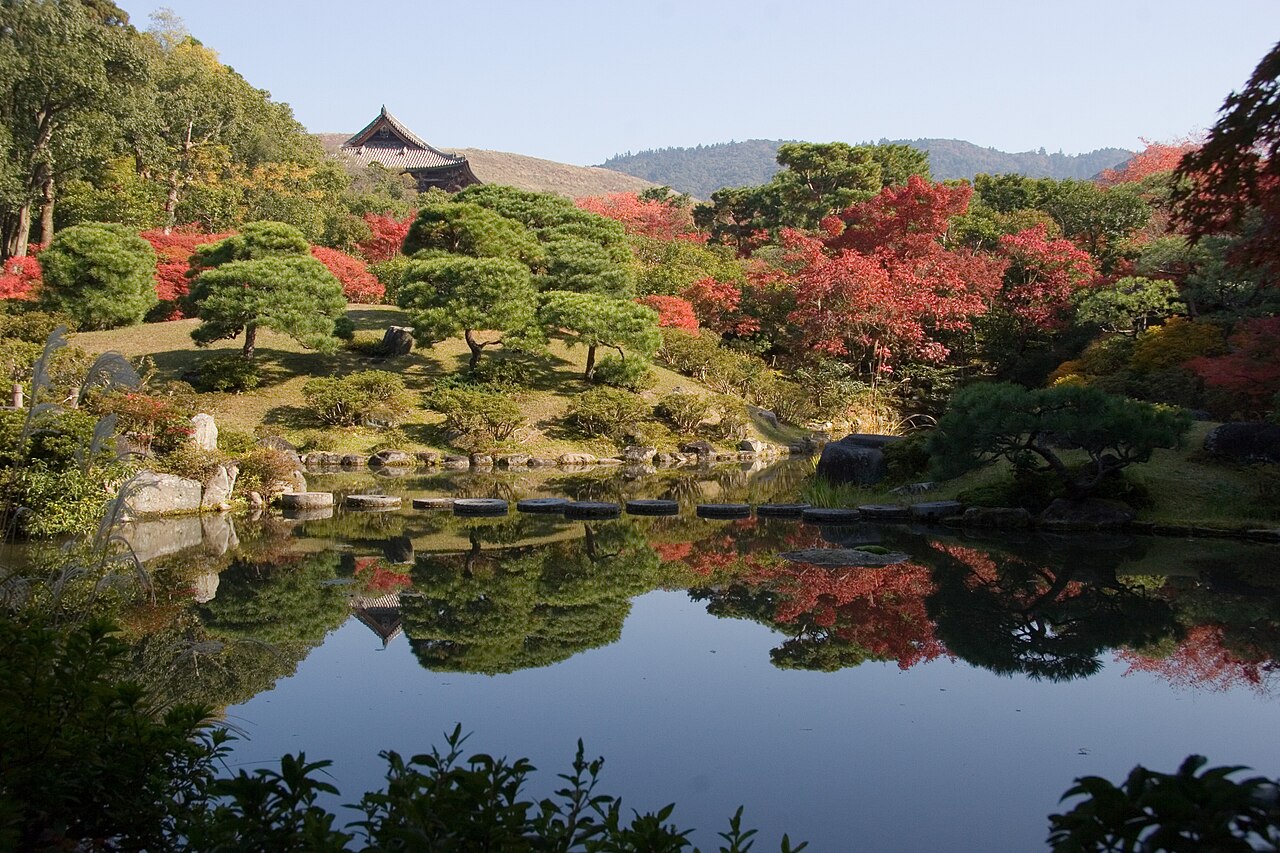
Even outside the festival, the area around Nigatsu-do rewards exploration. The lantern-lined lanes, moss-covered stone steps and neighbouring halls create one of the most evocative townscapes in Nara, especially in the soft light of early morning or dusk, and a small rest house nearby traditionally offers weary walkers a moment's respite. Spring cherry blossom and autumn maples frame the hall beautifully, adding seasonal colour to the timeless view.
To visit, walk about thirty minutes from Kintetsu Nara Station through Nara Park to Todai-ji, then follow the uphill path behind the Great Buddha Hall to Nigatsu-do; buses to the Todaiji area can shorten the approach. The grounds are always open and admission is free, making a sunset visit especially appealing. Allow around forty-five minutes to climb, take in the panorama and wander the surrounding lanes. For a free, uncrowded and genuinely beautiful view over Nara, Nigatsu-do is hard to beat.
A local's tip
Climb to the wooden veranda for a free, sweeping view over Nara at sunset, then explore the atmospheric lantern-lined lanes and stone steps around the hall, wonderfully quiet after dark.
Best time to visit
Late afternoon and sunset; March for the Omizutori fire ritual
Getting there
From Kintetsu Nara Station walk about 30 minutes through Nara Park to Todai-ji, then follow the path uphill behind the Great Buddha Hall to the elevated Nigatsu-do; buses to the Todaiji area shorten the walk.
Good to know
- Restrooms
- Free Tea Rest
- Panoramic View
Plan the whole trip offline
Nigatsu-do Hall (Todai-ji) is one of many places in the Real Japan app — with turn-by-turn directions, nearby spots and full offline maps you can use with no signal.