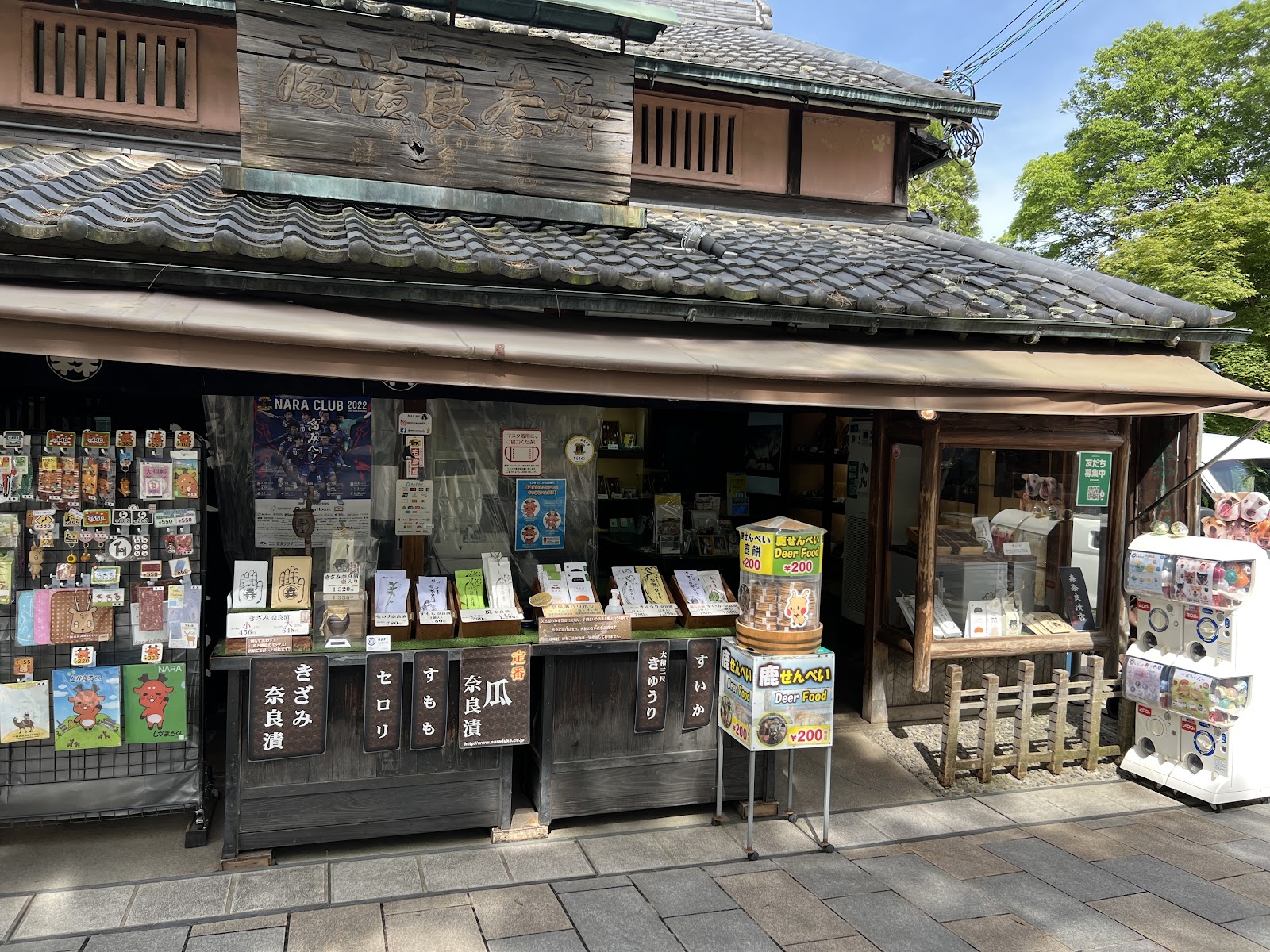
A historic pickle shop near Todai-ji specializing in narazuke, vegetables aged in sake lees — a centuries-old Nara delicacy.
Narazuke is one of Nara's oldest and most distinctive foods, and Mori Narazuke Shop, founded in 1869, is among its most respected purveyors. The name says it plainly: narazuke means "Nara pickles," vegetables cured for months, sometimes years, in the lees left over from sake brewing. The result is nothing like a quick vinegar pickle. Repeatedly re-bedded in fresh sake lees and sugar, the vegetables turn deep amber-brown, dense and translucent, with a powerful sweet-savory flavor and a real alcoholic warmth from the fermented lees.
The food's history is bound up with Nara's identity as the birthplace of Japanese sake. With temples and breweries producing quantities of sake lees as a byproduct, curing vegetables in that lees was both thrifty and delicious, and as Nara's reputation for good sake drew visitors, the pickles became a prized local souvenir — literally named after the place they came from. Mori Narazuke Shop is one of the direct inheritors of that tradition, and it still makes its pickles the slow, additive-free way, without the shortcuts common in mass-market versions.
The shop stands on the road leading from the southern gate of Todai-ji in Kasugano-cho, which makes it an almost effortless stop for anyone walking up to see the Great Buddha. Inside, glass cases and barrels hold the range: pickled uri (a type of melon or gourd) and cucumber are the classics, alongside ginger, eggplant, and the shop's showpiece — enormous Yamato white radishes pickled whole, sometimes 40 to 50 centimeters long, that hang like trophies. Everything is priced by item or weight and packaged for travel.
The smart way to shop here is to taste first. Narazuke is genuinely an acquired flavor: the sweetness, the funk of the lees, and the boozy kick can surprise first-timers. Staff will usually offer a sample slice, and it is worth trying before committing. Newcomers tend to find the pickled melon and cucumber the most approachable entry point; the intense, aged daikon is for those who already love the style. Because narazuke keeps for a long time without refrigeration, it is an excellent souvenir — it survives the journey home far better than most edible gifts, and a small, handsomely wrapped block makes a memorable present for anyone who appreciates Japanese food.
Eating narazuke is easy once you have it: thin slices served as a side with plain rice, tea, or sake, a little going a long way. Some visitors also enjoy it chopped into rice or as a foil to rich dishes, where its concentrated sweetness cuts through.
As a stop, Mori Narazuke Shop asks very little — a few minutes and a short detour on a route you are almost certainly walking anyway — and gives back something authentically, historically Nara. In a city where the food specialties (persimmon-leaf sushi, sake, mugwort mochi, tea porridge) all tell the story of an inland old capital making the most of what it had, narazuke may be the most vivid example of all: the taste of Nara's sake heritage, preserved in a jar.
A local's tip
Narazuke is an acquired taste — intensely savory-sweet and boozy from the sake lees. Ask for a sample slice before buying, and start with pickled uri (melon) or cucumber rather than the enormous long Yamato white radish if you're new to it.
Best time to visit
On the walk to or from Todai-ji
Getting there
On the road running from the southern gate of Todai-ji, in Kasugano-cho, Nara City. It is about a 20-minute walk from Kintetsu Nara Station toward Todai-ji, making it an easy stop en route to the Great Buddha.
Good to know
- English
- Samples
- Souvenir packaging
Plan the whole trip offline
Mori Narazuke Shop is one of many places in the Real Japan app — with turn-by-turn directions, nearby spots and full offline maps you can use with no signal.