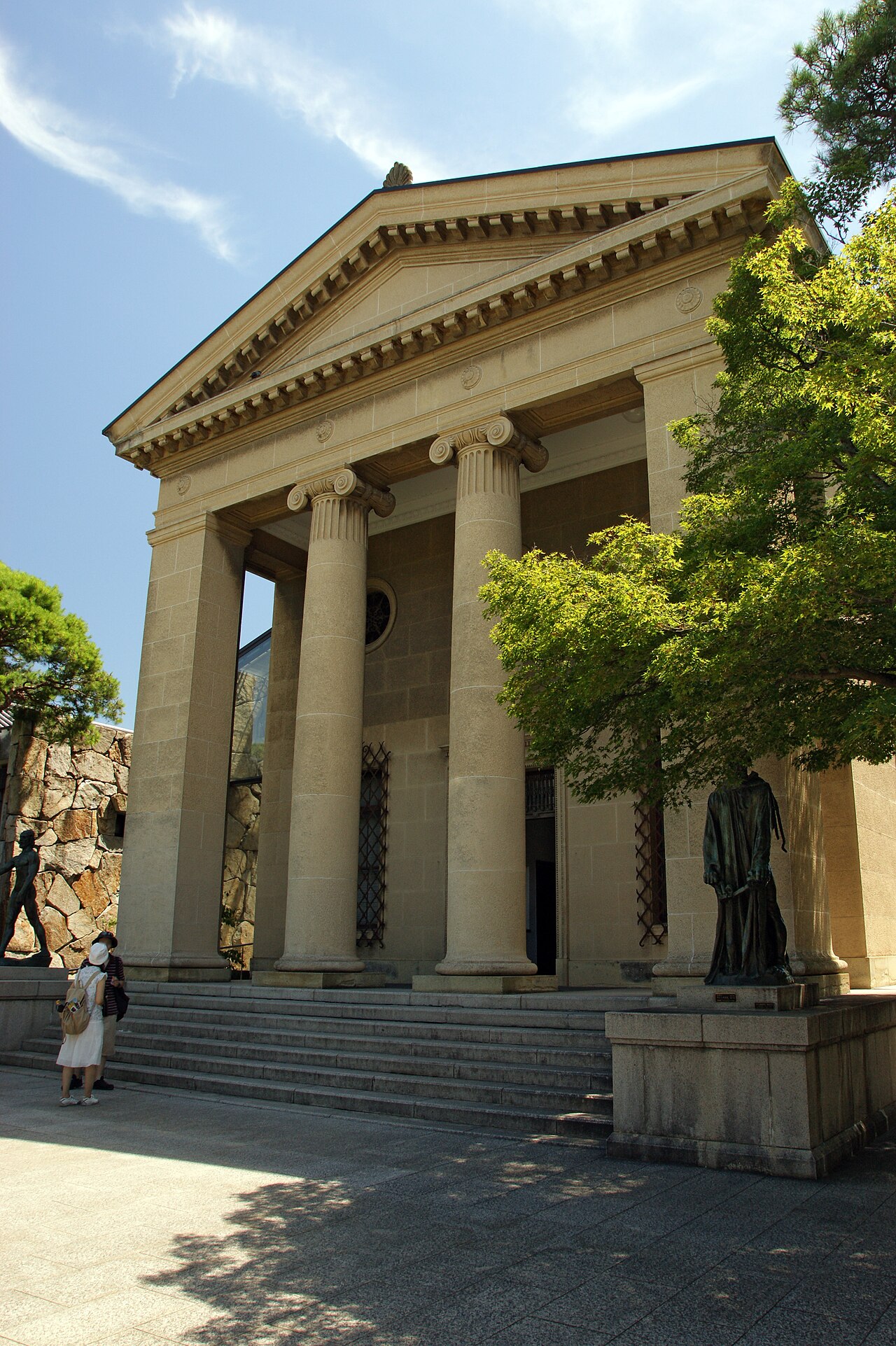
A city art museum inside Kenzo Tange's former city hall, spotlighting painters with deep ties to Kurashiki and Okayama.
The Kurashiki City Museum of Art offers a rewarding double attraction: a thoughtful collection of art connected to the region, housed inside one of postwar Japan's landmark modernist buildings. Standing just west of the Bikan Historical Quarter, it makes an easy and less-crowded complement to the more famous Ohara Museum of Art nearby, and it gives insight into the artists Kurashiki itself produced and nurtured.
The building is the first thing that impresses. It was originally the Kurashiki City Hall, designed by the internationally renowned architect Kenzo Tange and completed in 1960, a powerful composition of raw concrete with a strong horizontal rhythm typical of Tange's monumental style. When the city administration moved out, the structure was converted into an art museum, opening in that role in 1983. Encountering a genuine Tange work in a town best known for Edo storehouses is a striking reminder of Kurashiki's layered architectural heritage, and the surrounding grounds are dotted with outdoor sculpture.
The collection concentrates on artists with strong ties to Kurashiki and Okayama Prefecture. Central to it is a major group of works by Ikeda Yoson, a distinguished nihonga, or Japanese-style, painter and recipient of the Order of Culture, whose lyrical landscapes and figure paintings anchor the holdings. The museum also shows Western-style painters connected to the area, including Mitsutani Kunishiro and Sakata Kazuo, along with sculpture and prints, building a coherent portrait of the region's modern artistic life. Rotating special exhibitions supplement the permanent displays.
A notable point is how the museum completes the story told by its grander neighbor. Where the Ohara Museum celebrates the European masterpieces that Kurashiki money brought home, the City Museum of Art honors the homegrown talent the same cultural climate produced, giving visitors a fuller and more locally rooted understanding of why this town became such a center for art.
The visiting experience is calm and spacious, a welcome contrast to the busy canal lanes, and takes around fifty minutes. Because it was purpose-converted from a modern office building rather than a historic storehouse, the museum is comparatively accessible, with an elevator and step-free routes through the main galleries. English labeling is limited, so an app helps with the finer context, but the visual pleasure of both the art and the architecture translates easily.
Afternoons are a good time to visit, especially to pair the museum with a Bikan stroll, and the modernist interiors stay comfortable in any weather. Spring and autumn flatter the sculpture grounds outside. The museum closes on Mondays, so plan accordingly, and check ahead when special exhibitions change over.
To reach it, leave JR Kurashiki Station by the south exit and walk about ten to twelve minutes down Chuo-dori; the museum sits just west of the historical quarter at 2-6-1 Chuo, its bold concrete form easy to spot. Kurashiki is on the JR Sanyo Main Line, roughly fifteen minutes by local train from Okayama, covered by the Japan Rail Pass, with IC cards accepted on the trains.
A local's tip
The building is a bonus attraction in itself, a former city hall by architect Kenzo Tange, and the bold concrete exterior and sculpture-dotted grounds are worth circling even before you buy a ticket.
Best time to visit
Afternoon
Getting there
From JR Kurashiki Station south exit, walk about 10-12 minutes down Chuo-dori; the museum stands just west of the Bikan quarter at 2-6-1 Chuo, in a distinctive modernist concrete building.
Good to know
- Elevator
- Restrooms
- English signage
Plan the whole trip offline
Kurashiki City Museum of Art is one of many places in the Real Japan app — with turn-by-turn directions, nearby spots and full offline maps you can use with no signal.