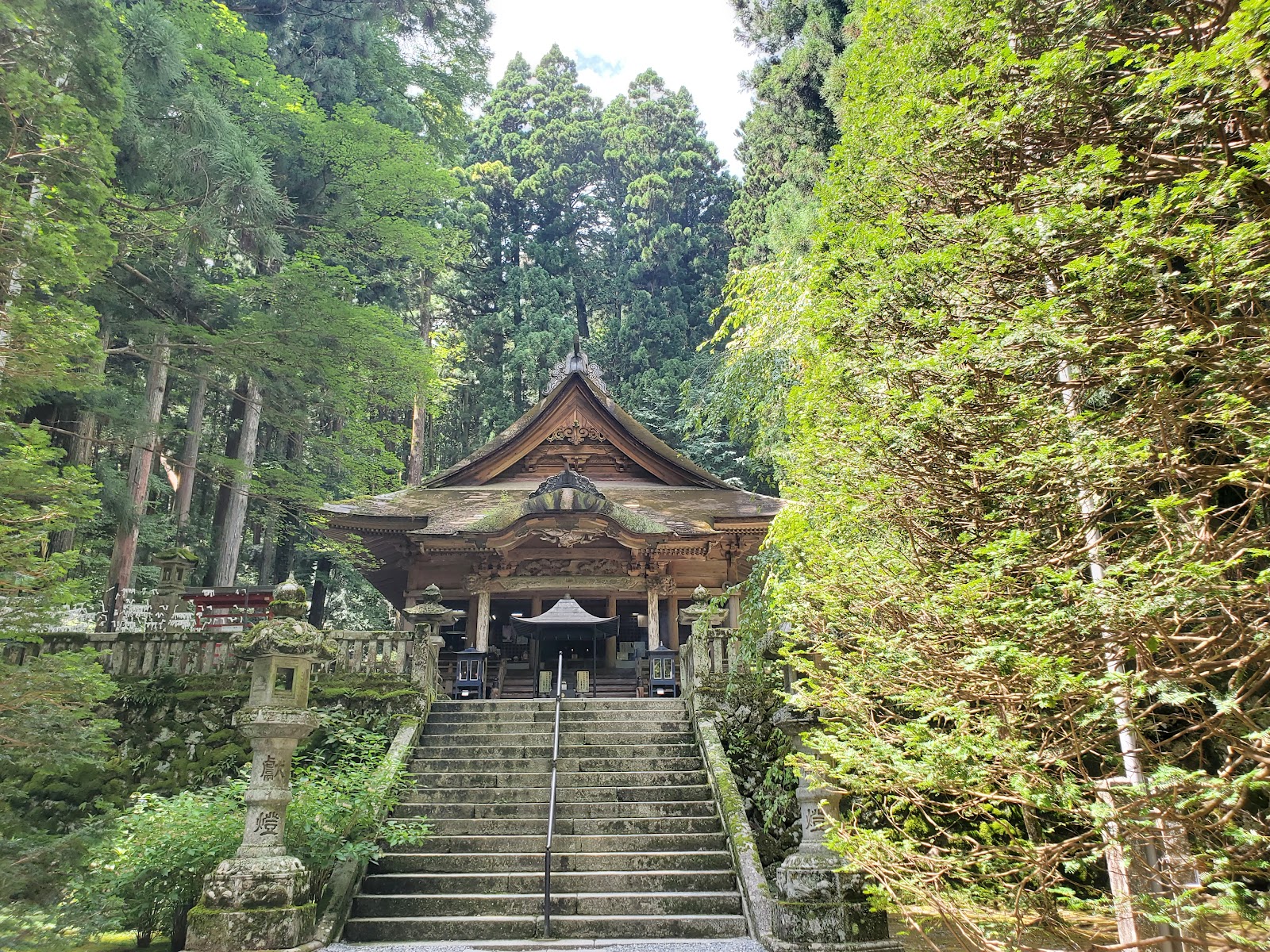
A hillside Zen temple above Kiso-Fukushima renowned for its dramatic dry rock gardens, among the largest in Asia.
Kozenji is a serene Zen temple set on the wooded hillside above the old town of Kiso-Fukushima, celebrated above all for its remarkable dry landscape gardens. Founded centuries ago as a temple linked to the Kiso clan, it combines historical importance with some of the finest modern Zen garden design in the region, including the Kanuntei, a vast sea of raked white gravel and stones that ranks among the largest rock gardens in the Orient.
The temple's roots run deep into local history. It is associated with the Kiso family, the lords of this mountain valley, and specifically honours the memory of Kiso Yoshinaka, the twelfth-century warrior of the Minamoto clan whose dramatic rise and fall during the Genpei War made him one of the tragic heroes of Japanese history. This connection gives Kozenji a significance beyond its beauty, tying it to the medieval story of the Kiso region and its most famous son.
Its gardens, however, are what draw most visitors. Kozenji contains several distinct dry gardens (karesansui), the abstract compositions of gravel, rock and moss through which Zen Buddhism expresses vast landscapes — seas, mountains, islands — in miniature and stillness. The largest, the Kanuntei or "sea of clouds" garden, sweeps out in raked patterns of pale gravel punctuated by carefully placed stones, evoking the very unkai, or sea of clouds, that forms over the Kiso mountains. The scale and design invite quiet contemplation, and the gardens are considered masterpieces of twentieth-century Zen garden art, created by noted designers.
The visiting experience is calm and reflective. From the temple buildings you view the gardens as intended — seated, in silence, letting the eye travel across the raked gravel and the mossy stones while the forested hillside rises beyond. The contrast between the disciplined geometry of the gardens and the wild mountain setting is part of their power. The temple grounds also include halls, a bell and quiet corners that reward unhurried exploration, and the elevated position offers glimpses over the town and river below.
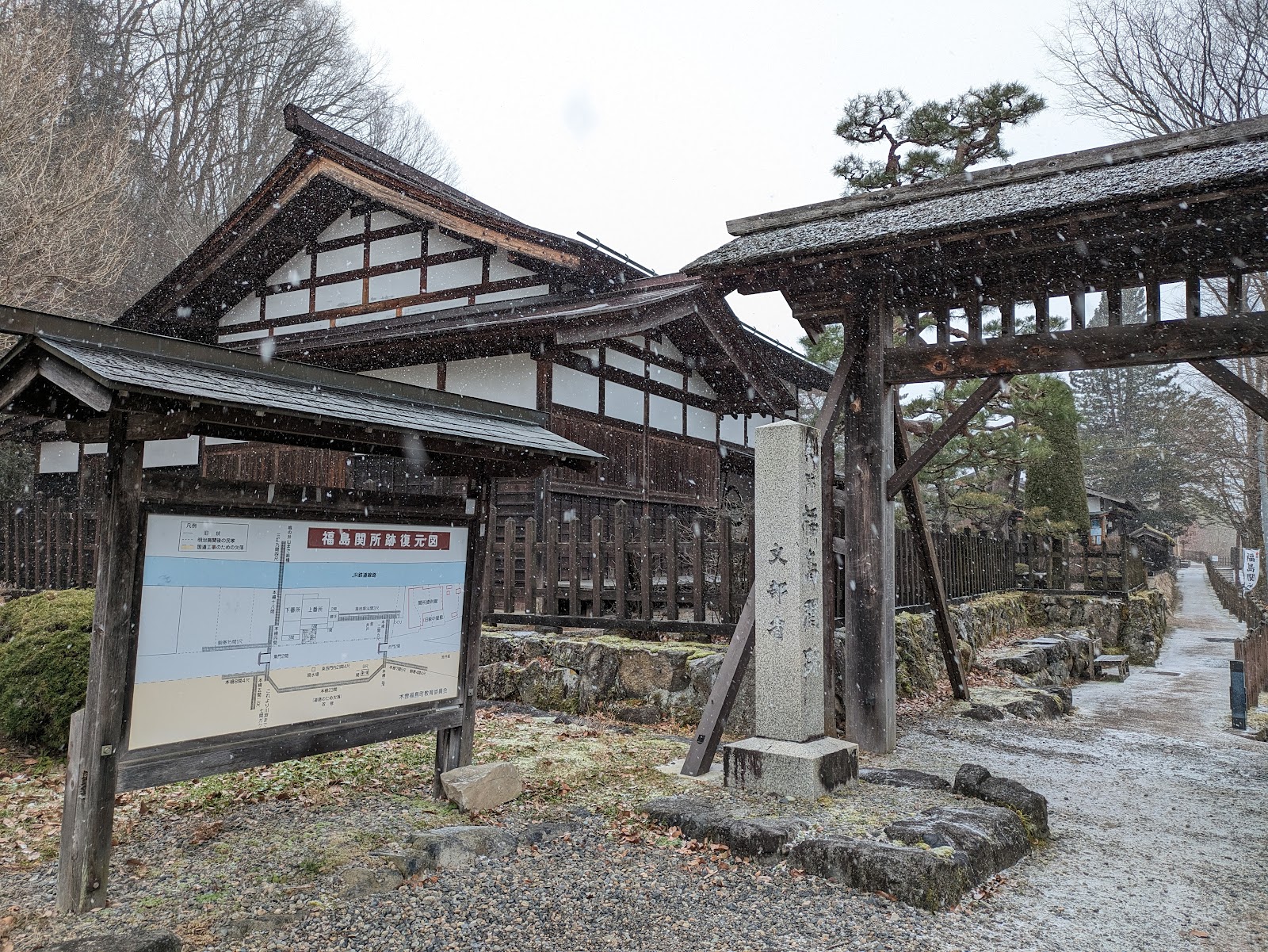
Kozenji pairs naturally with the other historical sights of Kiso-Fukushima — the reconstructed checkpoint, the old Ue-no-dan quarter and the former Yamamura residence — to build a full picture of the valley's spiritual and administrative past. As a temple devoted to Zen, it offers a meditative counterpoint to the bustle of the post towns further down the valley.
Seasonally, autumn is the highlight, when maples flame red and gold around the gravel gardens and the raked patterns are strewn with fallen leaves; spring green and summer shade are lovely too, and even winter snow lends the dry gardens a stark beauty. A modest admission supports the temple and its gardens, which are open through the day.
Access is easy: Kozenji is about a fifteen-minute walk uphill from JR Kiso-Fukushima Station on the Chuo Main Line, in the heart of the Kiso Valley. For anyone who appreciates Zen gardens or the quieter, more contemplative side of Japanese travel, Kozenji offers one of the most rewarding temple experiences in the region.
A local's tip
Seek out the 'Kanuntei' dry garden — one of the largest rock gardens in the Orient, best viewed in quiet contemplation.
Best time to visit
Autumn for foliage over the rock gardens
Getting there
A 15-minute walk from JR Kiso-Fukushima Station leads up to the temple on the hillside above the old town.
Good to know
- Garden
- Restrooms
Plan the whole trip offline
Kozenji Temple is one of many places in the Real Japan app — with turn-by-turn directions, nearby spots and full offline maps you can use with no signal.