A reconstructed Edo-period barrier station, one of the four great checkpoints on the Nakasendo, with a museum on travel control.
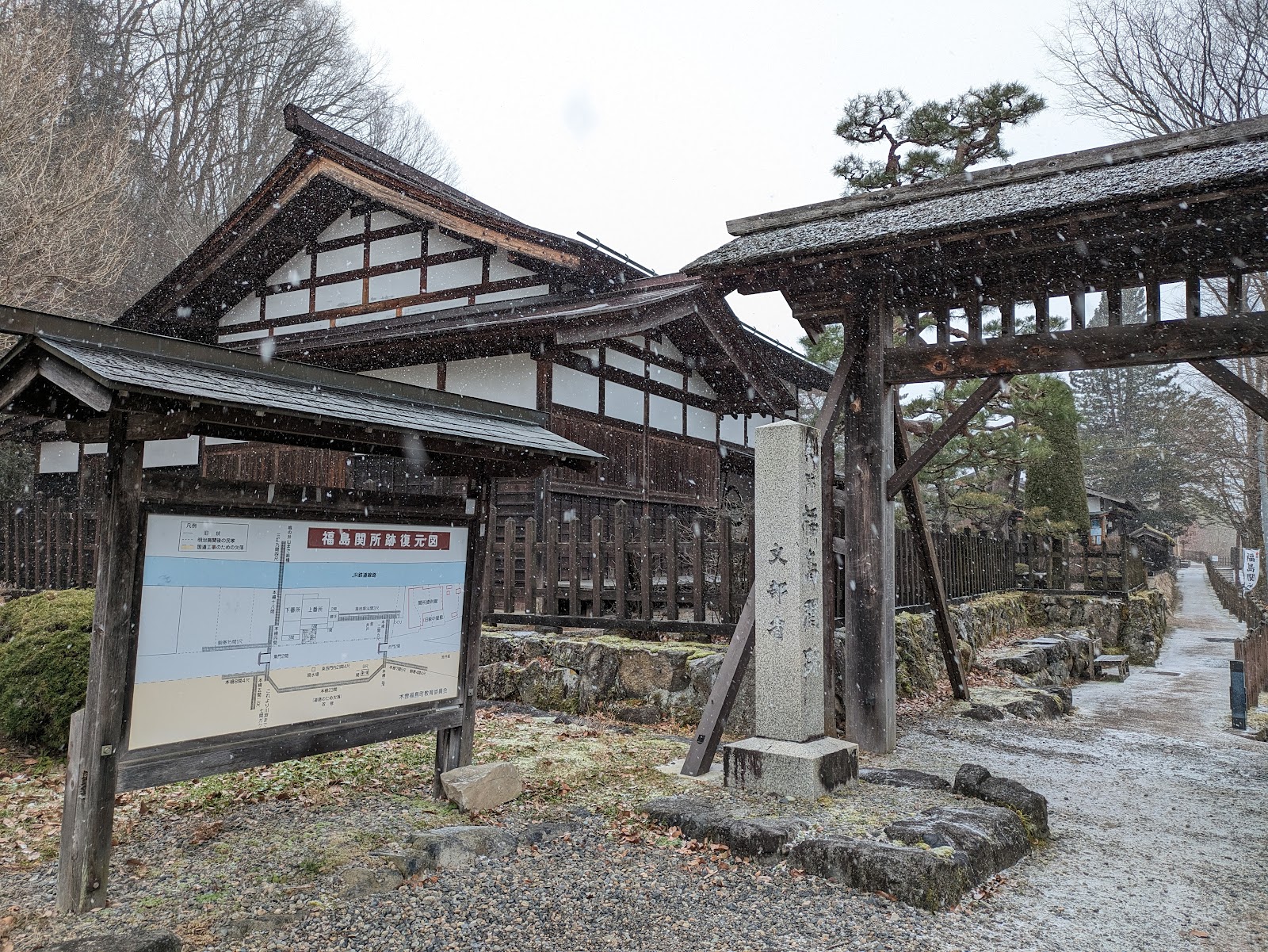
The Fukushima Checkpoint (Fukushima Sekisho) was one of the four most important barrier stations on the entire Nakasendo highway, the inland route linking Kyoto and Edo through the mountains. Reconstructed on its original site above the town of Kiso-Fukushima, it now serves as a museum that vividly explains how the Tokugawa shogunate controlled the movement of people and goods along Japan's great highways during the more than two centuries of Edo-period rule.
Checkpoints like Fukushima were instruments of political control. The shogunate's stability depended on keeping the powerful regional lords in check, and one key policy required their families to reside in Edo as effective hostages. To enforce this, barriers on the highways watched above all for two things, summed up in the famous phrase "outgoing women and incoming guns" — the daimyo wives who might flee Edo, and the firearms that might be smuggled toward a rebellion. Fukushima, guarding the rugged Kiso section of the Nakasendo, was one of the strictest of these barriers, and travellers needed proper documents to pass.
The reconstructed checkpoint recreates the barrier buildings where officials inspected travellers and their permits, and the accompanying museum displays documents, travel passes, inspection tools and models that bring the system to life. Exhibits explain the rituals of passage, the punishments for those caught without papers, and the daily workings of a barrier that every traveller on this stretch of the highway — lord, merchant, pilgrim or porter — had to negotiate. For visitors it offers a concrete, human window into how ordinary travel functioned under a controlling early-modern state.
Set on a rise overlooking the Kiso River and the old town, the site also provides pleasant views and connects naturally to a wider exploration of Kiso-Fukushima's history. The town was the administrative seat of the Kiso district and its valuable cypress forests, governed by the Yamamura clan whose former residence survives nearby, so the checkpoint fits into a rich local story of control, commerce and the management of a strategic mountain valley.
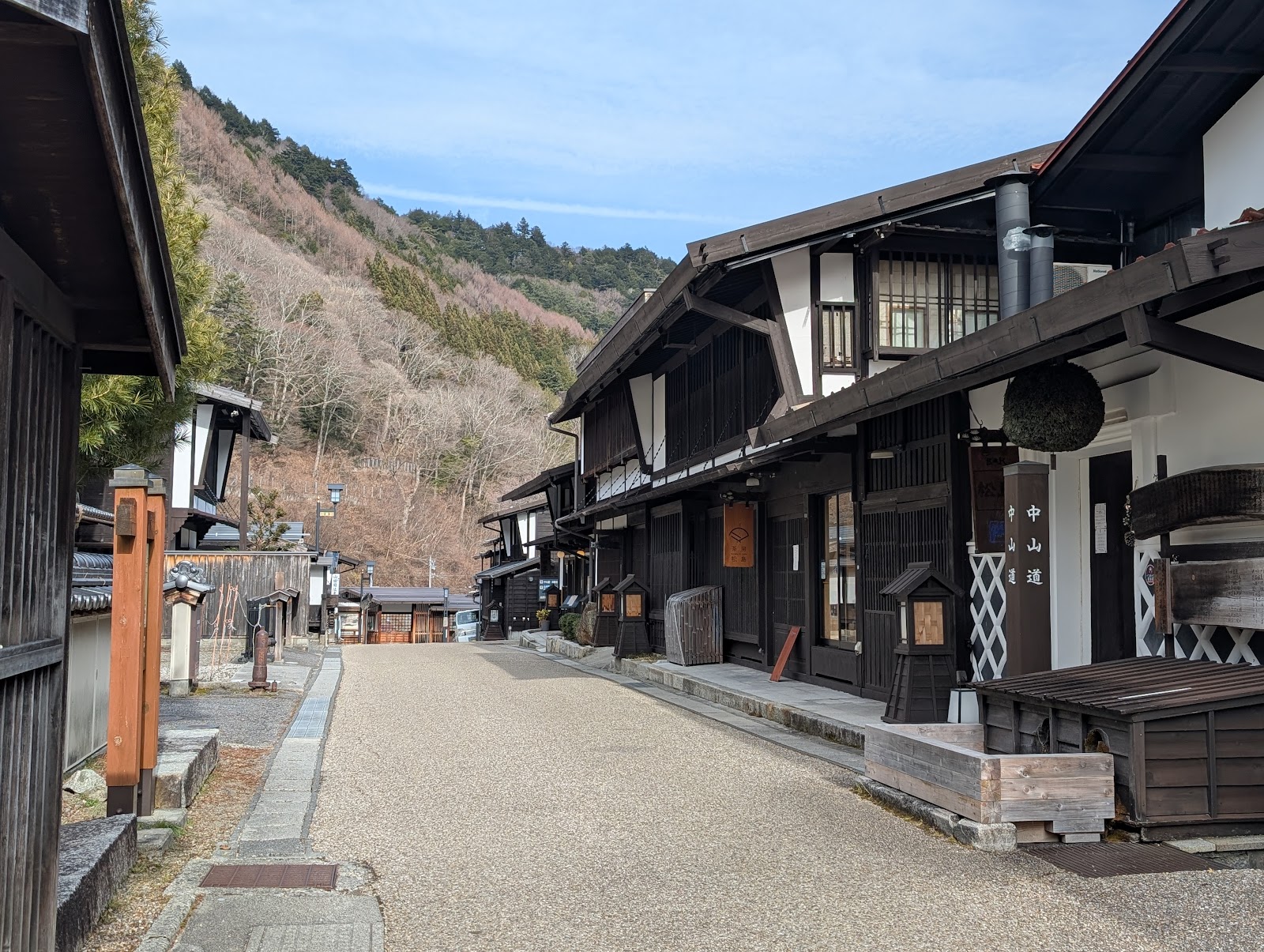
The experience is compact and informative rather than grand — a focused historical stop of perhaps forty minutes that greatly enriches a visit to the Kiso Valley by explaining the road that shaped every one of its post towns. Pairing the checkpoint with a walk through Kiso-Fukushima's old lanes, or with the preserved post towns of Narai, Tsumago and Magome, turns a scenic trip into a fuller understanding of the Nakasendo and Edo-era Japan.
Admission is modest and the site is open through the day, though it may close on some winter days. Cherry blossom in spring and foliage in autumn add seasonal appeal to the hilltop setting. Access is easy: it is a short walk from JR Kiso-Fukushima Station on the Chuo Main Line, in the centre of the valley. For anyone curious about how the famous highway actually worked, the Fukushima Checkpoint is one of the most illuminating historical stops in the Kiso region.
A local's tip
The exhibits on the 'outgoing women, incoming guns' inspection rules bring Edo-era travel control vividly to life.
Best time to visit
Year-round; pairs with exploring the old town
Getting there
A short walk from JR Kiso-Fukushima Station leads to the reconstructed checkpoint and its museum above the town.
Good to know
- Museum
- Restrooms
Plan the whole trip offline
Fukushima Checkpoint Site is one of many places in the Real Japan app — with turn-by-turn directions, nearby spots and full offline maps you can use with no signal.