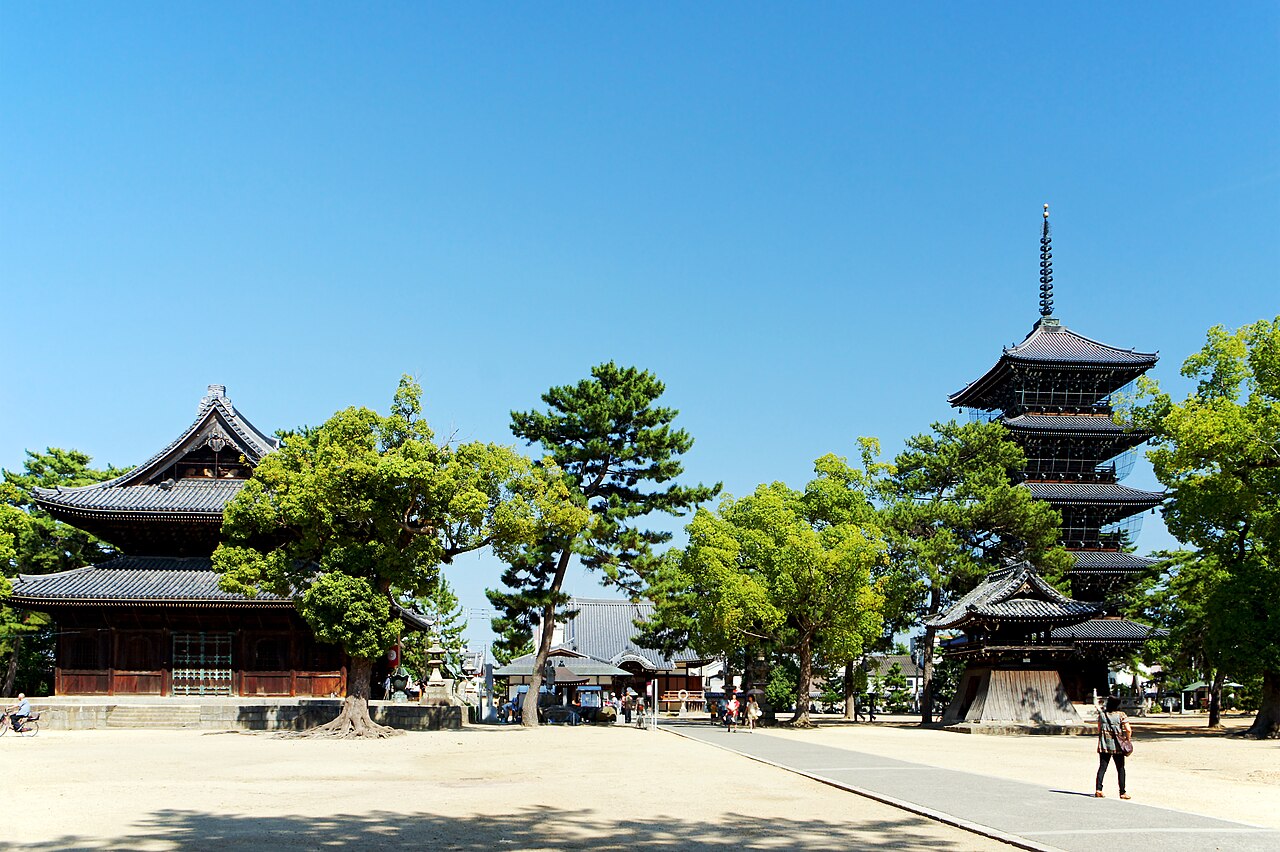
The great seafarers' shrine atop Mount Zozu, reached by a famous 1,368-step stone stairway.
Kotohira-gu, affectionately known across Japan as Konpira-san, is one of the country's most famous and beloved shrines, perched high on the wooded slopes of Mount Zozu in the town of Kotohira. Dedicated to Omononushi, the deity of seafaring, the shrine has for centuries been the object of pilgrimage by sailors, fishermen, and merchants who prayed here for safe voyages and good fortune, and it remains a place where people come to give thanks for protection at sea and, more broadly, for success in life's journeys. In the Edo period, a pilgrimage to Konpira was one of the great aspirations of ordinary Japanese, ranking alongside the journey to Ise.
The shrine is legendary above all for its stairs. The approach is a long stone stairway climbing the mountainside, and reaching the main shrine, the Hongu, requires ascending 785 steps; the truly devoted continue on to the Oku-sha, the inner shrine, for a grand total of 1,368 steps. The climb is a genuine effort, but it is broken up by an atmospheric procession of sights: a bustling approach street of souvenir shops and udon restaurants at the base, followed higher up by ornate gates, sub-shrines, teahouses where climbers rest, and cultural treasures along the way. Traditionally, those unable to climb could be carried up in a palanquin by porters, a service that has largely faded but speaks to the shrine's long history of welcoming all.
The rewards are substantial. The main shrine building is a handsome structure of classic Shinto architecture, and from the terrace beside it opens a sweeping panorama over the Sanuki Plain of Kagawa, patchworked with rice fields and framed by distant mountains and the Seto Inland Sea — a view that makes the climb worthwhile. Along the route, the Shoin (reception hall) houses celebrated screen paintings by the artist Maruyama Okyo, and the grounds hold treasures reflecting centuries of offerings from grateful worshippers, including maritime votive objects. The distinctive Konpira-inu tradition, in which pilgrims' dogs were sent to make the pilgrimage on their owners' behalf, adds a charming footnote.
The town of Kotohira at the foot of the mountain is a pleasure in its own right, with its old wooden storefronts, the historic Kanamaruza — Japan's oldest surviving kabuki theater — and shops selling local Sanuki udon, Kagawa's famous chewy wheat noodles. Many pilgrims fuel up on udon before or after the climb.
Kotohira is easily reached from Takamatsu by either the JR Dosan Line or the private Kotoden railway, and the shrine approach begins a short walk from the stations. There is no admission charge. Climbers should wear comfortable shoes and allow two to three hours for a round trip to the main shrine, more if continuing to the inner shrine; spring and autumn offer the most comfortable conditions. For a blend of physical pilgrimage, panoramic views, cultural treasures, and living tradition, Konpira-san is one of Shikoku's essential experiences.
A local's tip
The main shrine is 785 steps up and the inner shrine 1,368 — porters with palanquins once carried visitors, but pace yourself and rest at the teahouses along the way.
Best time to visit
Spring and autumn for pleasant climbing weather
Getting there
From Takamatsu, take the JR Dosan Line or the Kotoden line to Kotohira; the shrine approach begins a 15-minute walk from the station.
Good to know
- Shops
- Restrooms
- Teahouses
Plan the whole trip offline
Kotohira-gu (Konpira-san) is one of many places in the Real Japan app — with turn-by-turn directions, nearby spots and full offline maps you can use with no signal.