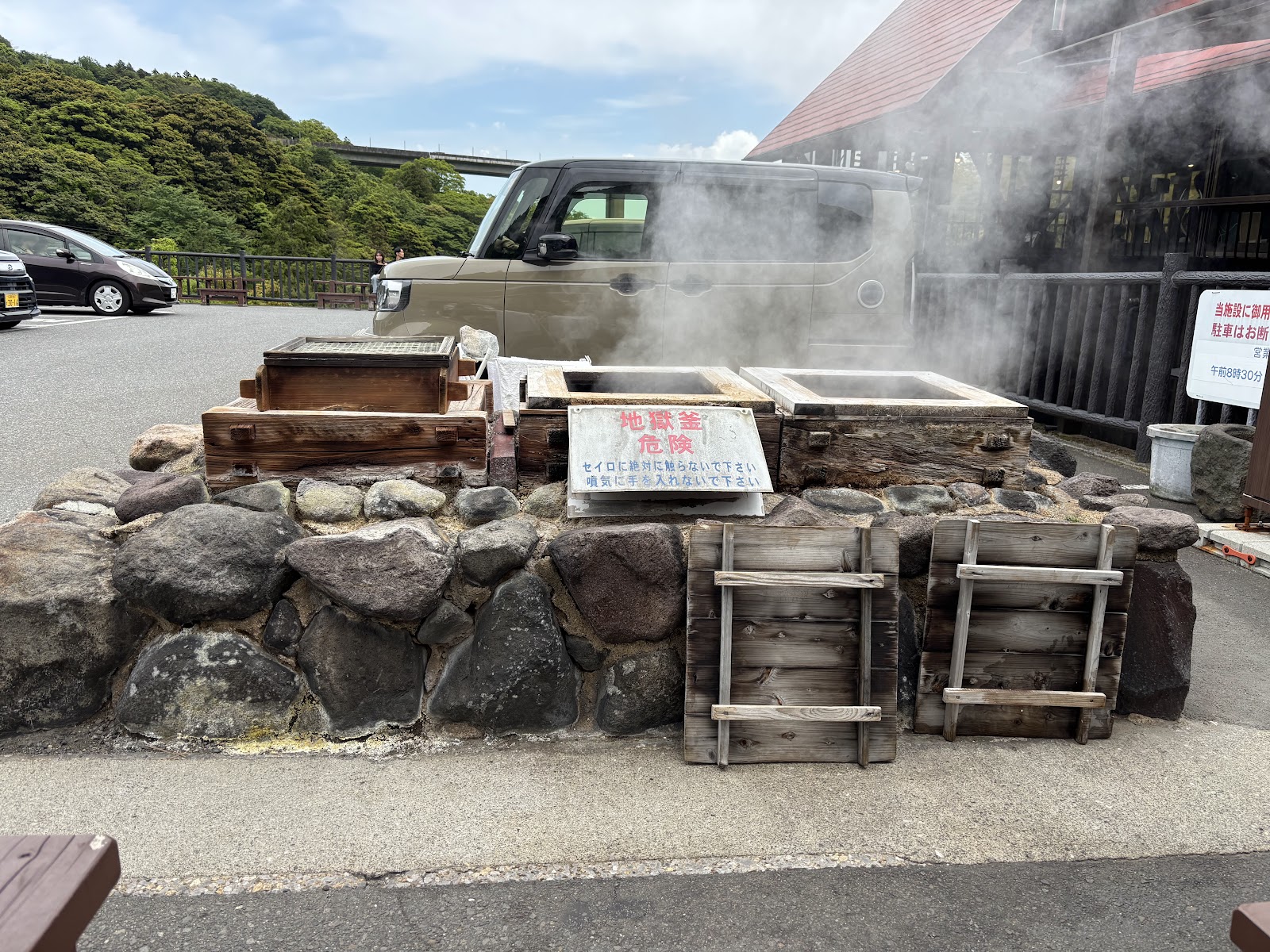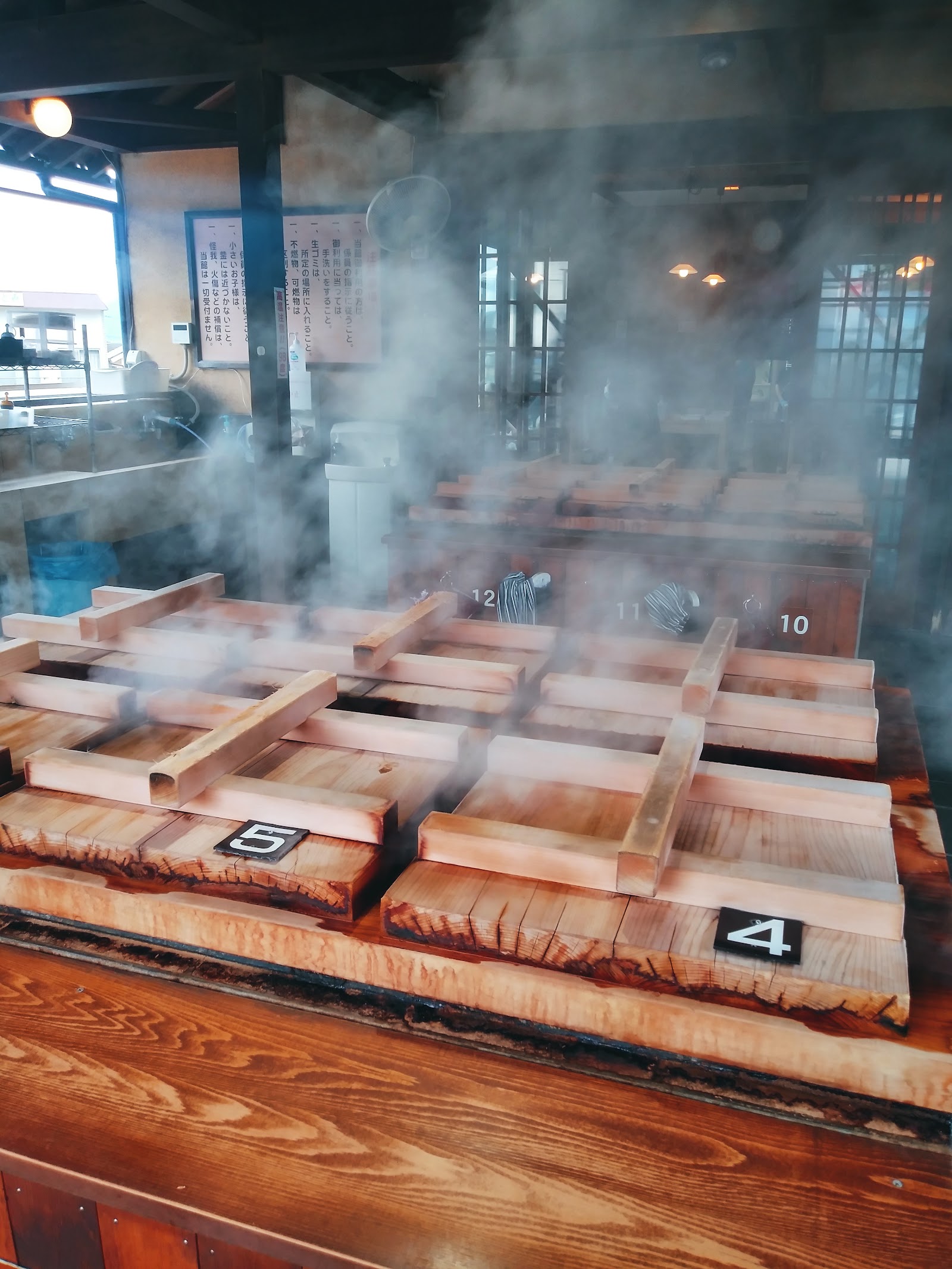
Public steam-cooking hall in Kannawa where you cook your own meal over natural geothermal vents.
Jigoku Mushi Kobo Kannawa is the beating culinary heart of Beppu's oldest hot-spring quarter, a municipal 'hell-steaming workshop' built directly over the natural geothermal vents that have defined this town for more than a thousand years. Here 'jigoku mushi' (hell steaming) is not a metaphor: rows of stone-lidded steamers channel mineral-rich steam rising at close to 100 degrees Celsius straight from the earth, and visitors do the cooking themselves.
The experience is refreshingly simple. You buy a ticket for a steamer slot at the entrance, then choose ingredients either brought from home or purchased on site: baskets of local eggs, sweet potatoes, corn, seasonal vegetables, seafood such as prawns and scallops, and cuts of Oita chicken and pork. Staff show you which steamer to use, you lower your basket in, set the timer, and wait as the salty, sulphur-touched steam does the rest. Because nothing is boiled in water and no oil is used, the food emerges startlingly clean-tasting, with the vegetables' natural sweetness intensified and a faint mineral seasoning from the steam itself. Locals swear the geothermal vapour brings out flavours ordinary cooking never could.
The practice has deep roots. Records of hell-steaming in Kannawa date back centuries, when townspeople and the sick who came to 'take the cure' used the vents to cook communally. The modern facility, opened by Beppu City, formalises that tradition into a clean, welcoming space with English guidance, communal tables and a relaxed, slightly smoky atmosphere thick with the hiss of steam and the chatter of families comparing their haul.
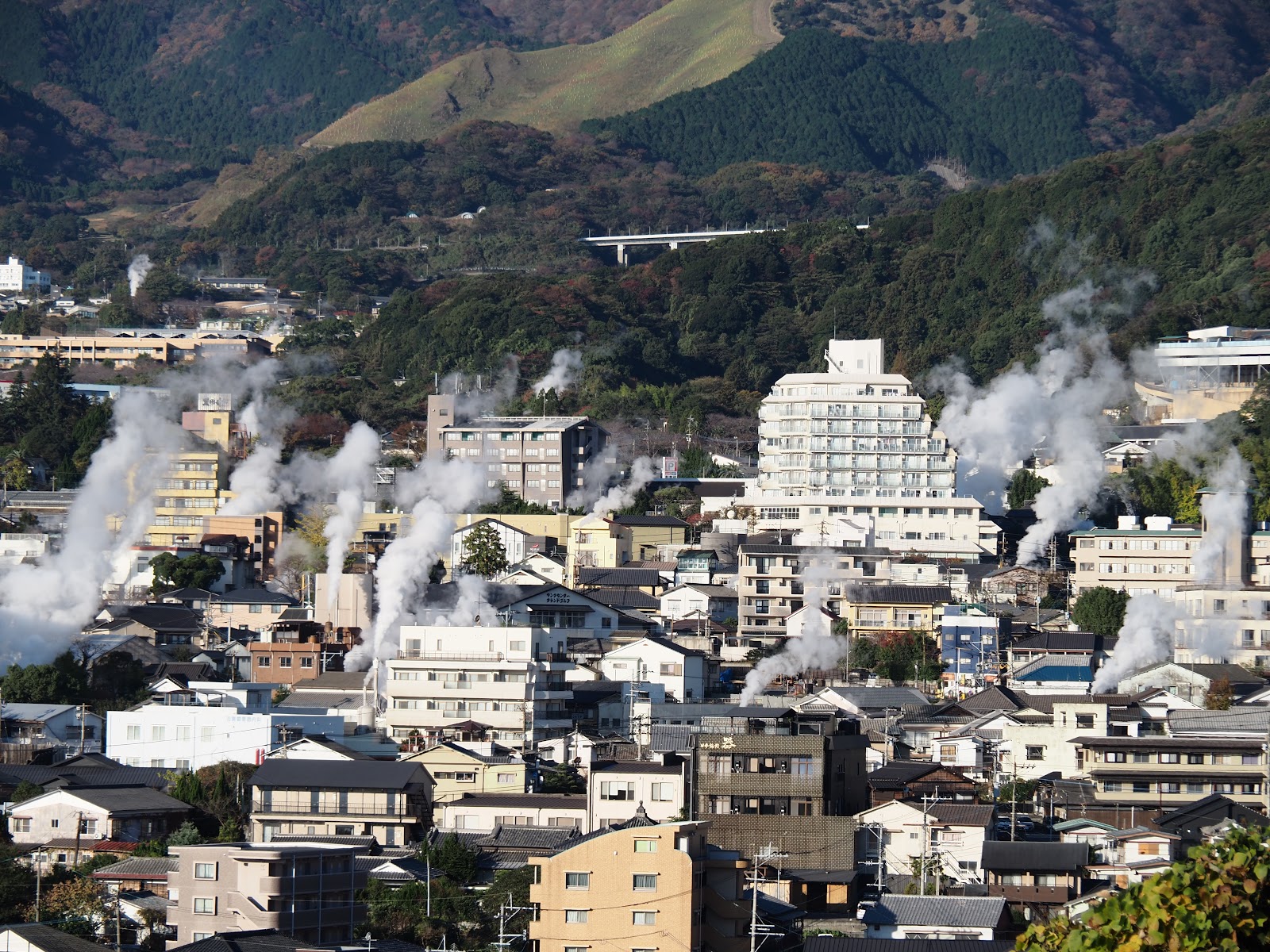
Beyond the steamers, the surrounding Kannawa district is worth lingering in. Clouds of white 'yukemuri' steam drift constantly from drains, rooftops and pavements, giving the narrow lanes an otherworldly, almost cinematic quality. Small shops sell steam-cooked pudding, steamed buns and onsen eggs, and the famous 'hells' (jigoku) hot-spring attractions are a short walk away, making this an easy, rewarding half-day combination of sightseeing and hands-on eating.
The best time to visit is late morning or lunchtime, before the busiest afternoon crowds; on weekends there can be a short wait for a free steamer. Dress in clothes you don't mind smelling faintly of sulphur afterwards, and bring cash for ingredients. Vegetarians are well served by the vegetable and egg options, while families find it an ideal, interactive stop that children love. Accessibility is good, with step-free access to the main steaming area and restrooms on site.
For visitors, Jigoku Mushi Kobo is more than a novelty. It is the most authentic and affordable way to taste the essence of Beppu, connecting you directly to the volcanic forces beneath your feet and to a folk food culture that has quietly endured here for generations. Come hungry, cook slowly, and eat where the earth itself does the work.
A local's tip
Buy a bag of local Kannawa eggs and sweet potatoes from the stalls outside, then steam them yourself in ten minutes for the cheapest, most memorable meal in town.
Best time to visit
Late morning or lunch
Getting there
From Beppu Station West Exit take a Kamenoi bus (route 5, 41 or 43) to Kannawa bus terminal, about 20 minutes, then walk 3 minutes uphill into the steam-wreathed old quarter.
Good to know
- Wi-Fi
- Restrooms
- English menu
Plan the whole trip offline
Jigoku Mushi Kobo Kannawa is one of many places in the Real Japan app — with turn-by-turn directions, nearby spots and full offline maps you can use with no signal.