The oldest and largest preserved samurai quarter in Kagoshima, a grid of stone-walled lanes and hedged gardens.
The Izumi Fumoto Samurai Residences form the oldest and largest preserved samurai district in Kagoshima Prefecture, a remarkable 46-hectare grid of stone-walled lanes, clipped hedges, and traditional homes that has survived largely intact from the Edo period. Built around 400 years ago, it is a nationally recognised Important Preservation District for Groups of Traditional Buildings, and walking its quiet streets is like stepping directly into the world of the Satsuma samurai.
The word fumoto refers to the distinctive regional system of rural samurai settlements that the powerful Satsuma domain established across its territory. Rather than concentrating all its warriors in a single castle town, Satsuma dispersed them into fortified villages that could guard the domain's borders, and Izumi, close to the frontier with what is now Kumamoto, was among the most strategically important. Its size and antiquity reflect that significance.
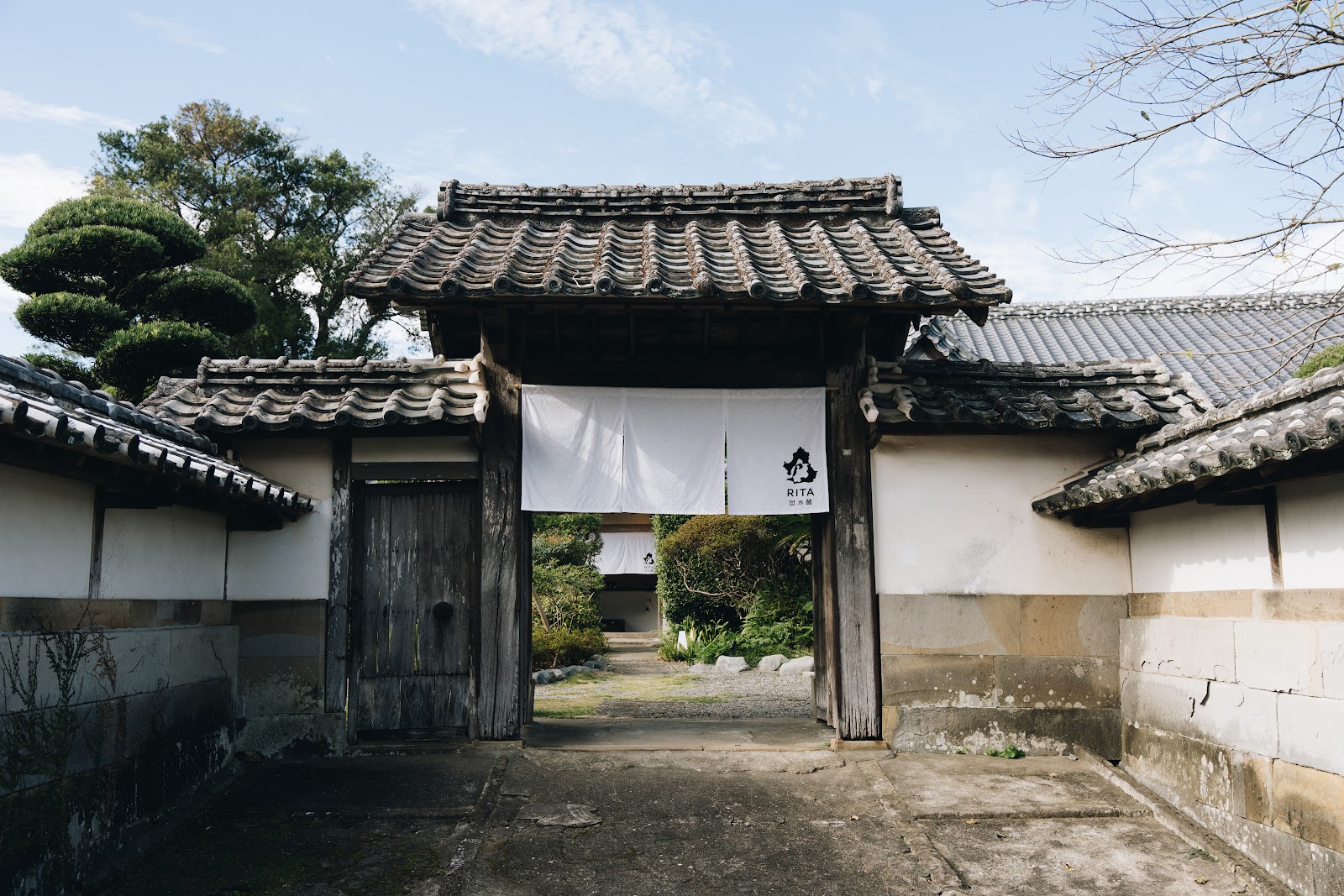
Today the district's appeal lies in its atmosphere of ordered calm. Low stone walls, built without mortar and topped with neatly trimmed hedges, line straight gravel lanes laid out on a defensive grid. Behind them sit samurai houses set in gardens, some still private homes, others opened to visitors. Two of the finest, the Takezoe and Zaisho residences, can be entered for a small fee, revealing tatami rooms, wooden verandas, and carefully composed gardens that show how the warrior class actually lived. Volunteer guides and horse-drawn carriage rides are sometimes available, adding to the sense of a living historical village rather than a museum.
Because the streets are flat and the district compact, it is best explored slowly on foot or by rental bicycle available at Izumi Station. An hour or two lets you wander the lanes, peer over walls into private gardens, and appreciate the harmony of grey stone, green hedge, and dark timber that defines the townscape. Spring brings cherry and plum blossom to the gardens, while autumn tints the maples, so those two seasons are especially rewarding.
Izumi is also famous in winter for an entirely different reason: thousands of migratory cranes descend on the nearby plains, one of the largest wintering crane populations in the world, and many visitors combine the crane observation centre with the samurai district for a full day. The two together, ancient streets and wild birds, make Izumi one of the most distinctive destinations in northern Kagoshima.
The district remains a genuine residential neighbourhood, so visitors are asked to explore respectfully, keeping to the lanes and not intruding on private homes. This lived-in quality is precisely what gives Izumi its authenticity; it is not a reconstruction but a continuous community that has preserved its historic form for four centuries.
Reached in about fifteen minutes by taxi from Izumi Station on the Kyushu Shinkansen, the district is an easy and rewarding stop for anyone travelling between Kagoshima and Kumamoto. With free access to the streets, modest admission for the show houses, parking, and bicycle rental nearby, it offers an unusually complete and unhurried encounter with samurai-era Japan, far from the crowds of the better-known historic towns.
A local's tip
This is the oldest and largest samurai district in Kagoshima; rent a bike at the station and ride the grid of stone-walled lanes, then pay to enter one or two preserved houses.
Best time to visit
Spring and autumn for gardens in full colour
Getting there
From Izumi Station on the Kyushu Shinkansen, it is about 15 minutes by taxi or a longer walk; rental bicycles at the station make the flat district easy to tour.
Good to know
- Parking
- Restrooms
- Bicycle rental
Plan the whole trip offline
Izumi Fumoto Samurai Residences is one of many places in the Real Japan app — with turn-by-turn directions, nearby spots and full offline maps you can use with no signal.