Thousand-year-old Zen temple on Mt. Ichibata revered as Japan's guardian of the eyes, with 1,300 stone steps and sweeping views of Lake Shinji.
Ichibata Yakushi, formally Ichibataji, is a Rinzai Zen temple of the Myoshinji school perched near the 200-metre summit of Mount Ichibata on the Shimane Peninsula, roughly four kilometres inland from the Sea of Japan. It is the head temple of the Ichibata Yakushi faith and enshrines Yakushi Ruriko Nyorai, the Buddha of Healing, who is venerated above all as the guardian of the eyes. For more than a thousand years pilgrims with failing sight have climbed here to pray, and the temple's affectionate nickname, the eye deity, still draws worshippers from across western Japan.
According to temple tradition, Ichibataji was founded in 894 by the monk Fuzen, who is said to have recovered a golden image of Yakushi from the sea and enshrined it after his mother's blindness was cured. That legend of miraculous healing became the heart of a devotional movement so popular that when a private railway was laid across the peninsula in the early twentieth century it was named the Ichibata Electric Railway, built expressly to carry pilgrims toward the mountain. Today the temple is the first stop on the Izumo Ten Great Yakushi circuit and the third temple of the Izumo Kunikamibutsu pilgrimage.
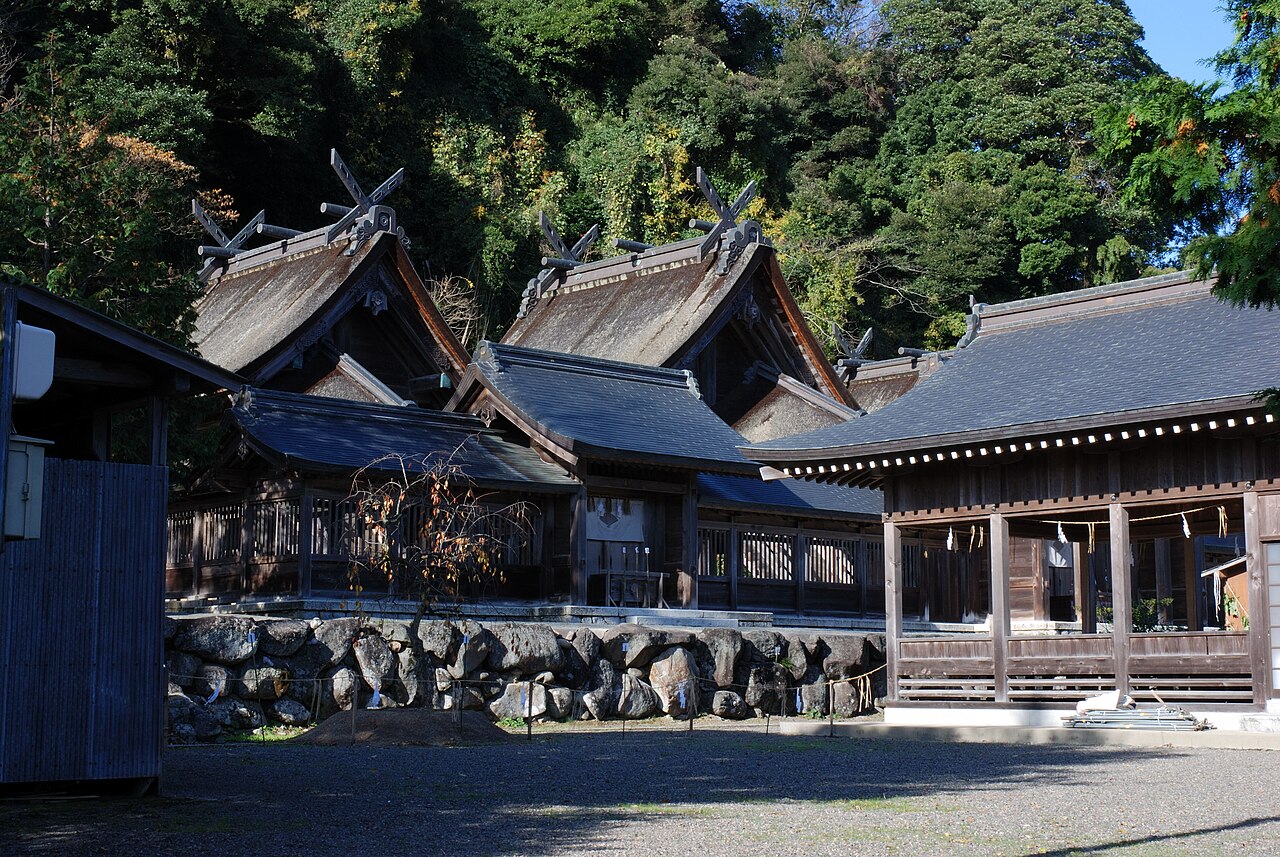
The grounds are broad and atmospheric, dotted with a Yakushi main hall, a Kannon hall, halls of guardian deities, and a celebrated flight of roughly 1,300 stone steps that ascends from the foot of the mountain. Visitors who reach the top are rewarded with views over Lake Shinji and the patchwork plains of Izumo. The temple is also known as a place for the first prayers of newborns and for family memorials, and its cedar forest, seasonal hydrangeas and vivid November maples make it as much a scenic retreat as a religious site.
A well-loved detail is the eye-shaped ema votive plaques and stroking-Buddha statues left by those praying for healthy vision; the temple shop sells the eye-medicine amulets for which Ichibata is famous. Around the precinct you will also find small Jizo statues dressed in red bibs by grateful families.
The visit is comfortable for most people if you arrive by road, as buses and taxis climb close to the main hall and the upper precinct is fairly level; those who prefer the traditional pilgrimage can test themselves on the long stone stairway, which is steep in places and best avoided in ice or heavy rain. Allow around an hour to ninety minutes to take in the halls unhurried.
Spring cherry blossom and especially the fiery autumn foliage of November are the finest times to come, though the mountain air is pleasant year round and the temple is quietest early in the day. To get there, take the Ichibata Electric Railway's Kita-Matsue Line to Ichibataguchi Station, then a local bus or taxi up the mountain; drivers can reach the summit car park in about forty minutes from central Izumo. The combination of living pilgrimage, panoramic scenery and a genuinely unusual dedication to eyesight makes Ichibata Yakushi one of the region's most rewarding temple visits.
A local's tip
Buy the eye-health amulet sold almost nowhere else in Japan, and ride the bus up so you can walk the 1,300 stone steps down instead of climbing them.
Best time to visit
Autumn morning
Getting there
From Dentetsu-Izumoshi ride the Ichibata Electric Railway Kita-Matsue Line to Ichibataguchi Station (about 25 min), then a local bus or taxi up Mount Ichibata; by car it is roughly 40 min from central Izumo, with a car park near the main hall.
Good to know
- Shop
- Parking
- Restrooms
Plan the whole trip offline
Ichibata Yakushi (Ichibataji) is one of many places in the Real Japan app — with turn-by-turn directions, nearby spots and full offline maps you can use with no signal.