An ancient and important Shimane shrine, home of Sada Shin Noh sacred dance, inscribed on UNESCO's intangible heritage list.
Sada Shrine, in the Kashima district northwest of central Matsue, is one of the most important Shinto shrines in Shimane Prefecture and, historically, one of the most revered in the entire Izumo region, second only to the great Izumo Taisha itself. Though quieter and far less visited than its famous neighbour, Sada Jinja rewards those who make the short trip with a powerful sense of antiquity and a living ritual tradition recognised by the world.
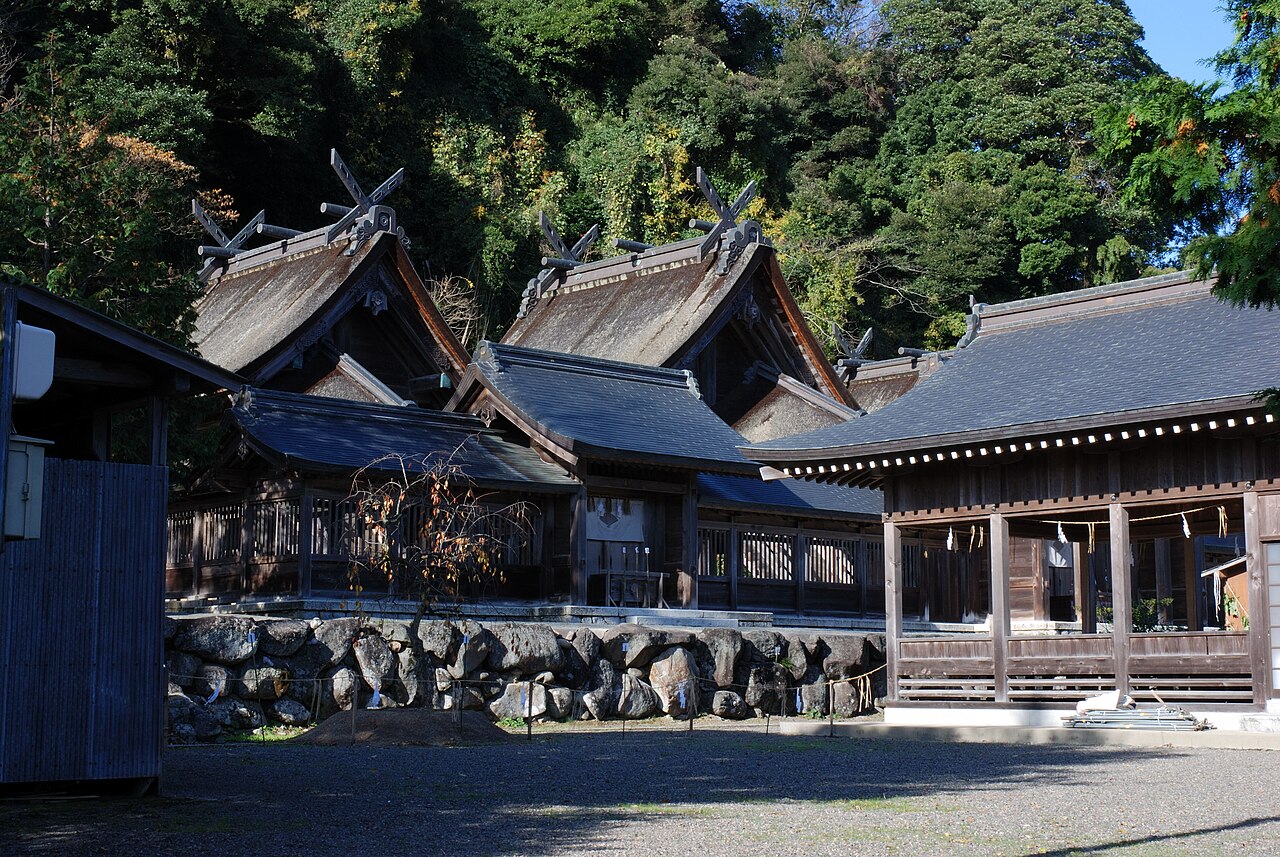
The shrine is unusual and striking in its layout, presenting three main sanctuaries standing side by side, each a hall in the distinctive taisha-zukuri style that represents the oldest form of Shinto architecture. The central hall is dedicated to Sada-no-Okami, a guiding and purifying deity, while the flanking halls enshrine other important gods including figures from Japan's creation mythology. This triple arrangement, set against wooded hills in a tranquil valley, gives the shrine a dignified, ancient atmosphere quite different from the busier sites of the region, and its buildings are valued as important examples of Izumo-style sacred architecture.
Sada's greatest treasure, however, is intangible. The shrine is the home of Sada Shin Noh, a form of sacred masked dance and ritual performed to purify and renew the shrine's sacred straw mats and to entertain and honour the gods. Performed most importantly during the Gozagae festival on 24 and 25 September, these solemn, hypnotic dances are considered a foundational influence on the wider tradition of Japanese kagura, the ritual dance-dramas performed at shrines across the country. In recognition of its cultural significance, Sada Shin Noh was inscribed on UNESCO's Representative List of the Intangible Cultural Heritage of Humanity, a distinction that places this modest rural shrine on the global cultural map.
Witnessing the dances during the autumn festival is a rare and moving experience, but even outside festival time the shrine's history and setting reward a visit. The Izumo region is steeped in myth, regarded in ancient texts as a land of gods, and Sada Jinja is woven deeply into that sacred geography. Walking its grounds, beneath old trees and before the three solemn halls, you feel the weight of more than a millennium of continuous worship.
Practically, Sada Shrine lies away from the main tourist trail, reached most easily by taxi or local bus from Matsue, and it pairs well with a wider exploration of the shrines and coastline of the Shimane peninsula. Admission is free and the grounds are always accessible. English information is minimal, so a little background on Izumo mythology and Shinto ritual enriches the visit considerably.
For travellers who want to go beyond the famous highlights and touch the deeper spiritual roots of the Izumo region, Sada Shrine is a genuine reward: an ancient, architecturally distinctive sanctuary that still safeguards a sacred dance old enough, and important enough, to be treasured by the whole world. It is one of Matsue's most significant and atmospheric sites.
A local's tip
Visit during the annual Gozagae festival in late September to witness Sada Shin Noh, the sacred masked dance recognised by UNESCO.
Best time to visit
September 24-25 for the Sada Shin Noh ritual dances
Getting there
About 25 minutes by bus or 20 minutes by taxi northwest of Matsue Station toward Kashima; the shrine sits inland from the coast in a quiet valley.
Good to know
- Parking
- Restrooms
Plan the whole trip offline
Sada Shrine is one of many places in the Real Japan app — with turn-by-turn directions, nearby spots and full offline maps you can use with no signal.