Home to the world's oldest wooden buildings, this 7th-century temple was Japan's first UNESCO World Heritage Site.
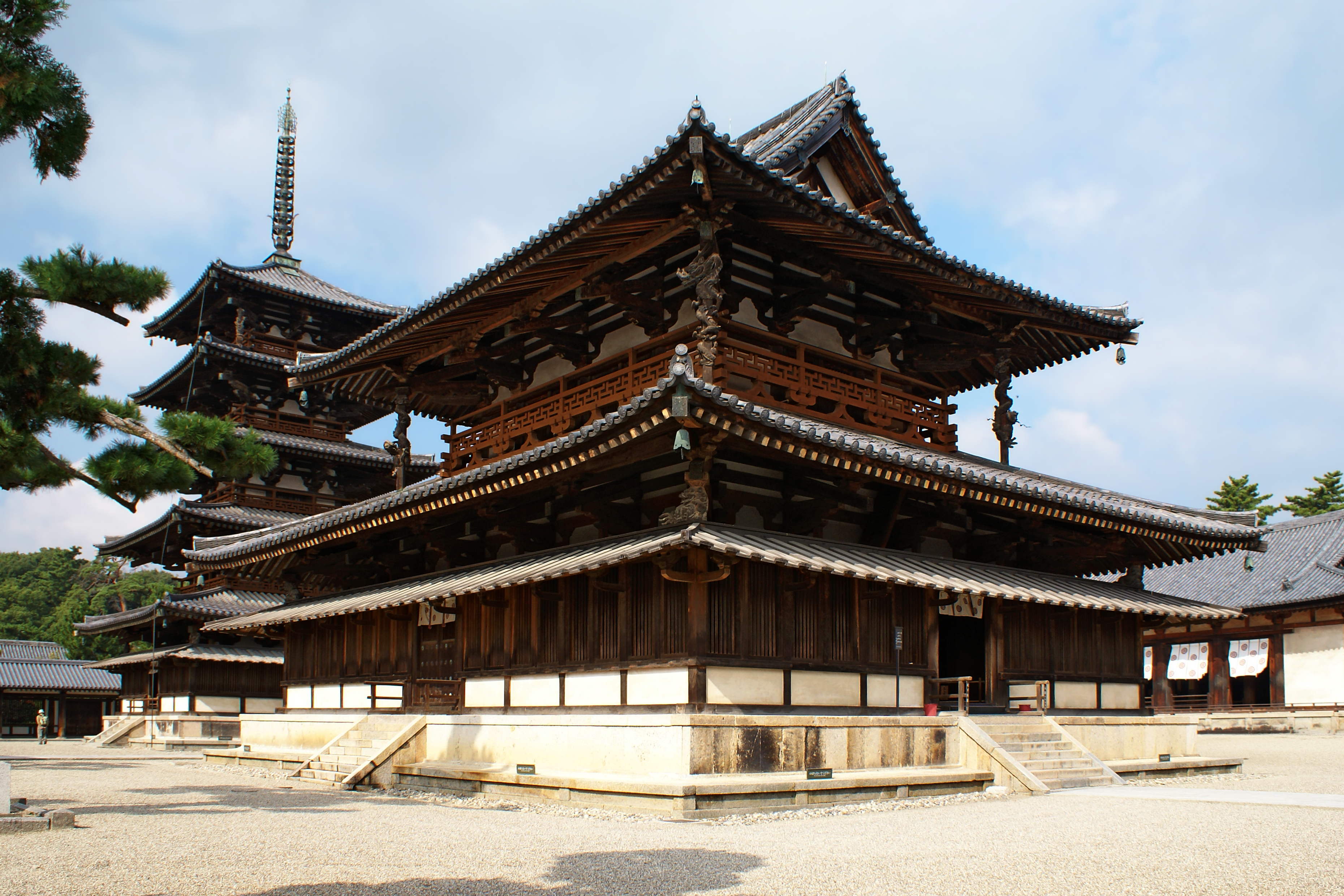
Horyu-ji, in the quiet town of Ikaruga just west of Nara, is one of the most important buildings in the history of world architecture. Founded in 607 by Prince Shotoku, the revered statesman who did more than anyone to establish Buddhism in Japan, its central hall (Kondo) and five-story pagoda are widely recognised as the oldest surviving wooden structures on Earth. A tree-ring survey confirmed that the central pillar of the pagoda came from a cypress felled in 594. To stand in the courtyard here is to stand among timber that has held its shape since before the founding of most of the world's great cathedrals.
The temple's full name, Horyu Gakumonji, the Learning Temple of the Flourishing Law, hints at its original role as both monastery and seminary. According to the Nihon Shoki chronicle the complex burned down after a lightning strike in 670, and the buildings you see today were raised in the decades that followed, meaning even the reconstruction is more than 1,300 years old. In 1993 Horyu-ji, together with nearby Hokki-ji, became Japan's very first UNESCO World Heritage Site, inscribed as the Buddhist Monuments in the Horyu-ji Area.
The grounds divide into two precincts. The Western Precinct (Sai-in) is the ancient heart, arranged around the Kondo and the pagoda within a cloistered corridor whose entasis columns, subtly bulged in the Greek manner, speak to the long reach of ideas along the Silk Road. The Kondo houses the Shaka Triad, a bronze masterpiece cast in 623, though its interior murals were tragically lost to a fire in 1949, an accident so shocking that January 26 became Japan's national Fire Prevention Day for cultural properties. A ten-minute walk east leads to the Eastern Precinct (To-in) and the octagonal Yumedono, the Hall of Dreams, built on the site of Prince Shotoku's former palace and one of the most graceful buildings in Japan.
Between the two precincts sits the Great Treasure Gallery (Daihozoin), whose collection of Asuka- and Nara-period sculpture and craft is staggering, including the slender, enigmatic Kudara Kannon. A single combined ticket covers all three areas, and giving the site a full two hours lets you absorb it properly rather than rushing.
The visiting experience is calm and uncrowded compared with the temples inside Nara Park, precisely because it takes a little effort to reach. Broad gravel courtyards, pine trees and low white walls give the compound a spare, meditative beauty; morning light is best, raking low across the weathered wood. Cherry blossoms and autumn maples both suit the setting, though Horyu-ji is a place you visit for history and atmosphere more than seasonal colour.
To get here, take the JR Yamatoji Line to Horyuji Station, about 15 minutes from Nara toward Osaka, then walk roughly 20 minutes or hop on a short bus to the Horyuji-mae stop. Because it lies on a JR line, it is fully covered by the Japan Rail Pass, making it an easy and rewarding half-day trip from central Nara or Osaka.
A local's tip
Buy the combined ticket and walk the extra 10 minutes to the quieter Eastern Precinct, where the octagonal Yumedono (Hall of Dreams) stands almost empty compared with the main compound - it is the most serene spot on the grounds.
Best time to visit
Morning on a clear day, when light rakes across the ancient timber
Getting there
Take the JR Yamatoji Line to Horyuji Station, then either walk about 20 minutes or catch a short bus to the Horyuji-mae stop. From central Nara it is roughly 15 minutes by train toward Osaka, in the town of Ikaruga.
Good to know
- Wi-Fi
- Restrooms
- Wheelchair access
Plan the whole trip offline
Horyu-ji is one of many places in the Real Japan app — with turn-by-turn directions, nearby spots and full offline maps you can use with no signal.