An indoor-and-open-air folk museum preserving the rural life and historic farmhouses of the Yamato region.
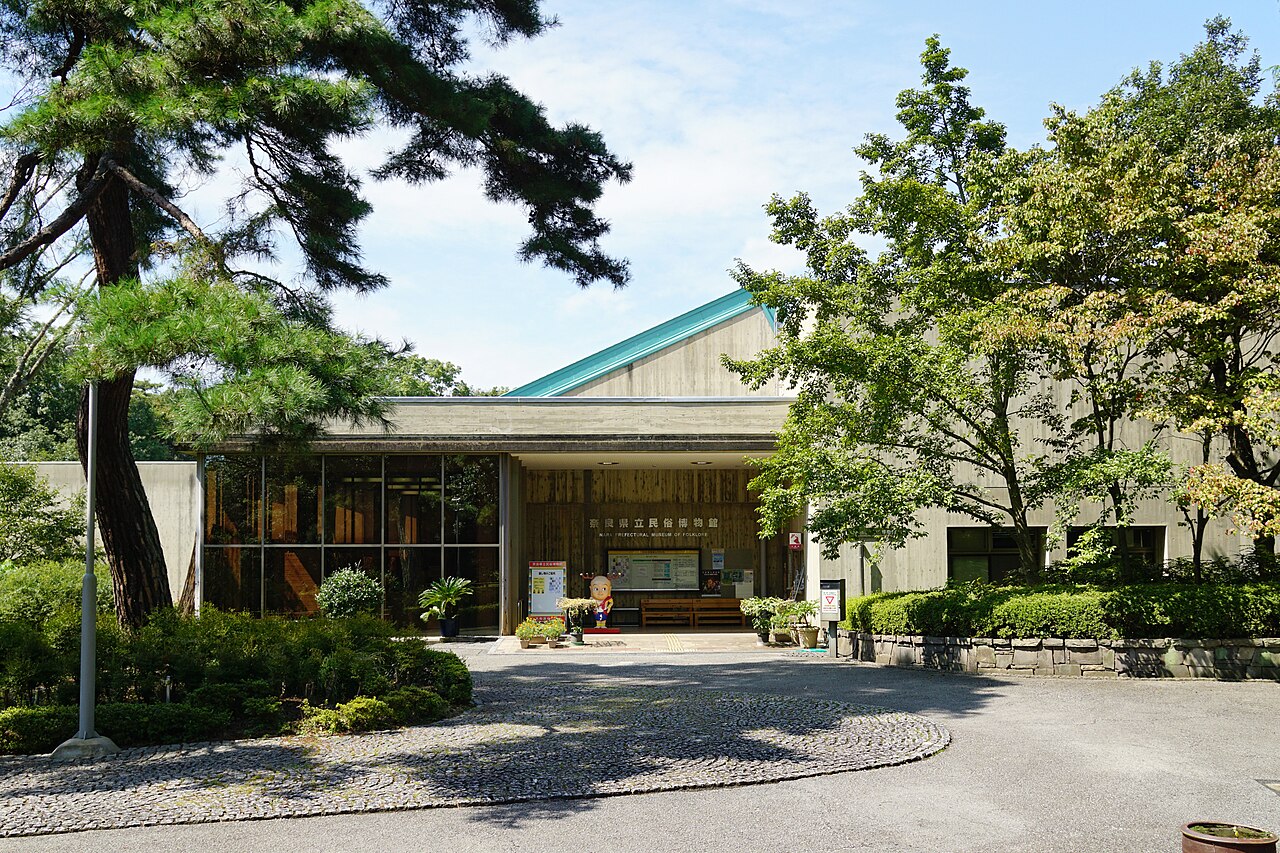
The Nara Prefectural Folk Museum preserves the everyday rural culture of the Yamato region, the countryside that surrounded and fed the ancient capital. Set within the leafy Yamato Folk Park in Yamatokoriyama, just southwest of Nara city, it combines an indoor museum of folk tools and crafts with an open-air collection of relocated historic buildings, giving a vivid, hands-on picture of how ordinary people lived, worked and farmed here across the centuries.
Inside the main museum, the displays gather the implements of daily life from the Edo period onward: farming and forestry tools, fishing gear, weaving and textile equipment, household utensils, and the objects of village festivals and seasonal customs. Together they trace the yearly rhythm of rice cultivation, sericulture and craft that shaped rural Yamato, and the ingenuity with which farming families made and maintained everything they needed. Thoughtful reconstructions and photographs show these tools in use, turning what could be a dry collection of artefacts into a living account of a vanished way of life.
The museum's greatest appeal, however, lies outdoors. Scattered through the surrounding park are several genuine historic buildings that have been carefully dismantled from their original sites and rebuilt here for preservation, including thatched-roof farmhouses, a merchant house and a rustic water mill. Visitors can walk right into these structures, standing on the earthen floors, ducking under smoke-blackened beams and imagining the hearth fires that once warmed them. Wandering between the buildings among the trees, especially when the cherry blossoms or autumn leaves are out, is a peaceful pleasure and gives the collection a depth that indoor cases alone never could.
The combination makes this an excellent, uncrowded excursion for anyone curious about the human landscape beyond Nara's famous temples. The park is spacious and green, family-friendly, and pleasantly quiet compared with the deer-filled centre of Nara. Admission is inexpensive, the site has good parking, and the paths through the park are gentle, though some of the historic buildings have steps and high thresholds typical of old rural architecture.
Spring and autumn are the best times to come, when the park's trees frame the old farmhouses in blossom or colour, though the museum is worthwhile year-round. To reach it, take the Kintetsu Kashihara Line to Koriyama Station, or JR to Koriyama, and then a Nara Kotsu bus toward the Yamato Folk Park (Yamato Minzoku Koen); the entrance is a short walk from the bus stop. As the rail approach is largely Kintetsu-operated, a Japan Rail Pass may not cover the whole trip, but the modest fares and the reward of stepping inside centuries-old farmhouses make this a memorable and grounding contrast to Nara's grand temples.
A local's tip
Do not miss the open-air section — several historic thatched farmhouses and a water mill have been relocated into the surrounding park, so you can step straight from the indoor displays into the buildings they describe.
Best time to visit
Spring and autumn for the surrounding Yamato Folk Park
Getting there
Within Yamato Folk Park in Yamatokoriyama. Take the Kintetsu Kashihara Line to Koriyama Station or JR to Koriyama, then a Nara Kotsu bus toward Yamato Minzoku Koen; the park entrance is a short walk from the stop.
Good to know
- Park
- Shop
- Parking
- Restrooms
Plan the whole trip offline
Nara Prefectural Folk Museum is one of many places in the Real Japan app — with turn-by-turn directions, nearby spots and full offline maps you can use with no signal.