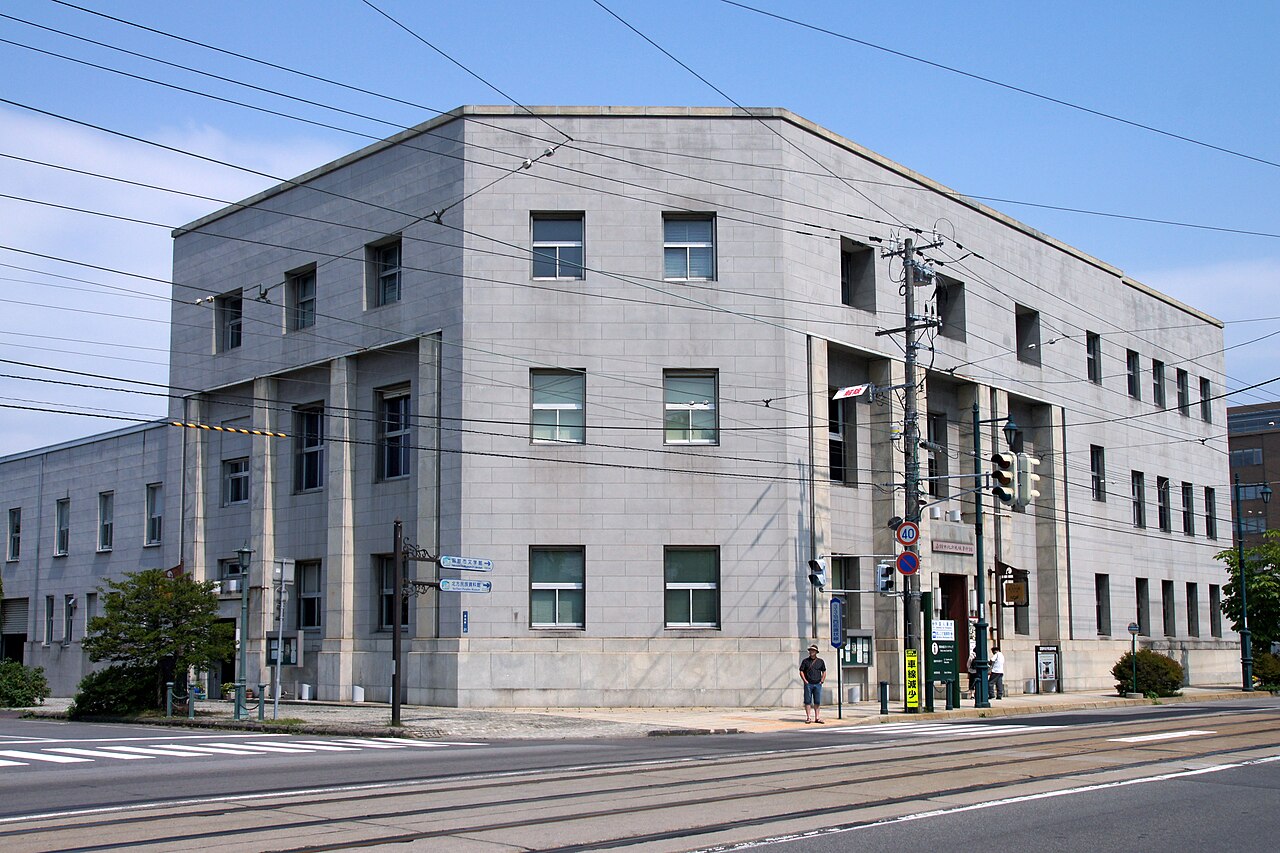
Ethnographic museum of the Ainu and northern peoples, set in an elegant 1926 former Bank of Japan branch in Motomachi.
The Hakodate City Museum of Northern Peoples is one of the most rewarding small museums in Hokkaido, dedicated to the indigenous Ainu and the wider circumpolar cultures that once traded and lived along the Sea of Okhotsk. It opened in 1989 and settled into its current, beautifully restored home — the former Hakodate branch of the Bank of Japan, built in 1926 — after a renovation reopened it in 1993. The building itself is part of the experience: a dignified stone structure with original glass doorknobs, ornate transoms and the cool, hushed air of a former vault, now filled with the material culture of the north.
The collection centres on the celebrated Osamu Baba collection, gathered by a local doctor who spent decades acquiring Ainu artefacts before they were lost. Highlights include exquisite Ainu robes — the attush garments woven from elm-bark fibre and the vividly appliquéd ceremonial coats — alongside "Ezo Nishiki" brocade textiles that arrived through the ancient Santan trade route linking Hokkaido to the Amur River and mainland Asia. There are also carvings, tools, hunting gear and objects from the Nivkh, Uilta (Orok) and other peoples of Sakhalin and the Kuril Islands, giving a rare panorama of how communities survived and expressed themselves across the frozen north.
What sets the museum apart is how approachable it makes a subject that can feel remote. Displays are grouped by theme — clothing, food, spiritual life, trade — and a hands-on corner lets visitors try Ainu paper-cutting patterns or handle and play reproductions of traditional instruments such as the mukkuri mouth harp. It is a small enough space to see thoroughly in an hour, yet dense enough to reward a slower visit.
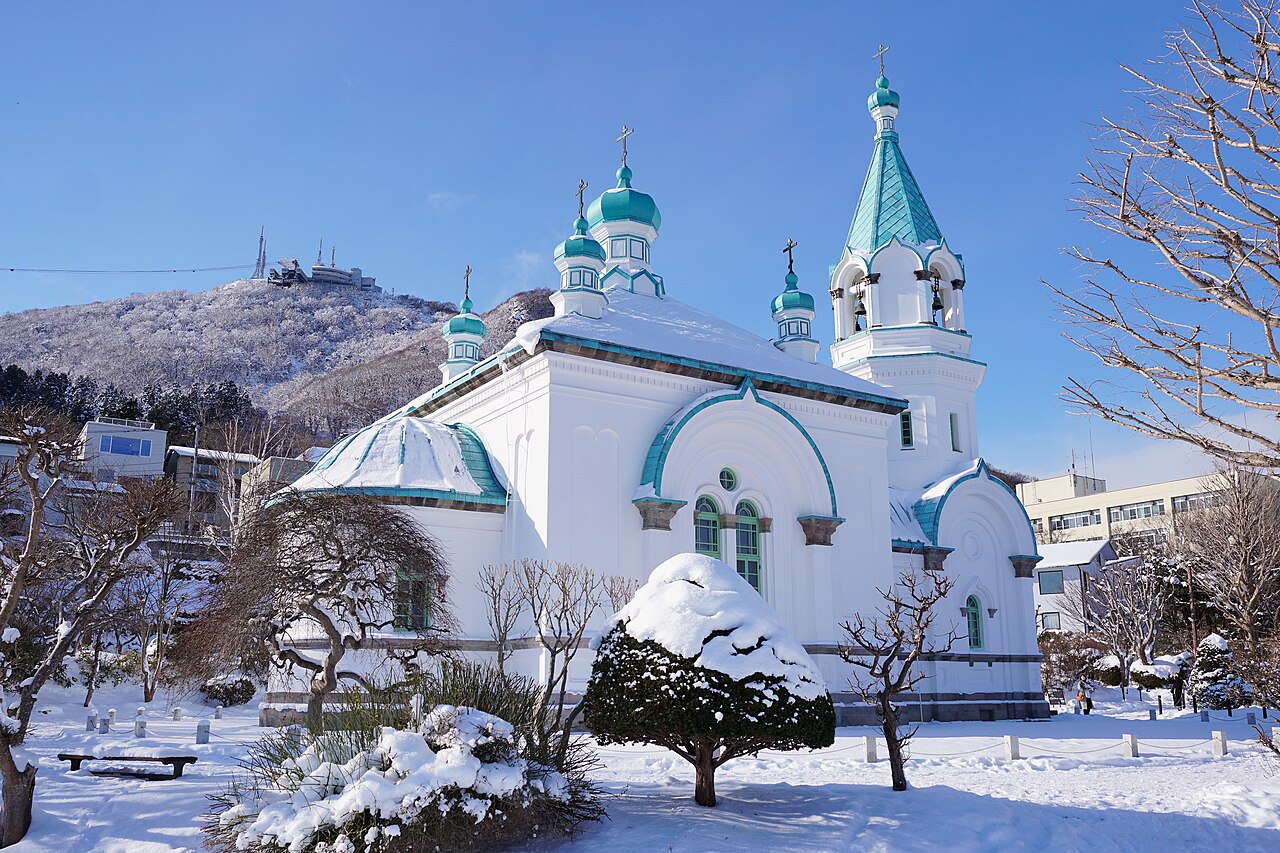
The location is ideal. Sitting right at the foot of the Motomachi slopes, near the Jujigai tram stop, it slots naturally into a half-day exploring Hakodate's historic harbour district: the sloping streets lined with churches and Western-style trading houses, the red-brick Kanemori warehouses a few minutes downhill, and the ropeway up Mount Hakodate for the famous night view. Many travellers pair the museum with the Old British Consulate and the Orthodox Church, all within easy walking distance.
It is open daily, with slightly longer summer hours (until 19:00 from April to October, and until 17:00 in winter), and admission is inexpensive at around 300 yen — with combination tickets available if you plan to visit several of the city's cultural sites. English signage is partial, so a guidebook or translation app helps, but the objects speak clearly on their own. For anyone curious about who lived in this land before it was called Hokkaido, this quietly excellent museum is among the best places in Japan to begin.
A local's tip
Ask at the desk about the free hands-on corner where you can try Ainu paper-cutting and play traditional instruments — it is easy to miss but genuinely fun for adults and kids alike.
Best time to visit
Year-round; pairs well with a Motomachi walk
Getting there
Take the Hakodate City Tram to Jujigai, then walk about two minutes uphill into the Motomachi slope district. The museum stands on the corner of the Motomachi shopping street in the former Bank of Japan building.
Good to know
- Wi-Fi
- Restrooms
- English signage
Plan the whole trip offline
Hakodate City Museum of Northern Peoples is one of many places in the Real Japan app — with turn-by-turn directions, nearby spots and full offline maps you can use with no signal.