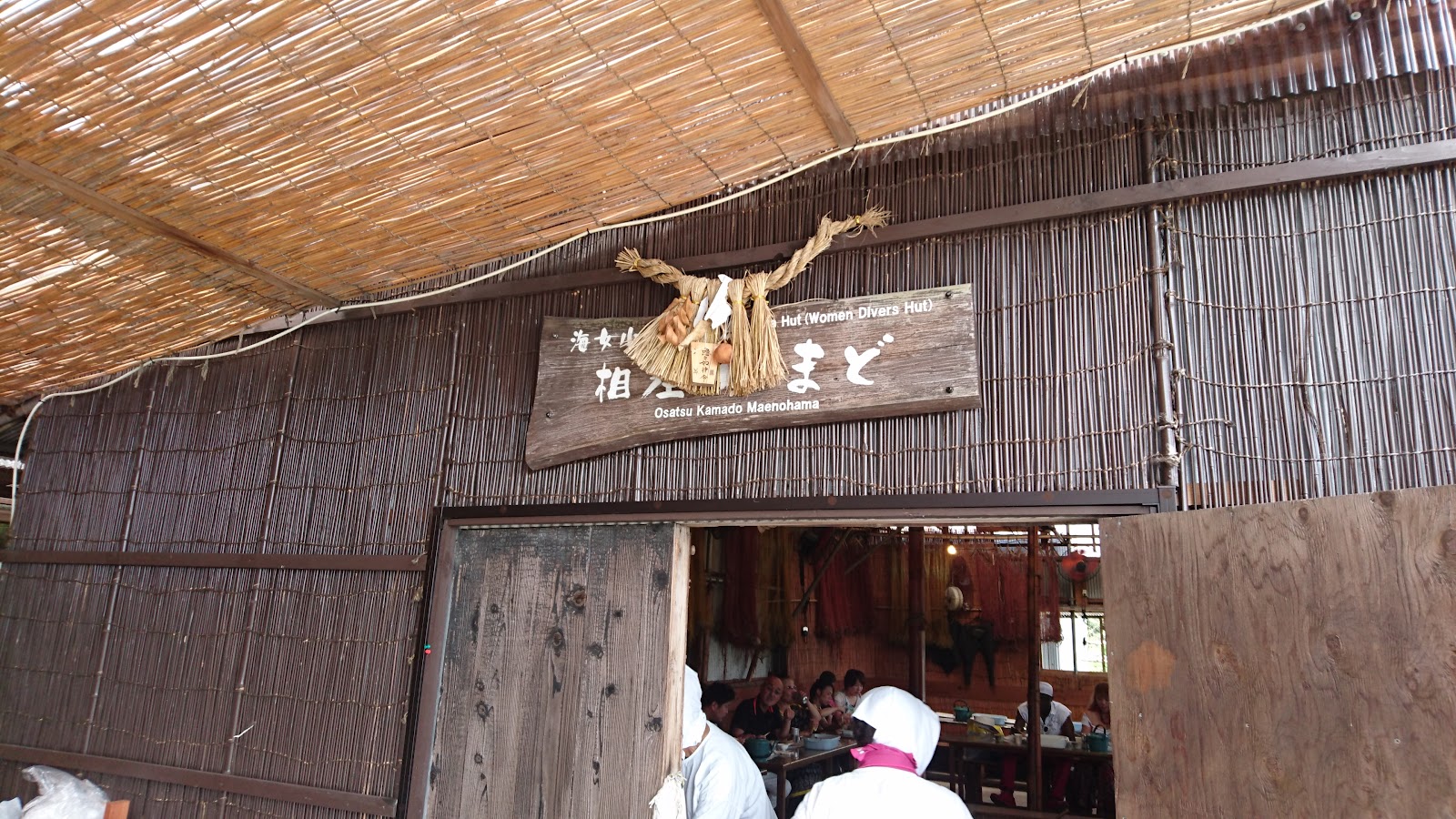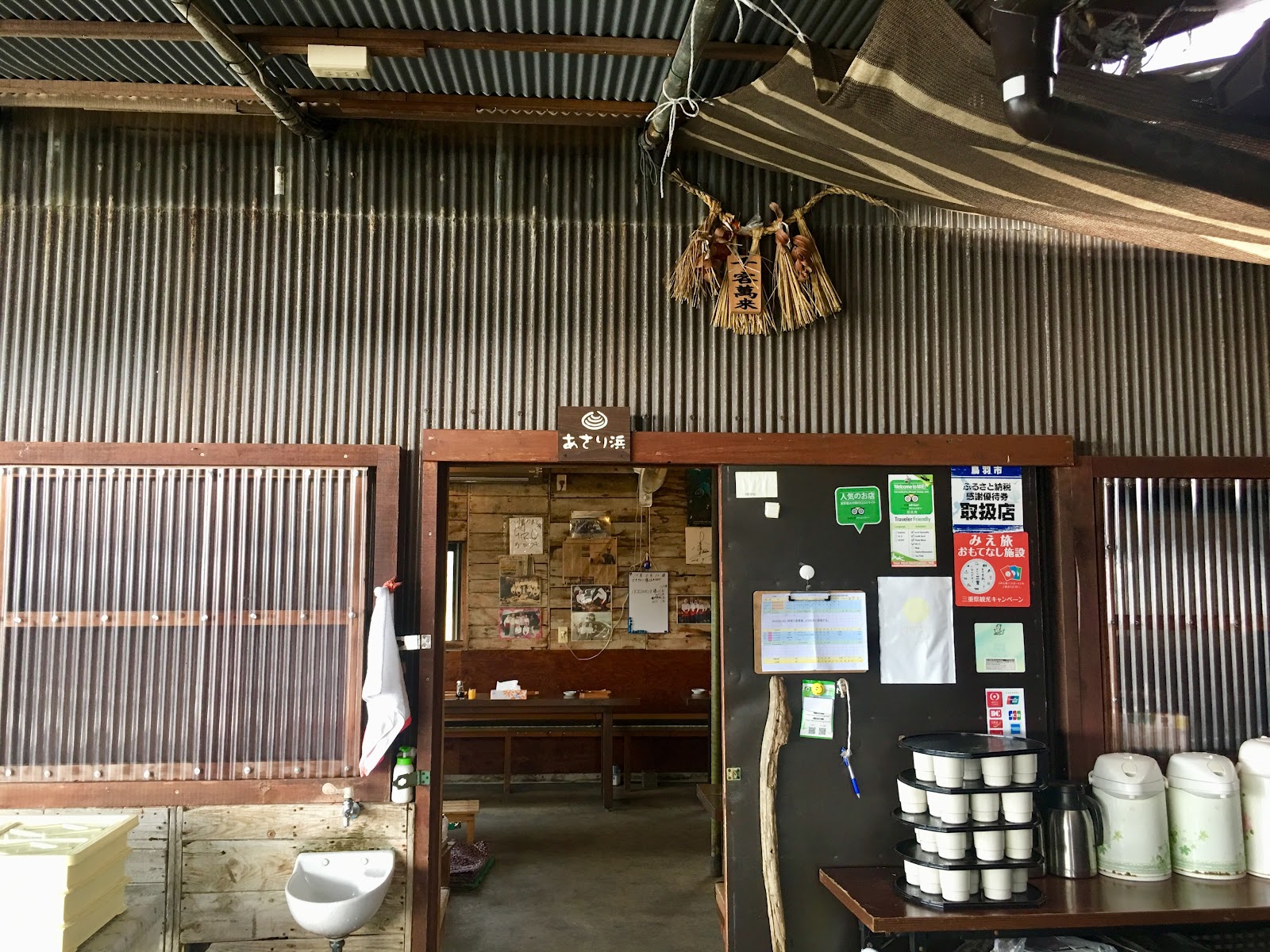
Traditional ama-diver hut in Osatsu where retired free-divers grill fresh shellfish over an open hearth and share their stories.
Hachiman Kamado is one of the ama huts of Osatsu, a fishing village on the Toba coast of the Shima peninsula, where visitors can eat freshly grilled seafood cooked by the traditional female free-divers known as ama. It is one of the most memorable food experiences in the whole Ise-Shima region, combining a hearty seafood feast with living contact with a fishing culture that stretches back more than a thousand years.
The ama are women who dive without breathing apparatus to gather abalone, turban shell, sea urchin, seaweed and other treasures from the seabed, surfacing with a distinctive whistling breath called isobue. Osatsu has one of the largest surviving communities of ama in Japan, and as the profession has aged, some of the divers have opened simple huts — amagoya — where they once rested and warmed themselves between dives, welcoming guests to share a meal around the hearth.
Inside, you sit around a sunken irori fireplace while the ama grill the catch in front of you: plump scallops still in the shell, sazae turban shells simmering in their own juices, squid, fish and, in season, the prized Ise-ebi spiny lobster. Everything is seasoned simply, letting the sweetness and brine of genuinely fresh shellfish speak for itself. The set menus vary with the season and the day's landings, and prices reflect the quality and the experience rather than fast-food economy, but few visitors leave anything but delighted.
What elevates the meal is the company. The ama, often working in traditional white diving garb, chat and joke with guests, explain their craft, and share stories of a hard, proud way of life passed down through generations of women. It is a warm, unhurried, deeply human encounter of a kind that is increasingly rare, and it gives the food a context no ordinary restaurant can match. The hut's atmosphere — smoke, sizzling shells, laughter and the smell of the sea — stays with people long after the flavours fade.
Osatsu lies on a remote stretch of the Toba coast, so getting there takes a little planning. Reservations are essential, both to guarantee a place and because the huts prepare food specifically for booked guests; many will advise on bus connections from Toba Station or arrange a shuttle. Bringing cash is wise, as card facilities can be limited. The setting is rustic by design, part of the authenticity rather than a shortcoming.
For travellers who want to go beyond the shrine and the polished sweets of Oharaimachi, a meal at an ama hut is the Ise-Shima region at its most elemental — the sea, the fire, and the women who have harvested these waters for centuries. Pair it with a visit to Toba's aquarium or the pearl island, and you come away with a rounded sense of a coast where spiritual tradition and hard coastal livelihoods have always gone hand in hand.
A local's tip
Book ahead and ask about the shuttle — the huts are remote and reservations are essentially required. Bring cash, and come hungry for grilled scallops, turban shell and Ise-ebi in season.
Best time to visit
Lunch; reserve in advance
Getting there
In the Osatsu fishing district of Toba, on the Shima peninsula. From Toba Station take a local bus toward Osatsu, or arrange the hut's shuttle when booking; a taxi from the station takes about 15 minutes.
Good to know
- Seating
- Restrooms
- Reservations
Plan the whole trip offline
Hachiman Kamado Ama Hut is one of many places in the Real Japan app — with turn-by-turn directions, nearby spots and full offline maps you can use with no signal.