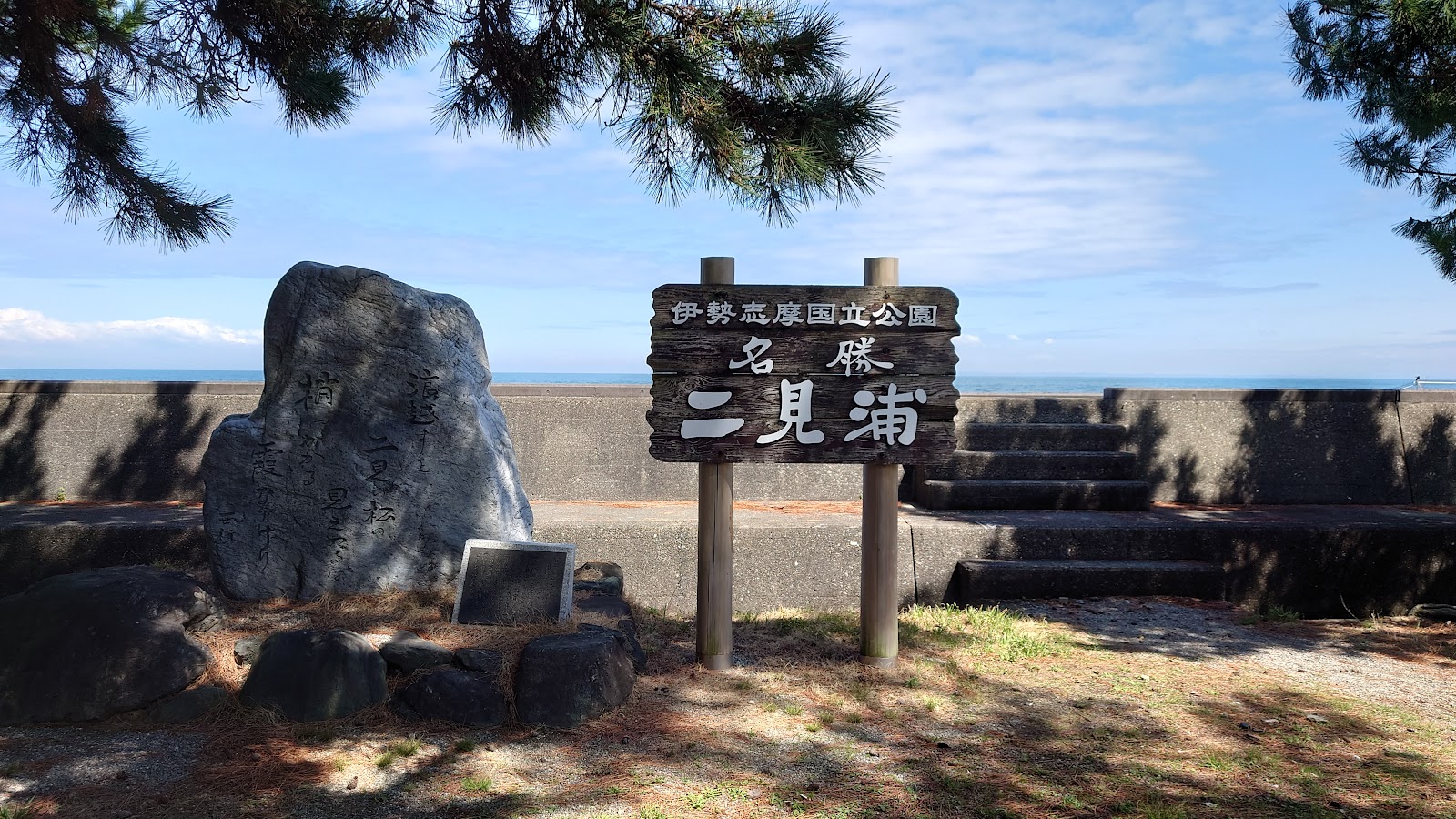
A nostalgic seaside approach street of old inns and frog-charmed shops leading to Futami's Married Couple Rocks.
Futamiura Omotesando is the atmospheric approach road that links the little seaside town of Futami to Futami Okitama Shrine and its famous Meoto Iwa, the Married Couple Rocks. Running down toward the coast from near Futaminoura Station, this modest but characterful street preserves the flavour of an old pilgrimage and resort town, and it makes a charming prelude or coda to a visit to one of Ise-Shima's most photographed sights.
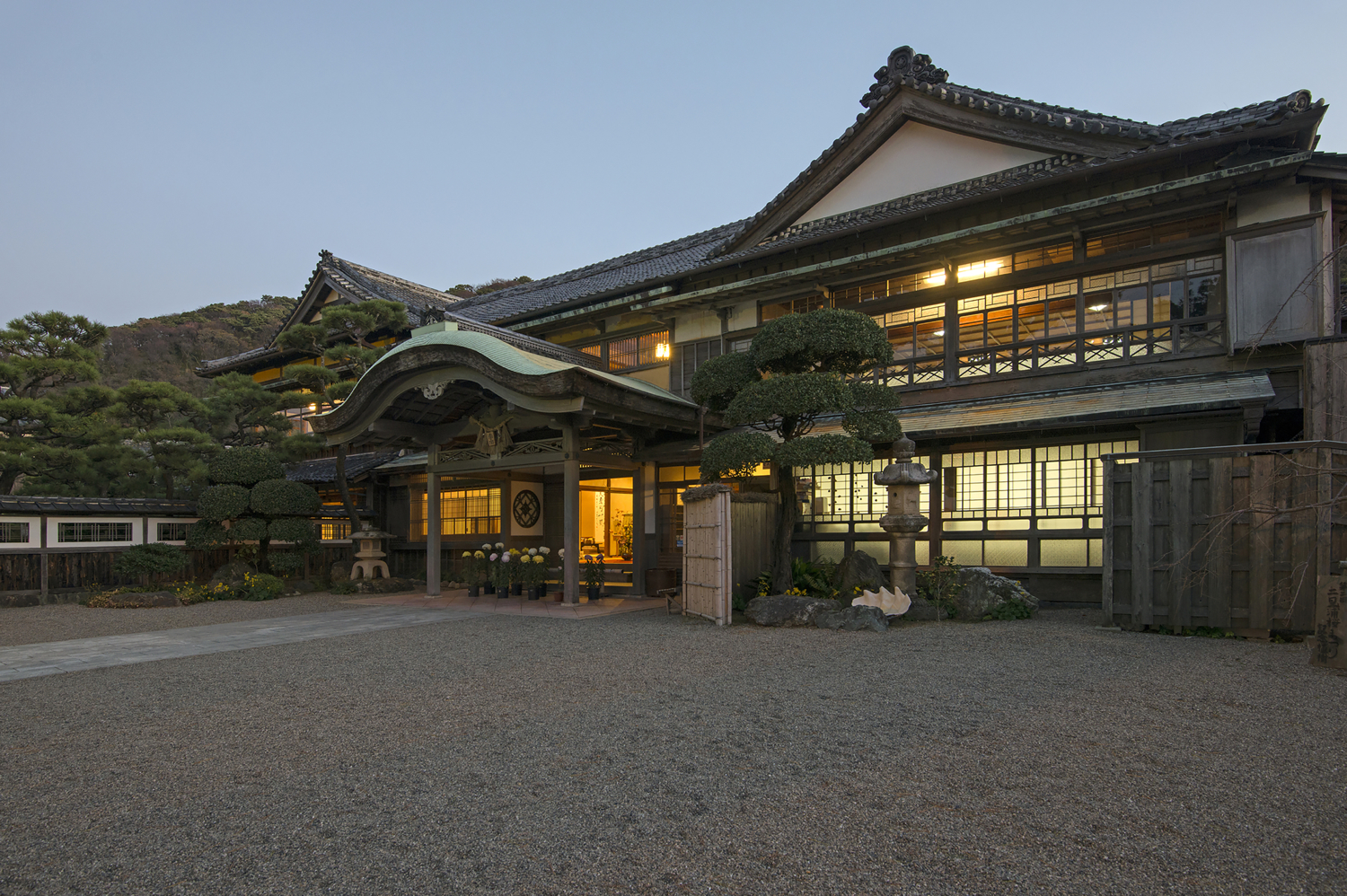
Futami has a long history as a place of ritual purification. Pilgrims bound for Ise Jingu traditionally stopped here first to cleanse themselves in the sea before continuing to the shrine, and the town grew up to serve them with inns, bathhouses and shops. In the Meiji and early twentieth-century periods it became a fashionable seaside resort, and several grand old ryokan and Western-influenced buildings from that era still stand along or near the approach, lending the street a gently faded, nostalgic elegance quite different from the polished shrine towns nearby.
Walking the omotesando, you pass a string of small souvenir shops, sweet sellers, cafes and inns, many decorated with frogs. The frog, or kaeru, is a pun on the Japanese word for 'to return', and Futami Okitama Shrine is closely associated with these amphibian messengers of the deity Sarutahiko; shops sell frog charms and figurines said to help travellers, lost items and good fortune find their way home. This playful motif, repeated on signs, statues and trinkets all the way to the shore, gives the street a distinctive, slightly whimsical identity.
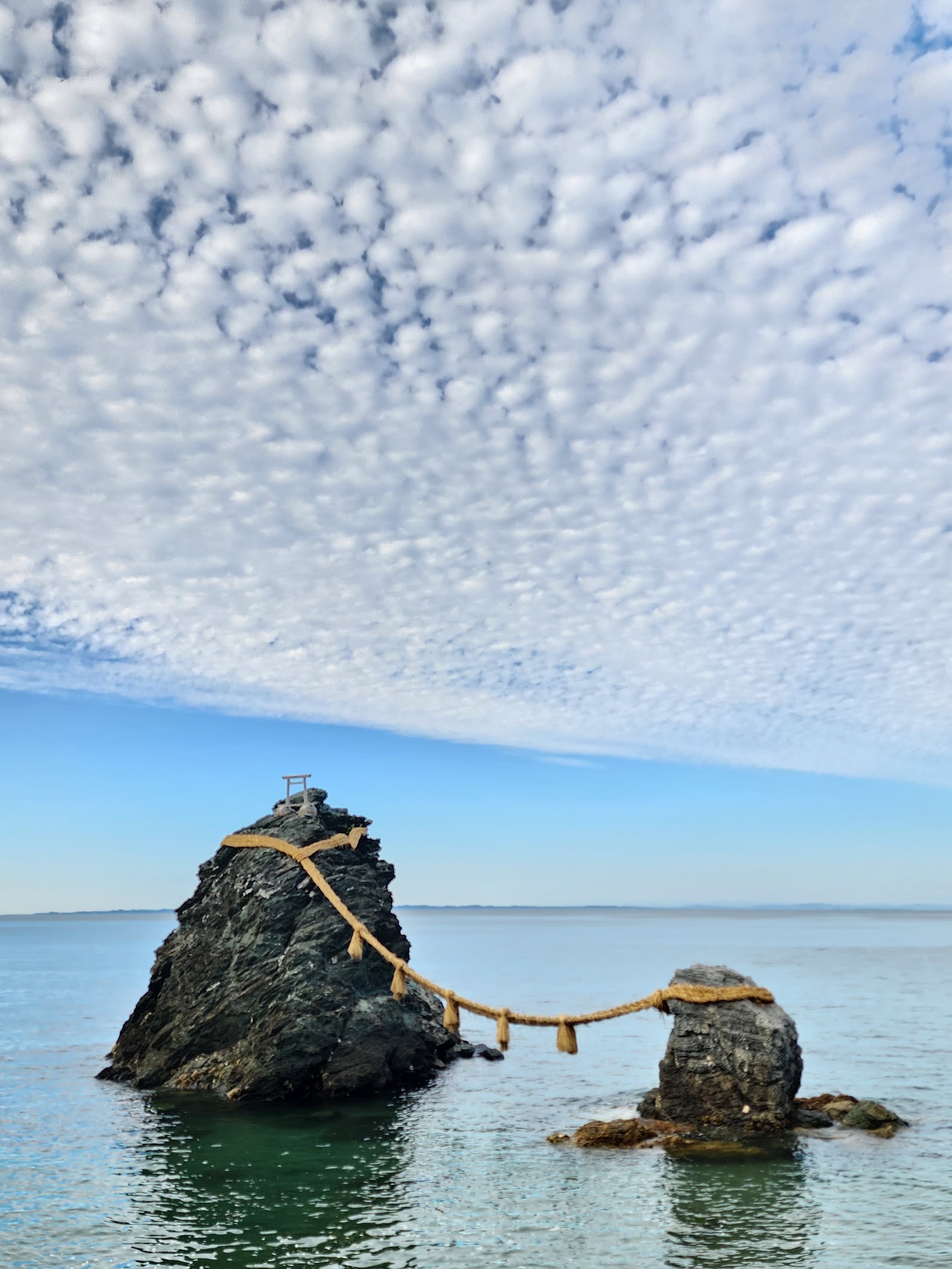
At the end of the approach lies the coast, where Futami Okitama Shrine looks out over Meoto Iwa — two sea rocks joined by a heavy sacred rope (shimenawa), representing the union of husband and wife and the creator deities Izanagi and Izanami. At dawn in the warmer months the sun rises between the rocks, and in clear conditions distant Mount Fuji can even be glimpsed beyond them, making the walk down the omotesando in the pre-dawn dark a small adventure rewarded by a memorable sunrise.
For visitors, the district is best combined with the rocks themselves. Come early to catch the sunrise and the quiet morning light, then browse the shops on the way back as the town wakes. The streets are always open and free, while shops keep daytime hours. Sturdy shoes are unnecessary — the walk is short and flat — but a jacket is welcome for a chilly seaside dawn. To reach Futamiura, take the JR Sangu Line to Futaminoura Station and walk about twelve minutes toward the coast, following signs to Meoto Iwa. Small, salt-aired and steeped in the old rituals of purification and safe return, Futamiura Omotesando is a gentle, characterful corner of the Ise-Shima coast.
A local's tip
Look for the retro frog motifs everywhere — Futami is associated with frogs (kaeru, a pun on 'return'), and the shops sell frog charms said to help travellers come home safely.
Best time to visit
Early morning, paired with sunrise at Meoto Iwa
Getting there
About a 12-minute walk from Futaminoura Station toward the coast. The old approach road runs from the town down to Futami Okitama Shrine and Meoto Iwa.
Good to know
- Cafes
- Restrooms
- Souvenir shops
Plan the whole trip offline
Futamiura Omotesando is one of many places in the Real Japan app — with turn-by-turn directions, nearby spots and full offline maps you can use with no signal.