A striking hilltop keep marking the site of Toyotomi Hideyoshi's last great castle and the birthplace of the Momoyama era.
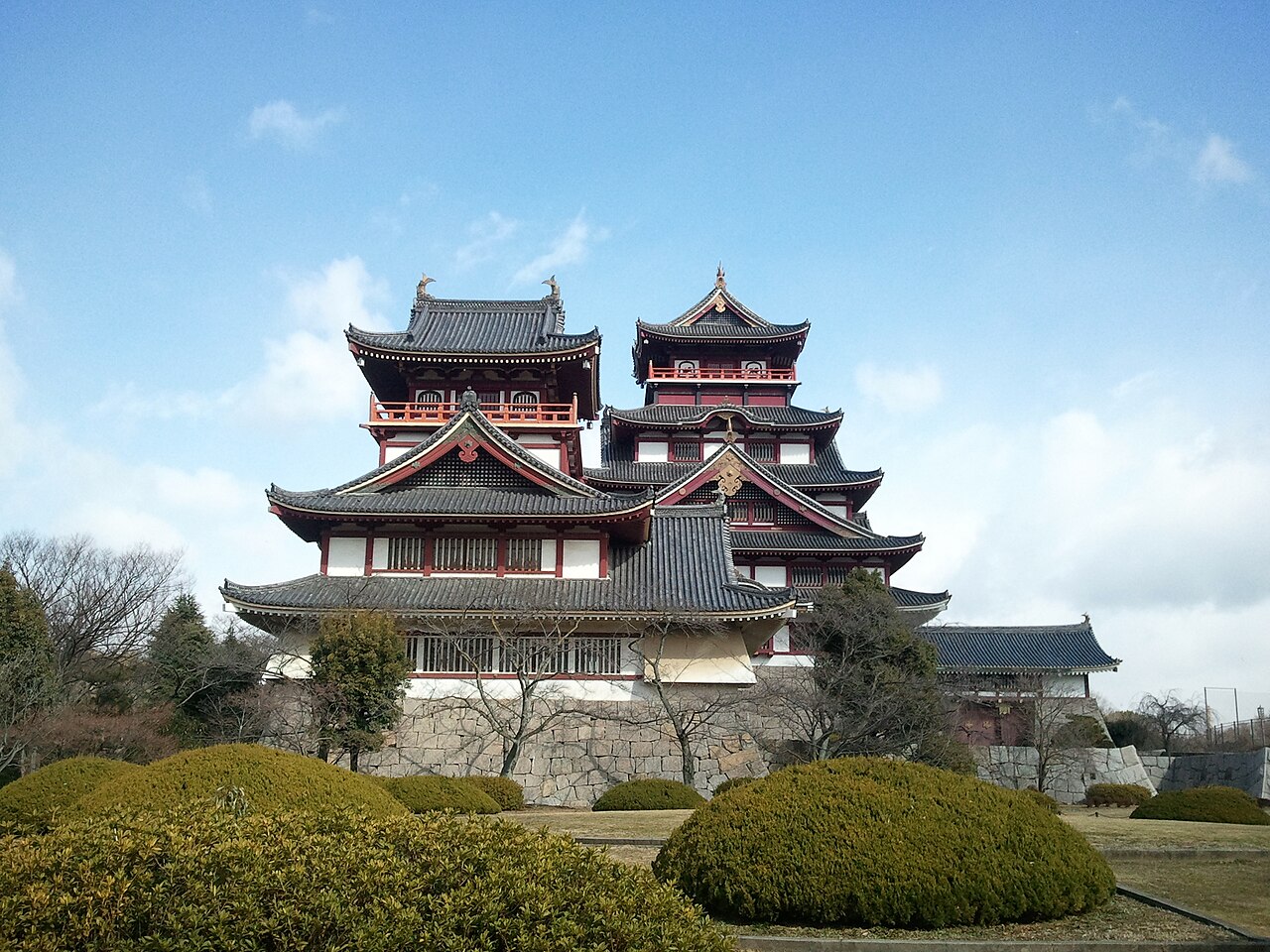
Fushimi Momoyama Castle stands on a wooded hill in southern Kyoto, its bright white walls and green-tiled roofs rising above the cherry trees. The castle is one of the most historically resonant sites in the city, for it marks the location of the fortress built by Toyotomi Hideyoshi, the warlord who unified Japan in the late 16th century. So central was this castle to its age that historians named an entire cultural period after the hill on which it stood: the Azuchi-Momoyama period, famous for its bold, gilded, exuberant art and architecture.
Hideyoshi first built a castle here in the 1590s as a luxurious retirement residence, only for it to be badly damaged by a great earthquake in 1596. He promptly rebuilt it on higher ground, and it was in this castle that he died in 1598. After his death the fortress passed into the turbulent politics that led to the Battle of Sekigahara. In 1600 the castle was besieged and its defenders, loyal to Tokugawa Ieyasu, held out and then died in a famous last stand; blood-soaked floorboards from the keep were later, according to tradition, enshrined as ceiling boards in several Kyoto temples as a memorial. Tokugawa Ieyasu was inaugurated as shogun at Fushimi in 1603 before the castle was eventually dismantled, its stones and materials reused elsewhere, and the hill given over to the tomb of Emperor Meiji centuries later.
The tower visitors see today is not the original. It is a ferro-concrete replica built in 1964 as the centrepiece of a now-closed amusement park. Though the reconstruction is not archaeologically accurate and cannot be entered, it is a handsome, photogenic structure, a five-storey main keep with an attached smaller tower, and it gives a real sense of the grandeur of the Momoyama style even in imitation. The surrounding grounds are a free public park, criss-crossed with paths and planted with hundreds of cherry trees that draw local hanami crowds in early April.
The experience is that of a pleasant, slightly out-of-the-way hilltop stroll rather than a museum visit. From the station it is an uphill walk of about fifteen minutes through the park, moderately steep in places, to reach the keep. Because the tower interior is closed, most visitors simply admire the exterior, photograph it against the cherry blossoms or blue sky, and enjoy the quiet greenery, a striking contrast to the crowds of central Kyoto. Nearby lie the solemn precincts of the Meiji Emperor's mausoleum, reached by a long ceremonial staircase, adding a note of imperial gravity to the area.
To get there, take the JR Nara line from Kyoto Station to Momoyama Station, about ten minutes and covered by the Japan Rail Pass, or the Keihan line to Momoyama or Fushimi-Momoyama Station. The castle pairs naturally with a day exploring the wider Fushimi district, home to Fushimi Inari Taisha and the historic sake breweries along the canals of Chushojima.
A local's tip
The current tower is a 1960s replica and cannot be entered, but the hilltop park and its cherry avenues make the climb worthwhile in early April.
Best time to visit
Spring for cherry blossoms in the surrounding park
Getting there
Take the JR Nara line to Momoyama Station or the Keihan line to Momoyama Station, then walk uphill about 15 minutes through the park to the castle. From Kyoto Station the JR ride is about 10 minutes.
Good to know
- Parking
- Restrooms
Plan the whole trip offline
Fushimi Momoyama Castle is one of many places in the Real Japan app — with turn-by-turn directions, nearby spots and full offline maps you can use with no signal.