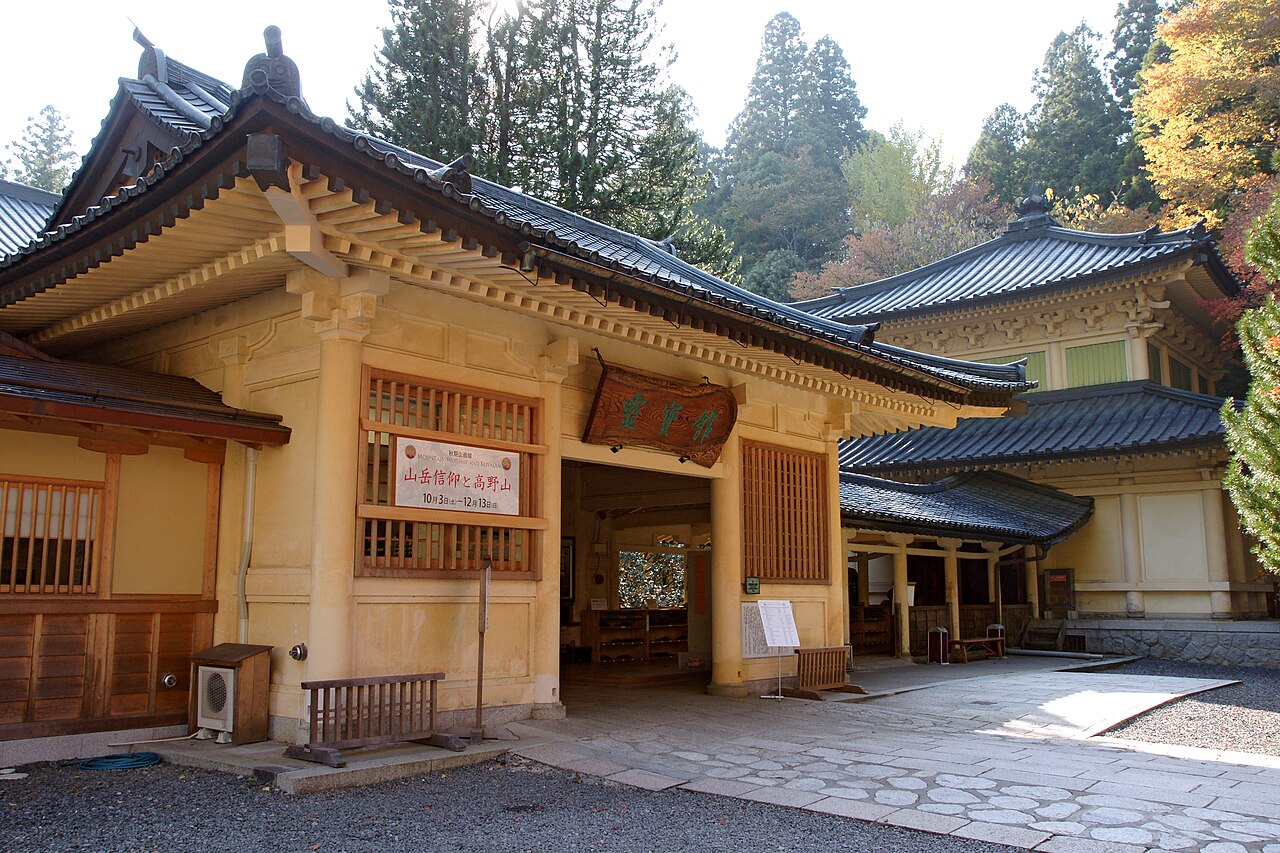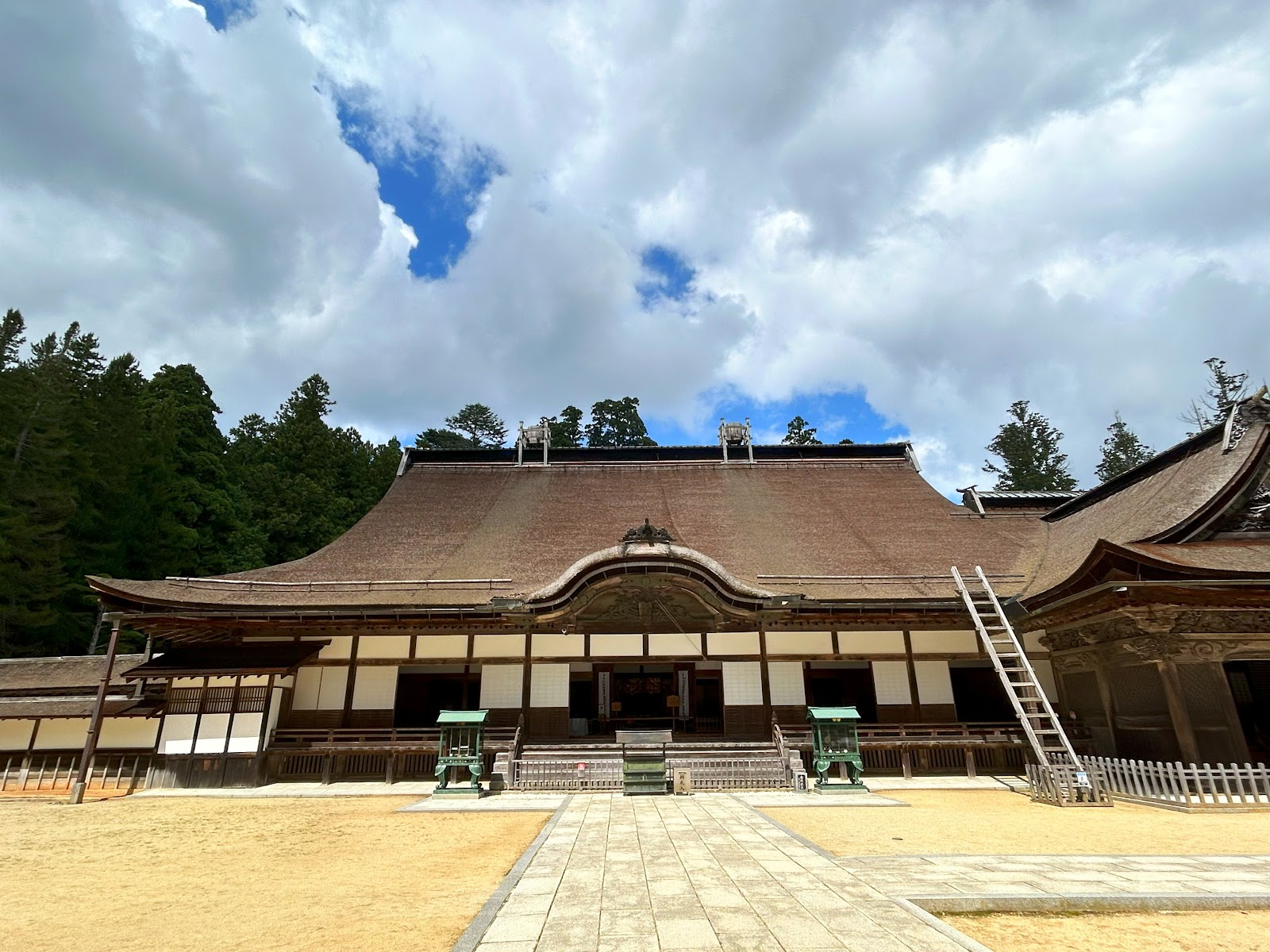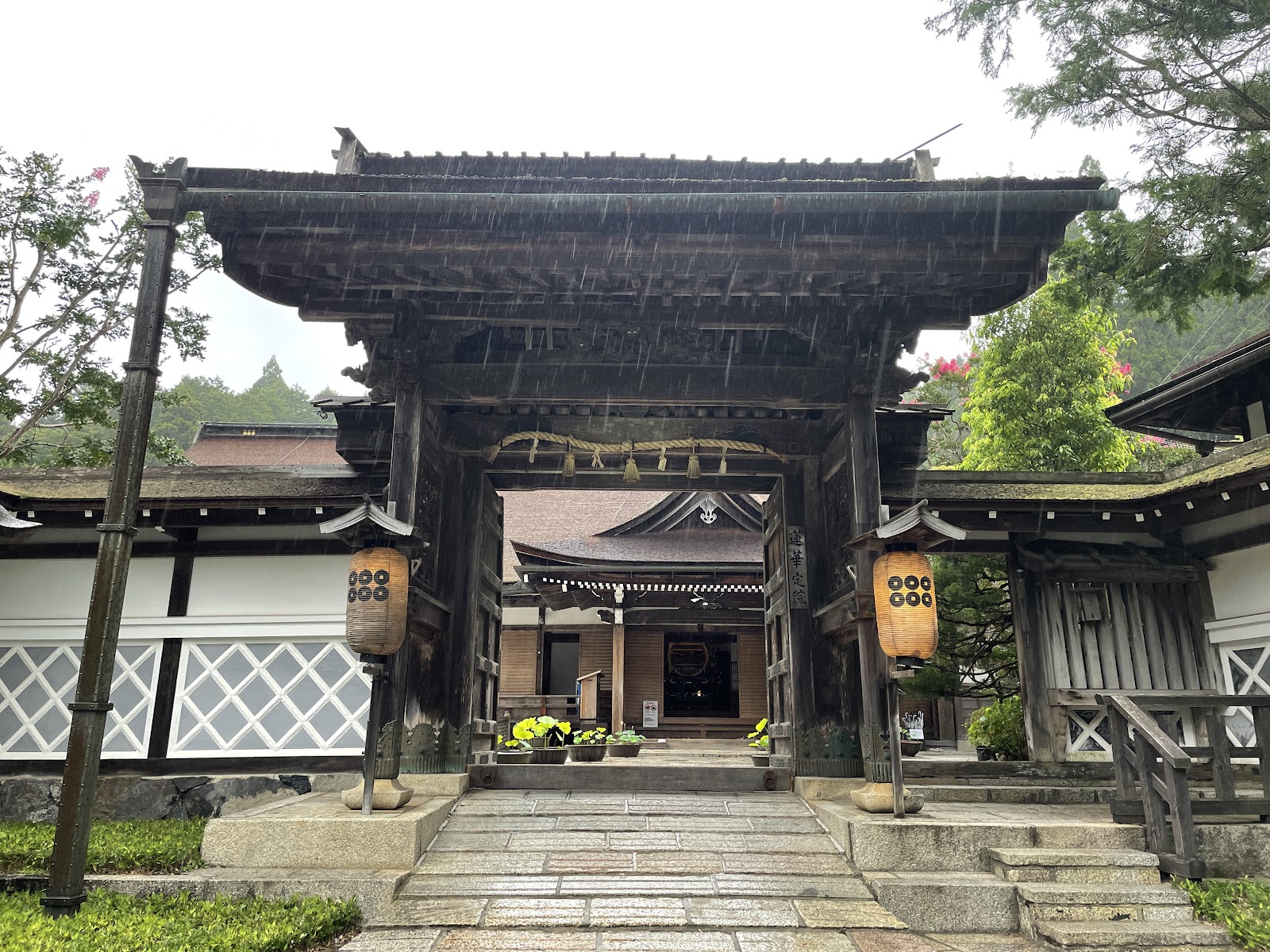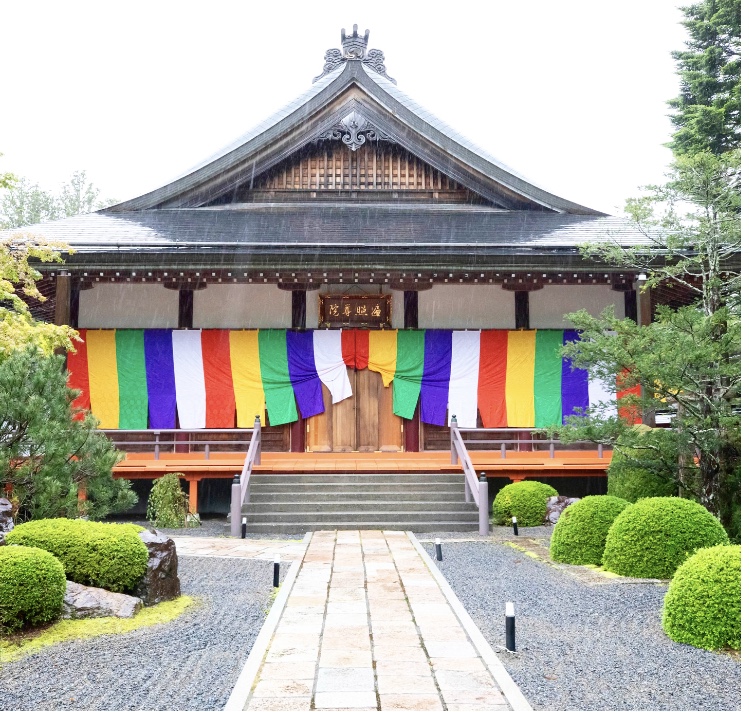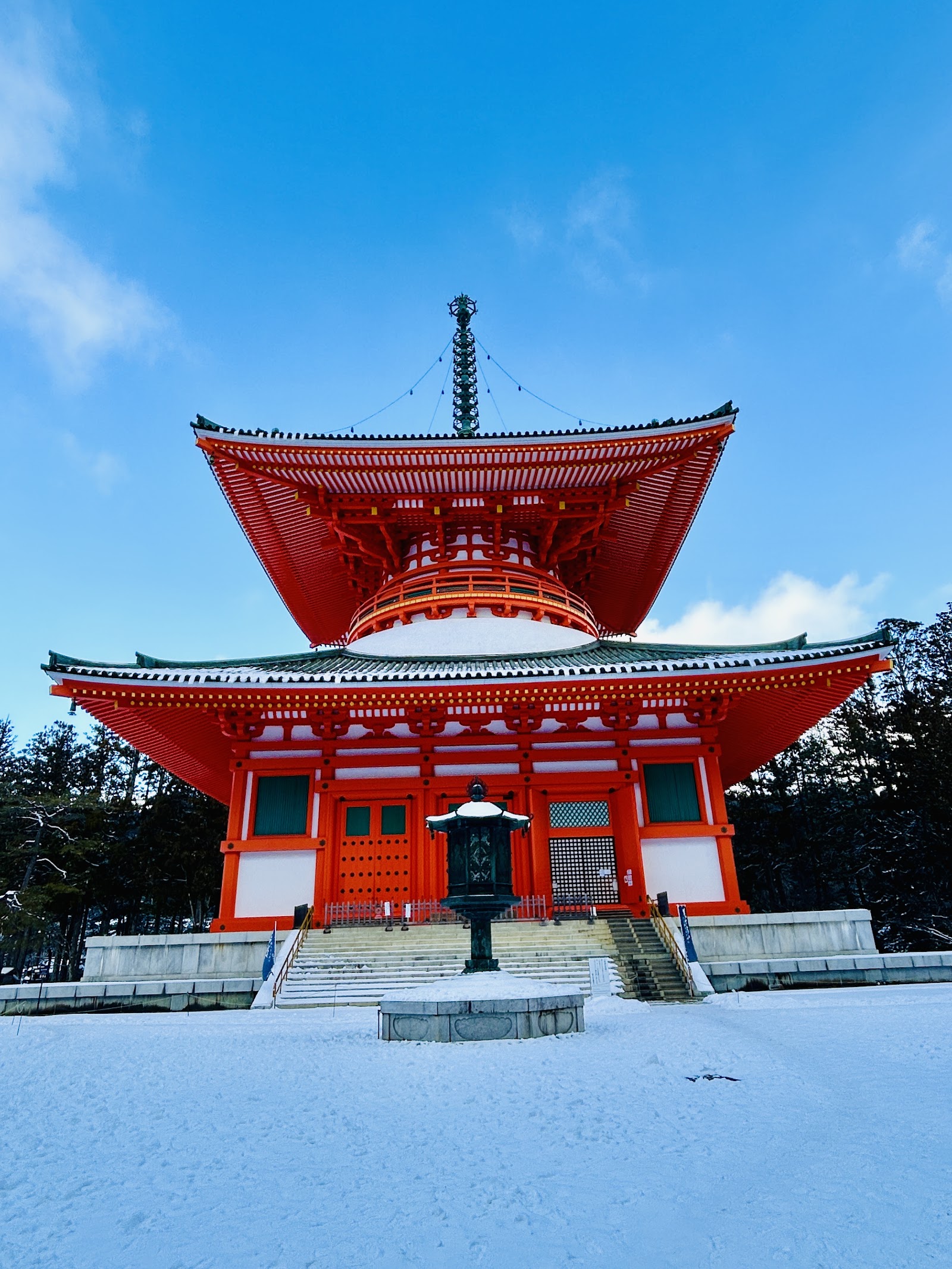
Koyasan's sacred central temple complex, crowned by the towering vermilion Konpon Daito pagoda that houses a three-dimensional mandala.
Danjo Garan is one of the two most sacred precincts on Mount Koya, the other being Okunoin, and together they anchor the whole religious geography of the mountain. Garan is a Sanskrit-derived word for a monastic complex, and this is the very ground where Kobo Daishi began building Koyasan after the emperor granted him the mountain in 816. Walking among its halls and pagodas is walking through the founding blueprint of Japanese esoteric Buddhism.
The complex gathers nearly twenty structures across a broad, cedar-shaded plateau. Its undisputed centrepiece is the Konpon Daito, the Great Stupa, a colossal vermilion pagoda rising almost 49 metres. Though the current concrete reconstruction dates from 1937, it follows Kukai's original vision of a tahoto-style pagoda meant to symbolise the cosmic centre of the Shingon universe. Inside, a rare three-dimensional mandala unfolds: a central gilded statue of Dainichi Nyorai, the Cosmic Buddha, surrounded by four further Buddhas, with the sixteen bodhisattvas painted on the surrounding pillars, so that visitors literally stand inside a mandala made solid.
Beside it stands the Kondo, the main hall, where the mountain's most important ceremonies are held. The present building, rebuilt in 1932 after fire, enshrines a Yakushi Nyorai healing Buddha. Scattered across the grounds are other treasures: the small, elegant Miedo hall closed to the public; the Fudo-do, a delicate structure from the Kamakura period and one of the oldest buildings on the mountain, designated a National Treasure; and the Sanko-no-matsu, a three-needled pine said to have grown from a sacred pine needle thrown by Kukai from China to mark where he should found his temple.
The Garan is especially photogenic in the changing light. In the late afternoon the setting sun ignites the vermilion pagoda against dark cedars, while spring brings cherry blossom to the plateau and autumn drapes it in crimson maple. Because the grounds are open and free at all hours, many visitors return at dusk when the crowds thin and the great pagoda is quietly lit.
Danjo Garan sits at the heart of central Koyasan, an easy walk from Kongobuji, the Reihokan treasure museum and the Daimon gate, making it simple to weave into a half-day tour of the mountain's core. Entry to the grounds costs nothing; a small fee allows you inside the Konpon Daito and Kondo, both well worth it. For anyone trying to grasp the ideas behind Shingon Buddhism, standing beneath the Great Stupa, at the symbolic centre of the cosmos, is the clearest lesson Koyasan offers.
A local's tip
Step inside the Konpon Daito to see the three-dimensional mandala of gilded Buddha statues and pillar paintings, a rare chance to stand literally within a mandala.
Best time to visit
Late afternoon, when the vermilion pagoda glows
Getting there
From Koyasan Station take the Nankai Rinkan bus to Kondo-mae or Senjuinbashi (about 10 minutes). The complex is a short walk west of Kongobuji.
Good to know
- Wi-Fi
- Restrooms
Plan the whole trip offline
Danjo Garan is one of many places in the Real Japan app — with turn-by-turn directions, nearby spots and full offline maps you can use with no signal.