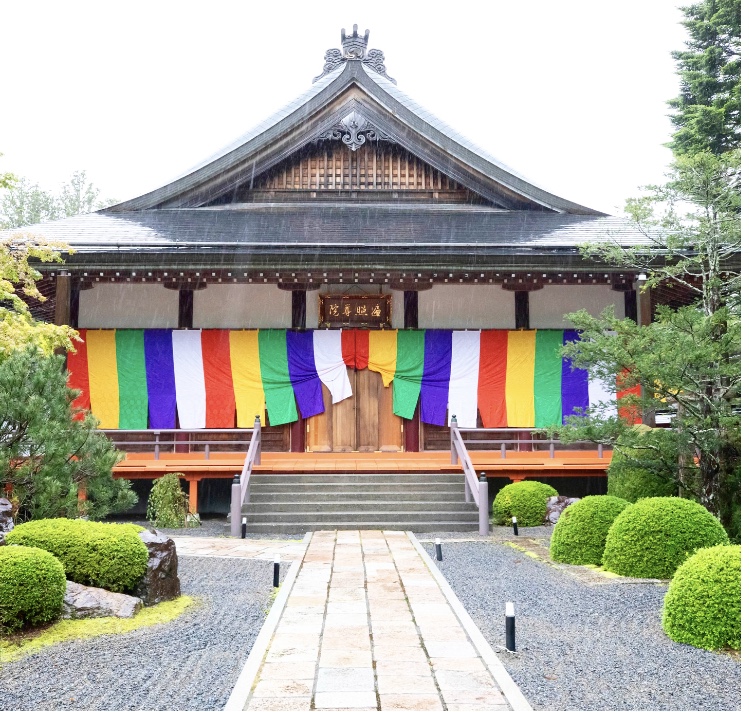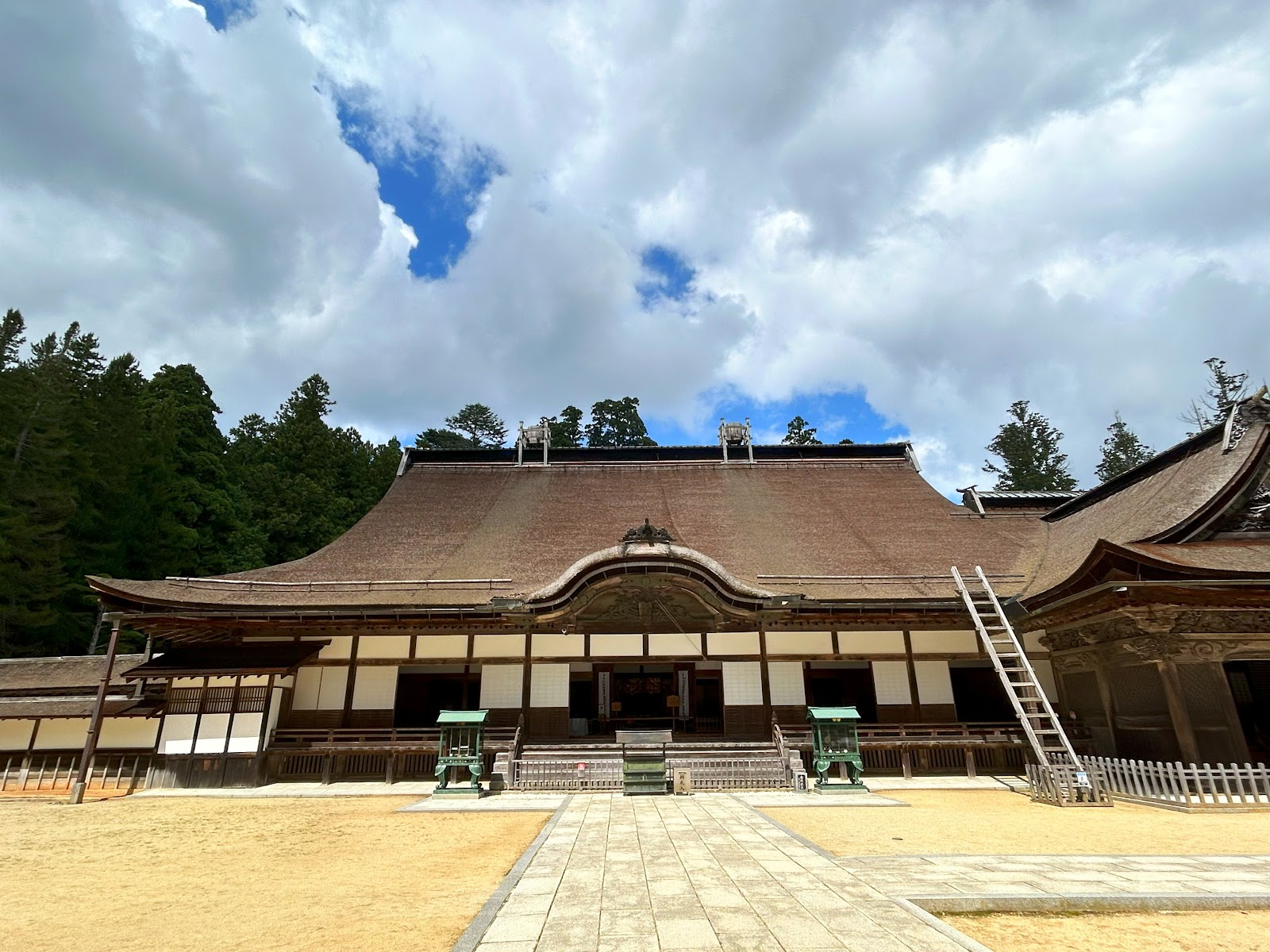
The head temple of Shingon Buddhism, famous for its painted sliding screens and Japan's largest rock garden, Banryutei.
Kongobuji is the ecclesiastical head temple of the Koyasan Shingon sect and the administrative centre of the entire mountain, overseeing more than 3,600 affiliated temples across Japan. Its name means Temple of the Diamond Mountain Peak, a phrase drawn from a key Shingon sutra. For visitors, it is the grandest and most rewarding of Koyasan's built temples, combining aristocratic interiors, dramatic screen paintings and a rock garden of record-breaking scale.
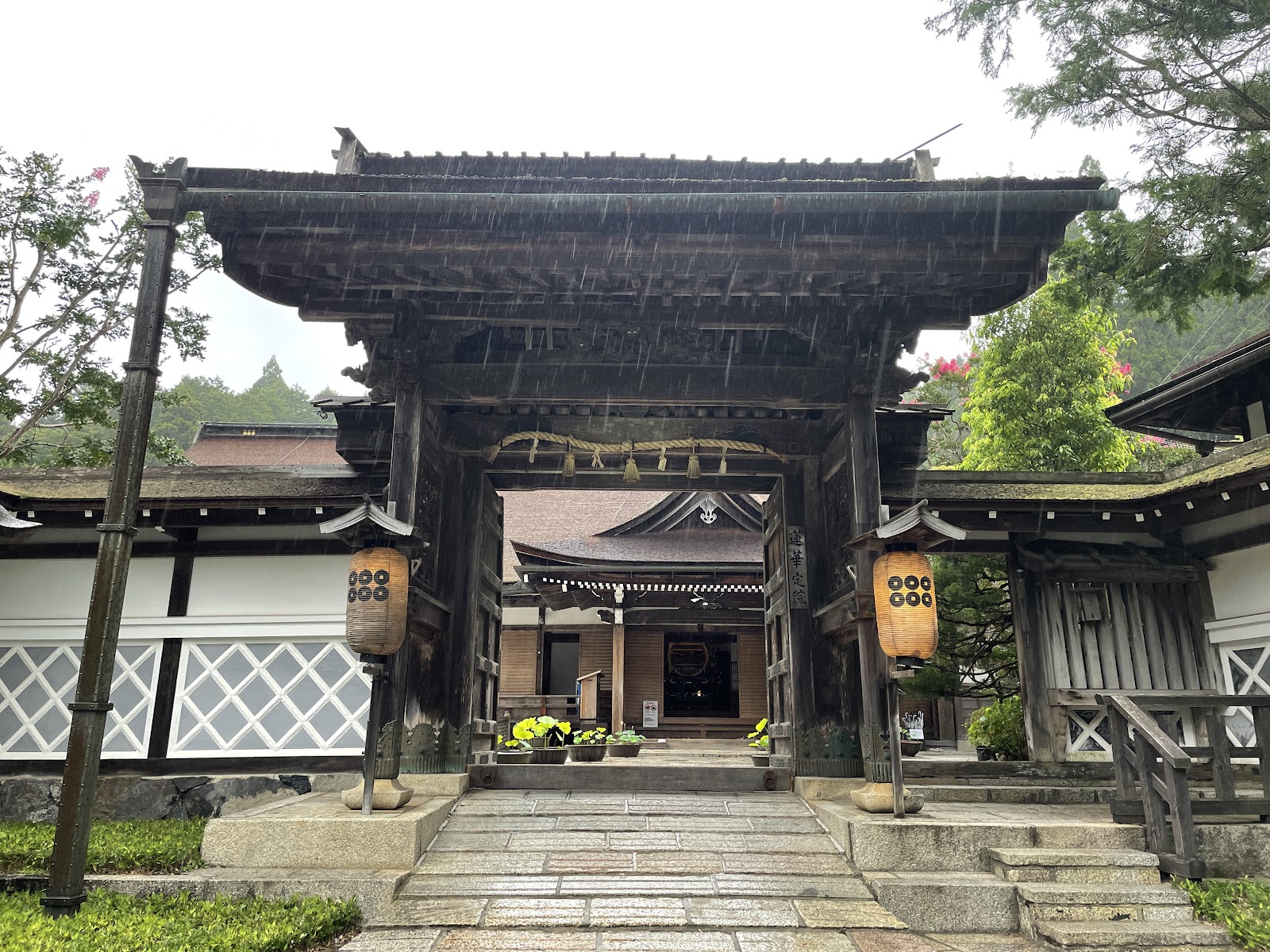
The present temple traces its origins to 1593, when the warlord Toyotomi Hideyoshi commissioned a hall in memory of his mother; it was later merged with a neighbouring temple to form Kongobuji as it stands today. The main gate and cedar-shingled roofs, weighted with stones in the traditional Koyasan style, give the complex a restrained, weathered dignity.
Inside, visitors move through a series of grand reception rooms whose fusuma sliding doors are decorated with gold-leaf paintings by artists of the Kano school. The Willow Room, or Yanagi-no-ma, carries a darker history: it is the room where Toyotomi Hidetsugu, Hideyoshi's nephew and one-time heir, was ordered to commit ritual suicide in 1595. Other chambers depict cranes, plum blossom and the four seasons in shimmering detail. Deeper in the building lies the largest temple kitchen on the mountain, with enormous hearths and rice cauldrons once capable of feeding two thousand monks.
The temple's showpiece is Banryutei, the Banryu-tei rock garden, laid out in 1984 and, at some 2,340 square metres, the largest rock garden in Japan. One hundred and forty granite stones, quarried in Kukai's home province of Shikoku, are arranged in raked white gravel from Kyoto to suggest a pair of dragons emerging from a sea of cloud to guard the inner sanctuary. Benches along the veranda invite long, quiet contemplation, and the free bowl of tea and rice cracker offered to visitors makes it easy to linger.
Kongobuji sits at the very centre of Koyasan, a few minutes on foot from the Danjo Garan complex, and is easily combined with the rest of the mountain's core sights in a single morning. The interior is entered in socks or bare feet, so slip-on shoes are practical, and photography is permitted in the garden though restricted in some painted rooms.
As the beating heart of Shingon administration for centuries, Kongobuji offers something the forest paths of Okunoin do not: a glimpse of the wealth, artistry and political intrigue that shaped Japanese Buddhism at its height. It is an essential first stop for understanding why an entire mountain became a holy city.
A local's tip
Sit for the free tea and rice cracker served in the great hall, then find Banryutei, Japan's largest rock garden, hidden at the back of the temple.
Best time to visit
Morning, when tour groups are fewer
Getting there
From Koyasan Station take the Nankai Rinkan bus to Kongobuji-mae or Senjuinbashi (about 10 minutes), then a short walk. Central Koyasan is compact and walkable.
Good to know
- Wi-Fi
- Restrooms
- Tea service
Plan the whole trip offline
Kongobuji is one of many places in the Real Japan app — with turn-by-turn directions, nearby spots and full offline maps you can use with no signal.