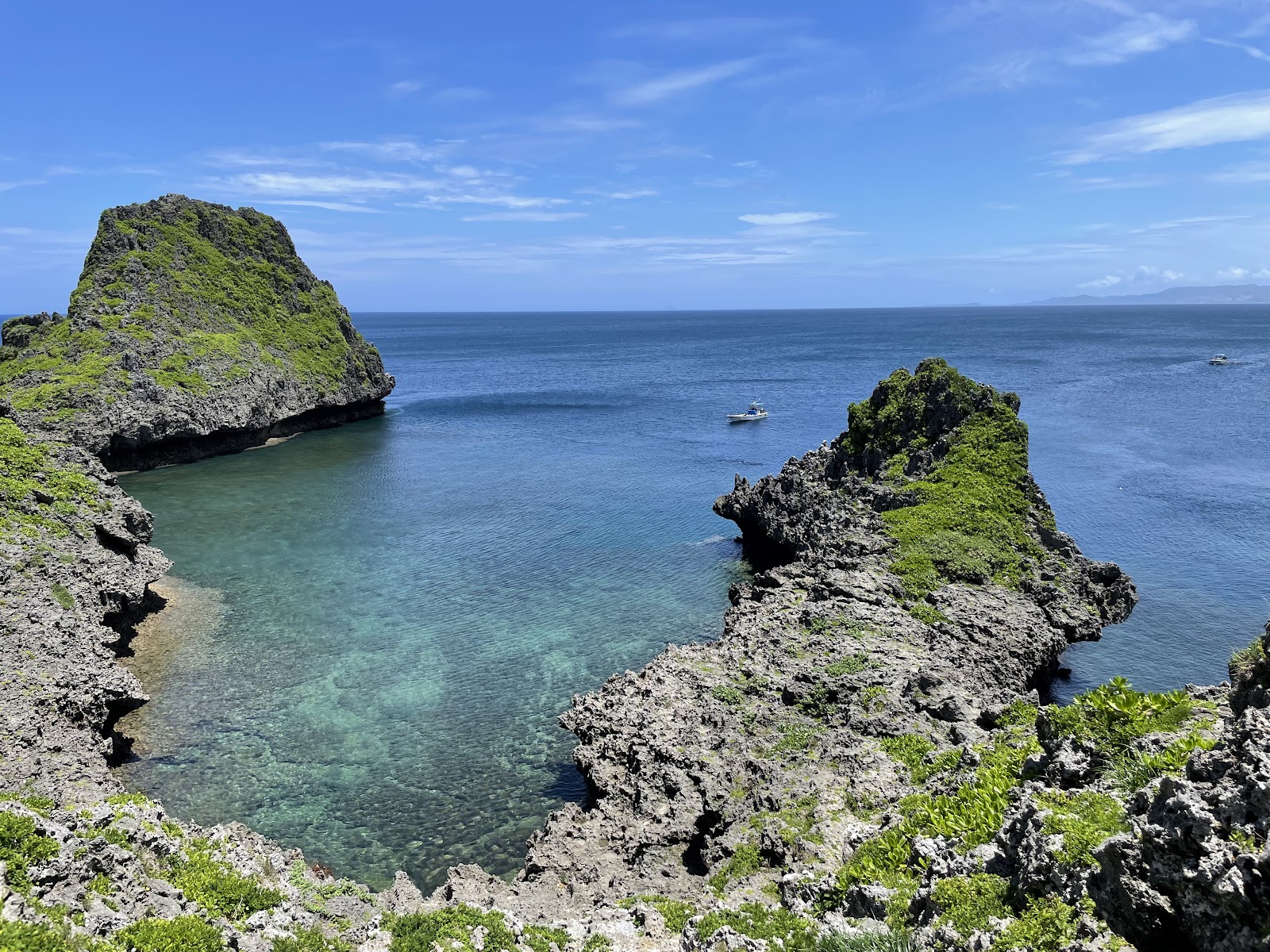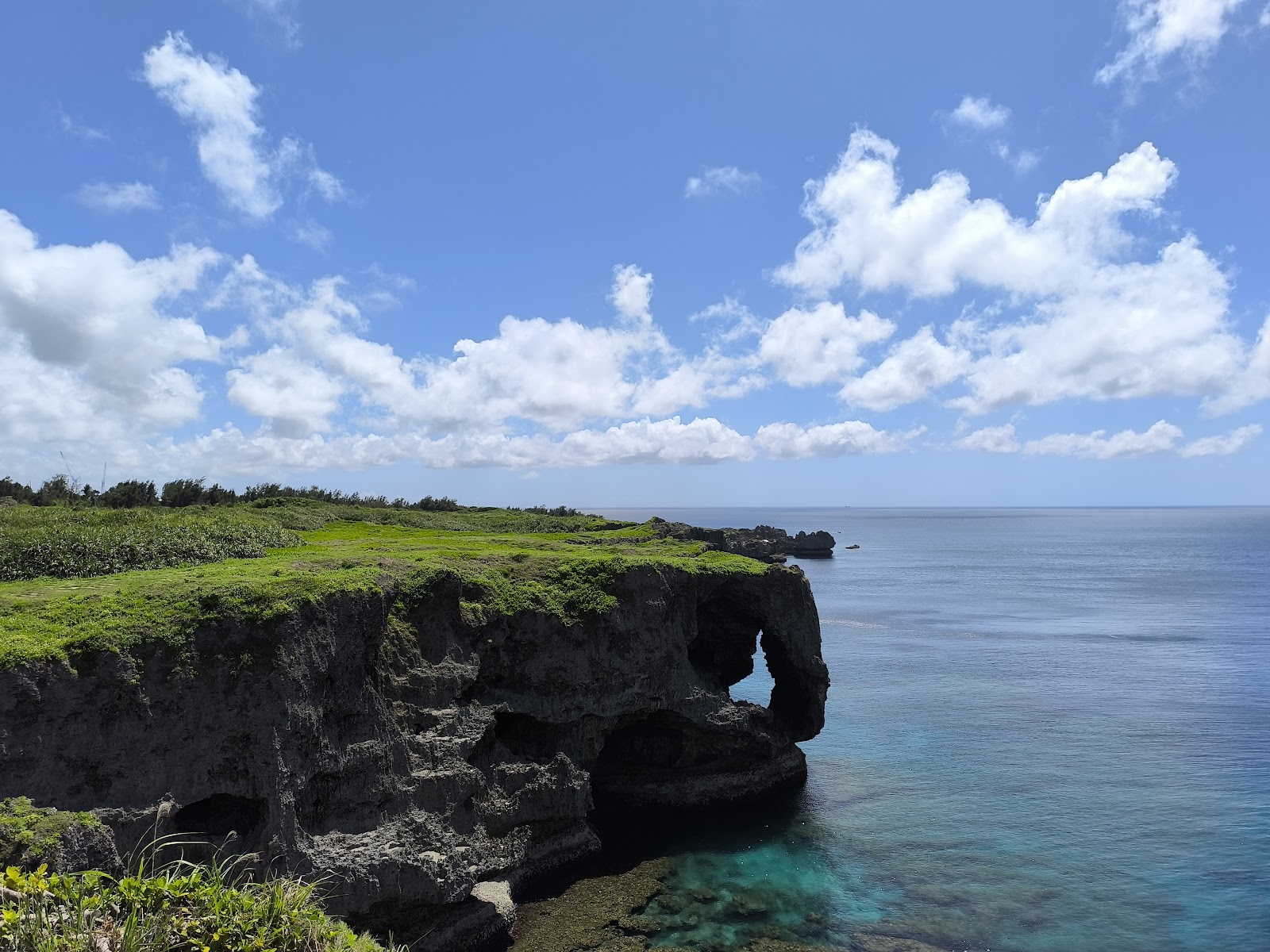
A dramatic coral cliff on Okinawa's west coast whose elephant-trunk rock arch frames the turquoise sea.
Cape Manzamo is one of Okinawa's most photographed natural landmarks, a rugged headland of coral limestone jutting into the brilliant blue of the East China Sea on the island's west coast. Its fame rests on a single unforgettable feature: a cliff eroded into the shape of an elephant's trunk dipping toward the water, forming a natural arch that frames the sea and sky. Standing on the grassy clifftop with the waves crashing far below and the turquoise ocean stretching to the horizon, visitors quickly understand why this spot has become an icon of the island.
The cape's name carries a piece of Ryukyuan history. Manzamo is said to mean a field, or mo, large enough to seat ten thousand people, a phrase attributed to a king of the Ryukyu Kingdom who, on visiting the broad grassy plateau atop the cliffs, declared it fit for a vast gathering. That royal association adds a layer of cultural resonance to what is primarily a spectacular piece of natural scenery, and it reminds visitors that these coasts were admired long before the age of tourism.
A well-maintained loop path runs around the headland, allowing visitors to view the elephant-trunk rock from several angles and to take in the sweeping coastline of the Onna resort area, dotted with hotels and beaches. The grassy plateau is fringed with hardy coastal plants and native flora, and interpretive signs point out the geology of the uplifted coral and the ecology of the cliffs. On clear days the water below glows in astonishing gradients of turquoise and deep blue, and you can often see the reef patterns beneath the surface.
The experience is easy and quick, ideal as a stop on a drive up the west coast. The main paths are flat and largely accessible, with railings guarding the cliff edges, and a visitor centre with a cafe, shop and restrooms serves the site. Most people spend around forty-five minutes walking the loop and taking photographs. Because Cape Manzamo lies well north of Naha in the Onna area, it is most easily reached by car, though highway buses serve the region for those without one, and it combines well with the beaches, resorts and the Churaumi Aquarium further north.
The cape is spectacular at any time of day, but it is above all a sunset destination. As the sun sinks toward the sea beyond the arch, the sky and water turn gold and rose, and the silhouette of the elephant-trunk rock against the glowing horizon is one of Okinawa's great scenes. Sunrise and clear midday light are rewarding too, the latter showing the sea at its most vividly coloured.
A notable point is how Cape Manzamo represents the geological character of Okinawa's coasts, where ancient coral reefs, lifted and carved by the sea, create dramatic cliffs and arches quite different from the volcanic coastlines of mainland Japan. It is a natural showcase of the forces that shaped these subtropical islands.
The best time to visit is around sunset. Drive about an hour north from Naha along the coast, or take a highway bus to the Onna area and continue by taxi or on foot. Whether you come for the photographs, the sea air or the sunset, Cape Manzamo is a breathtaking reminder of Okinawa's wild coastal beauty.
A local's tip
Walk to the far side of the headland loop for the classic angle where the elephant-trunk rock arch frames the open sea, less crowded than the main viewpoint.
Best time to visit
Sunset, when the sun drops into the East China Sea beyond the cliff
Getting there
Best reached by car, about an hour north of Naha along the coast; highway buses also serve the Onna area, then a short walk or taxi.
Good to know
- Cafe
- Parking
- Gift shop
- Restrooms
Plan the whole trip offline
Cape Manzamo is one of many places in the Real Japan app — with turn-by-turn directions, nearby spots and full offline maps you can use with no signal.