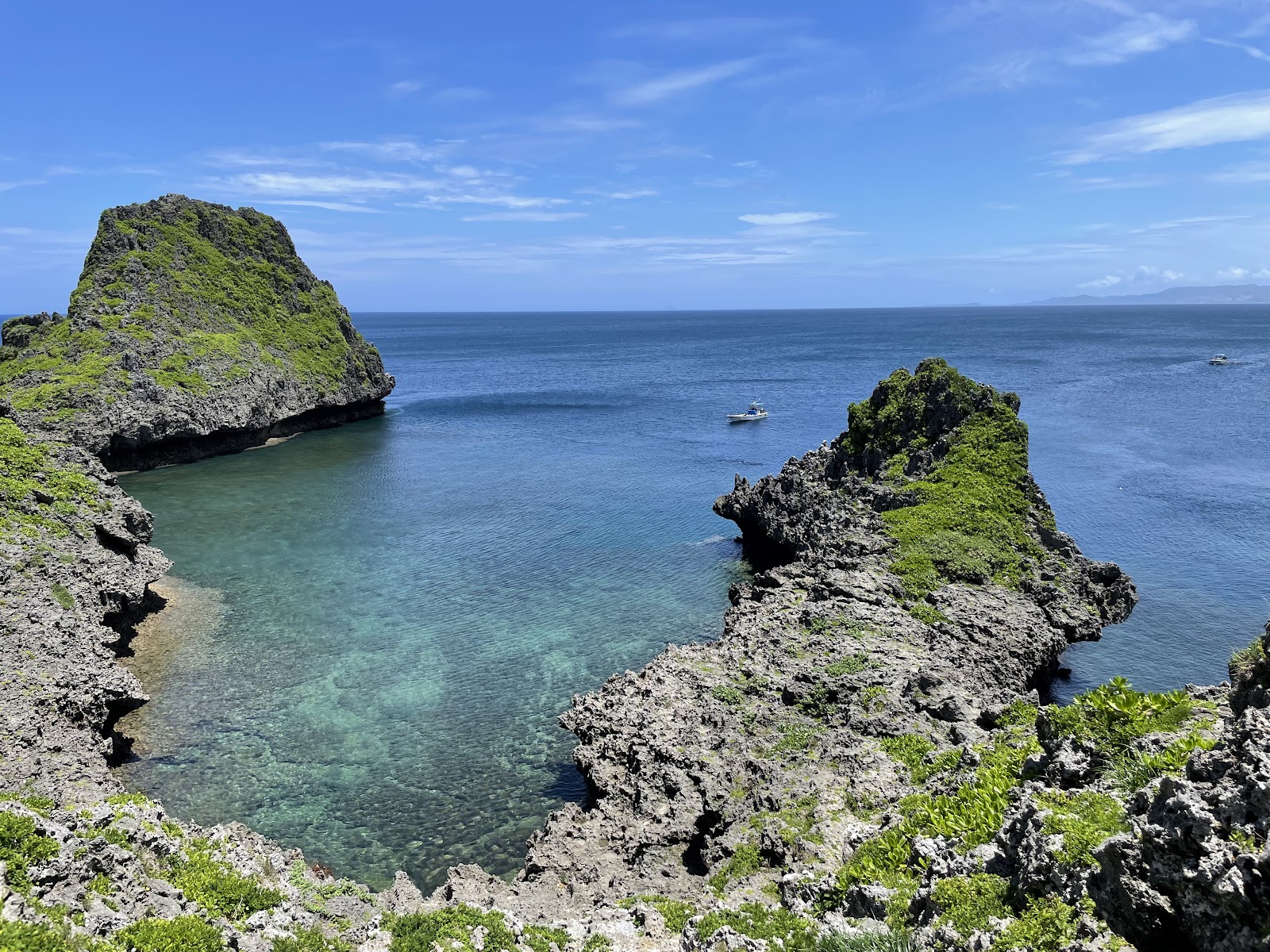
A rocky cape on Okinawa's west coast hiding a sea cave where sunlight turns the water an electric cobalt blue.
Cape Maeda, on the coast of Onna Village midway up Okinawa's west shore, is the most famous snorkelling and diving site on the main island, and the reason is a single natural wonder: the Blue Cave. This shallow sea grotto, carved into the limestone headland by centuries of wave action, glows an almost luminous cobalt when sunlight enters the water outside and reflects off the sandy floor back through the cave mouth. Float into the entrance on a calm morning and the whole chamber seems lit from within, a light that photographs never quite capture.
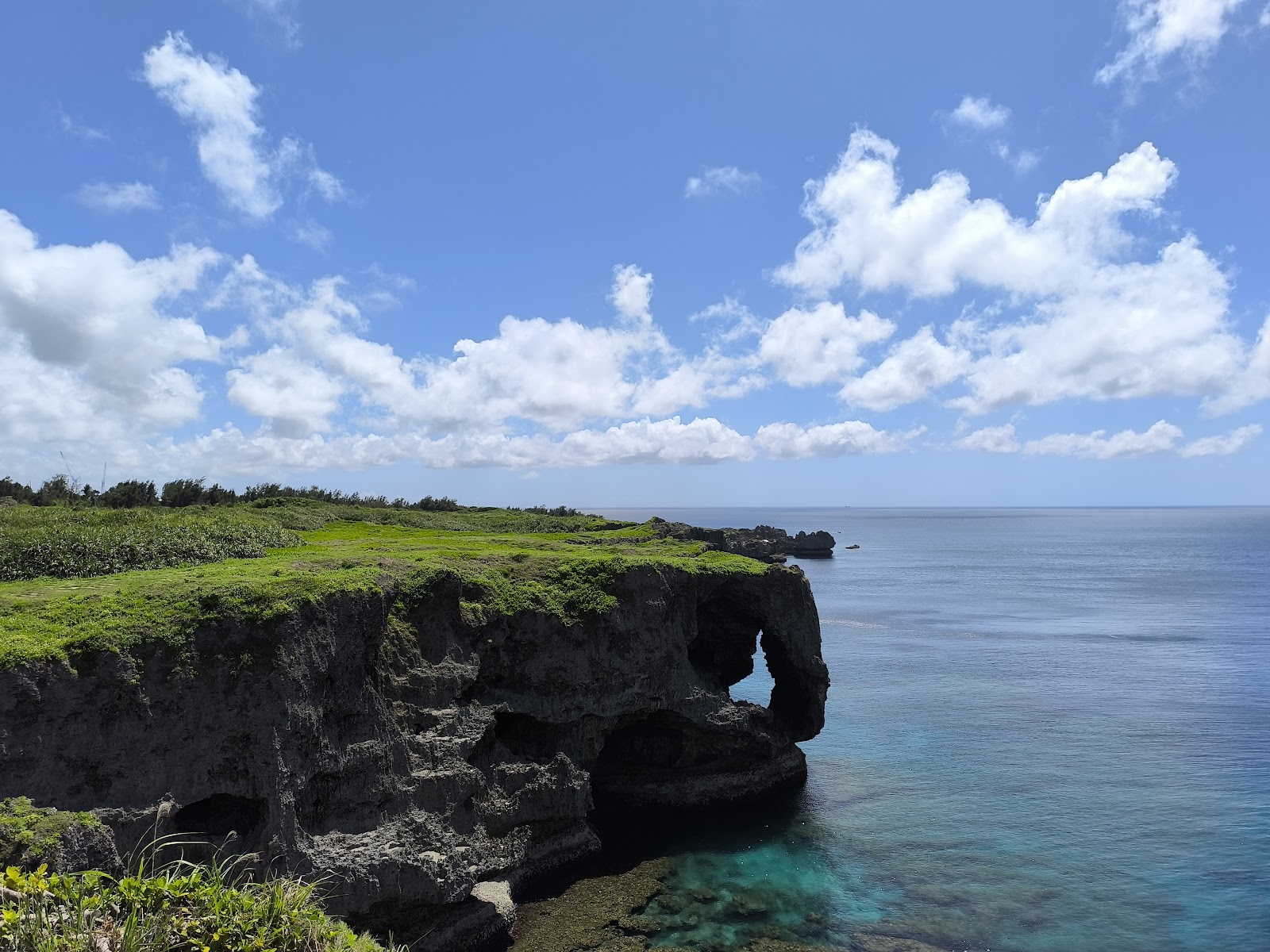
The cape itself is a low tableland of raised coral limestone that drops in a rugged cliff to the sea. A staircase descends from the car park and observation deck to the water's edge, where snorkellers and divers wade or step in from the rocks. The reef here is healthy and busy: schools of sergeant-major fish crowd around, and you will often see wrasse, parrotfish, and the occasional sea turtle in the deeper water beyond the cave. Because the site faces west and is partly sheltered, visibility is frequently excellent, and the gentle entry makes it approachable even for first-time snorkellers who join one of the many guided tours.
Cape Maeda has a long history as a landmark for local fishermen, and today it sits within the Okinawa Kaigan Quasi-National Park, which protects much of this coastline. The clifftop observation area is worth the walk on its own for the sweeping view over the East China Sea, especially at sunset when the water shifts through gold and violet. On clear days you can see the island of Ie-jima to the north.
Visiting takes some planning. Conditions govern everything: after storms or on days with a strong swell the cave and stairs are closed for safety, so it pays to check the forecast and go early when seas are calmest. The best months run from April through October, when the water is warm and the light is high; winter visits are possible but cooler and rougher. Bring water shoes for the rocky entry, and if you are not a confident swimmer, book a tour, since many operators supply life jackets, wetsuits, and a guide who knows exactly where the blue light is best.
Getting there is straightforward by car: roughly 55 minutes from Naha Airport up the expressway, with parking on site. There is no railway in this part of Okinawa, so most travellers rent a car or take a snorkelling excursion that includes hotel pickup. Combine a morning at Cape Maeda with the nearby Cape Manzamo viewpoint and the beaches of Onna for a full day on the Nakagami coast. Facilities at the cape include restrooms, showers, and several dive shops. For anyone chasing that single perfect image of Okinawa's impossibly blue sea, this is the place it actually looks like in real life.
A local's tip
Go right at opening (around 8am) before tour groups fill the cove; the water is calmest and the blue glow strongest with the low morning sun.
Best time to visit
Morning, calm seas, April to October
Getting there
About 55 minutes by car from Naha Airport via the Okinawa Expressway to the Ishikawa IC, then Route 6. Parking is available at the cape. There is no train on Okinawa's main island north of Naha, so a rental car or an organised snorkelling tour is the usual way to arrive.
Good to know
- Parking
- Restrooms
- Dive shops
Plan the whole trip offline
Cape Maeda & the Blue Cave is one of many places in the Real Japan app — with turn-by-turn directions, nearby spots and full offline maps you can use with no signal.