A beautifully preserved Edo-era post town on the old Tokaido road, famous for four centuries of Arimatsu shibori tie-dyeing.
Arimatsu, on the southern edge of Nagoya, is one of the best-preserved historic streetscapes in the region and a rare survivor of the old Tokaido, the great highway that linked Edo (Tokyo) and Kyoto during the Edo period. Founded in 1608 as a rest stop for travellers, the town grew wealthy from a single celebrated craft: Arimatsu-Narumi shibori, an intricate form of tie-dyeing. Because the area's fields were poor for rice, the settlers turned to dyeing cotton, and travellers on the Tokaido bought Arimatsu's patterned tenugui hand towels and yukata as souvenirs, spreading the town's fame across Japan.
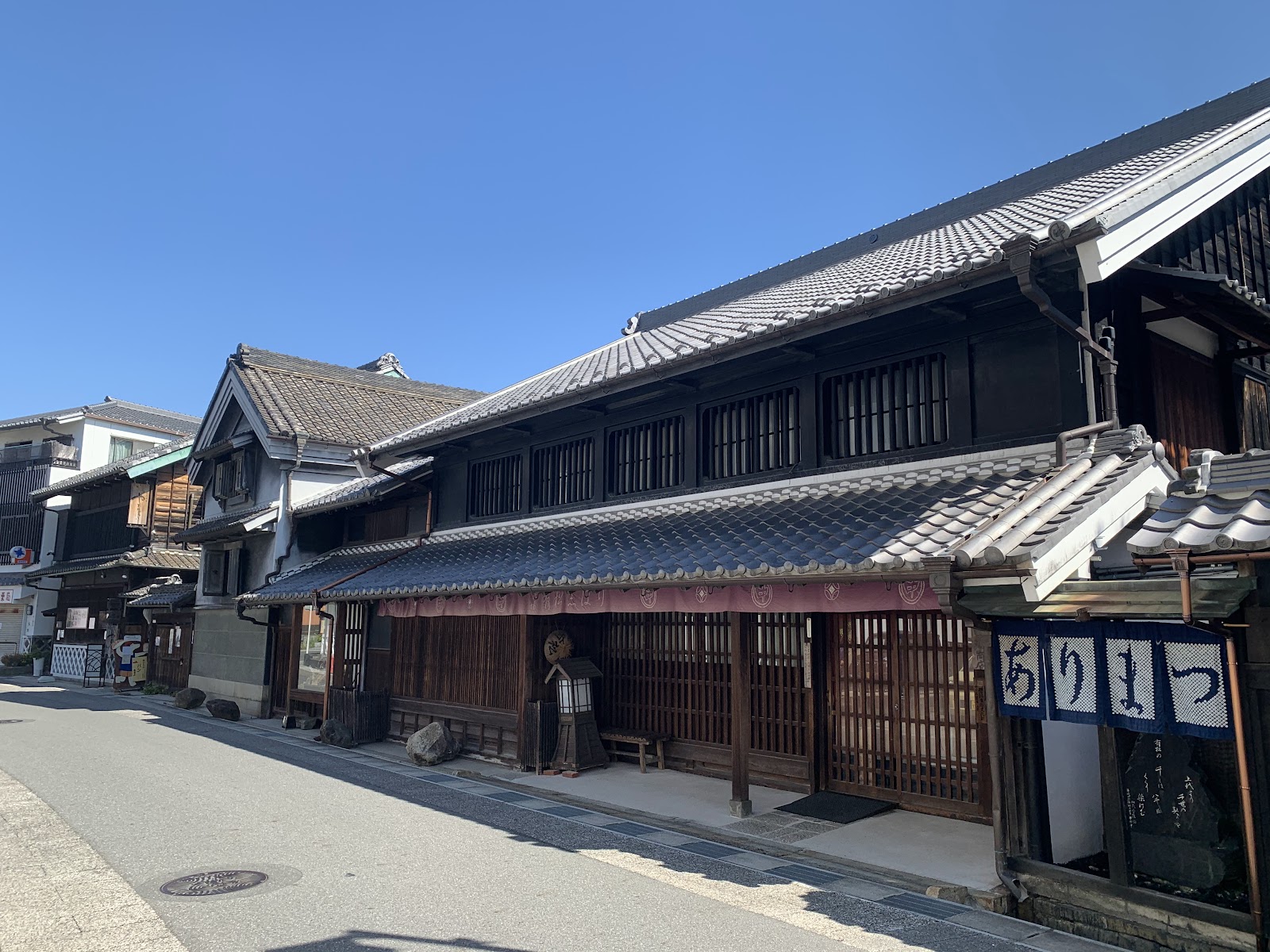
The main street preserves a remarkable row of Edo- and Meiji-era merchant houses, many belonging to the families of shibori wholesalers. Their imposing black-tiled roofs, plastered kura storehouses, lattice windows, protective udatsu fire-gables and deep eaves create an atmospheric corridor of traditional architecture that has escaped both wartime destruction and modern redevelopment. Several of the grandest homes are designated cultural properties, and the district as a whole is protected for its historic character. Walking its length, past dye shops and old signboards, it is easy to imagine the bustle of Tokaido travellers pausing here centuries ago.
Shibori remains a living craft in Arimatsu, not a museum relic. Shops along the street sell scarves, clothing and cloth dyed in dozens of traditional techniques — tiny pinched "kanoko" spots, pleated and bound patterns, and flowing indigo designs — and the Arimatsu-Narumi Shibori Kaikan museum explains the history and demonstrates the painstaking hand-tying that precedes each dip in the dye vat. Many visitors join a short workshop to tie and dye their own handkerchief, a hands-on souvenir and an appreciation for how much labour each pattern represents. Some patterns require months of tying by specialist artisans, a skill increasingly rare and precious.
The town comes most alive on the first weekend of June during the Arimatsu Shibori Festival, when the street fills with stalls, demonstrations and bargains, and craftspeople display their finest work. Even outside the festival, the district is a pleasant, low-key place to wander, photograph and shop, with cafes and small eateries tucked among the old houses.
Arimatsu is easy to reach as a half-day trip: a direct Meitetsu train runs south from central Nagoya to Arimatsu Station in about twenty minutes, and the historic street begins just a few minutes' walk away. Entry to the district is free, and it can be combined with a visit to the nearby Okehazama battlefield site, where Oda Nobunaga won his famous 1560 victory, for a day that blends craft heritage with Sengoku history.
For travellers seeking a quieter, more authentic slice of old Japan within the Nagoya area, Arimatsu delivers: a genuine post-town streetscape, a four-hundred-year-old textile tradition still practised by hand, and the chance to carry home a piece of it that you dyed yourself.
A local's tip
Step into one of the shibori shops to watch craftspeople hand-tie cloth — many offer short tie-dye workshops where you can make your own handkerchief as a souvenir.
Best time to visit
First weekend of June for the Arimatsu Shibori Festival
Getting there
Take the Meitetsu Nagoya Main Line south to Arimatsu Station (about 20 minutes from Nagoya); the preserved street is a 3-minute walk from the station.
Good to know
- Museum
- Restrooms
- Craft shops
Plan the whole trip offline
Arimatsu Historic District is one of many places in the Real Japan app — with turn-by-turn directions, nearby spots and full offline maps you can use with no signal.