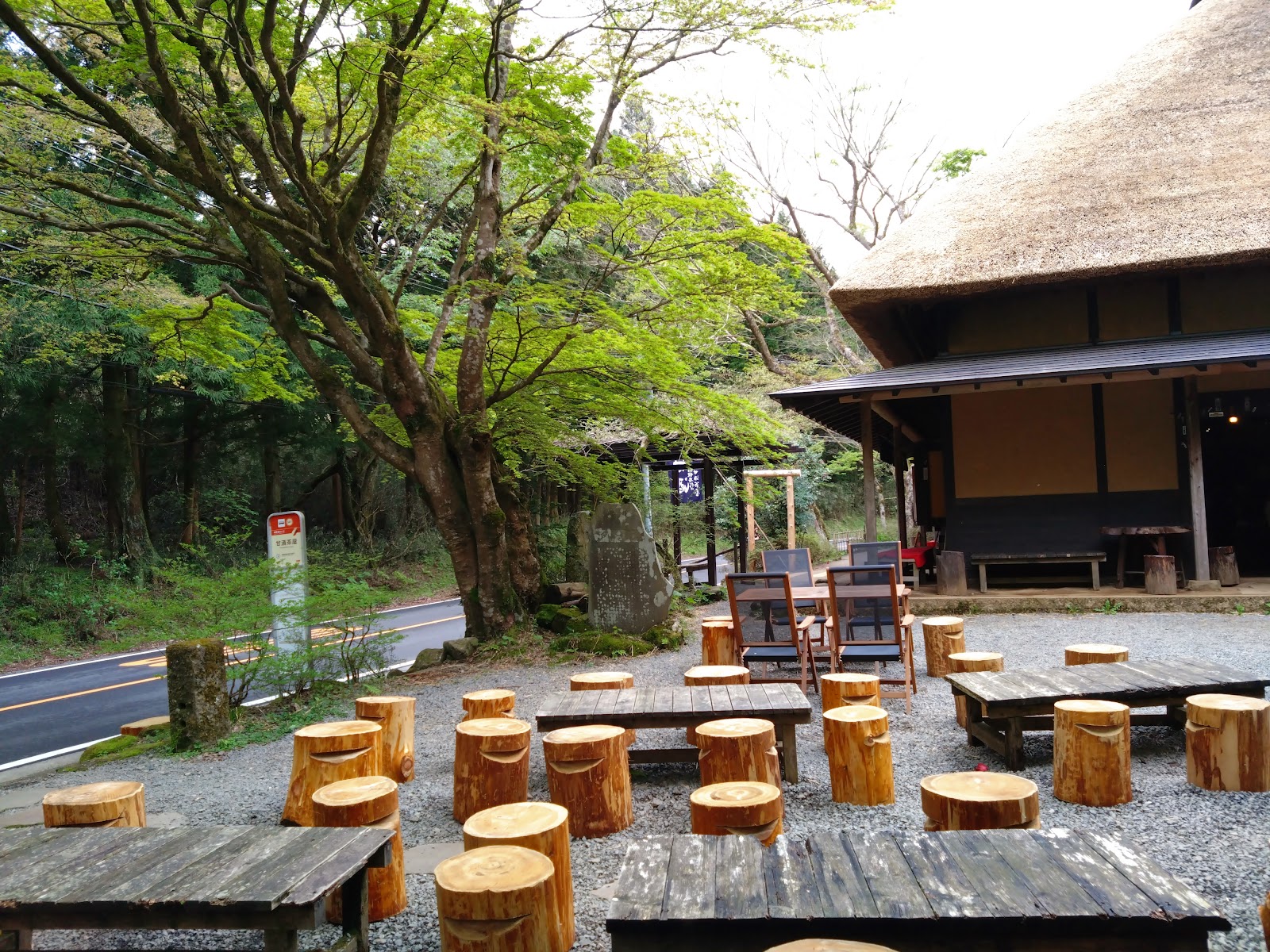
A thatched-roof teahouse on the old Tokaido serving sweet amazake to travellers for some four hundred years, little changed since the Edo era.
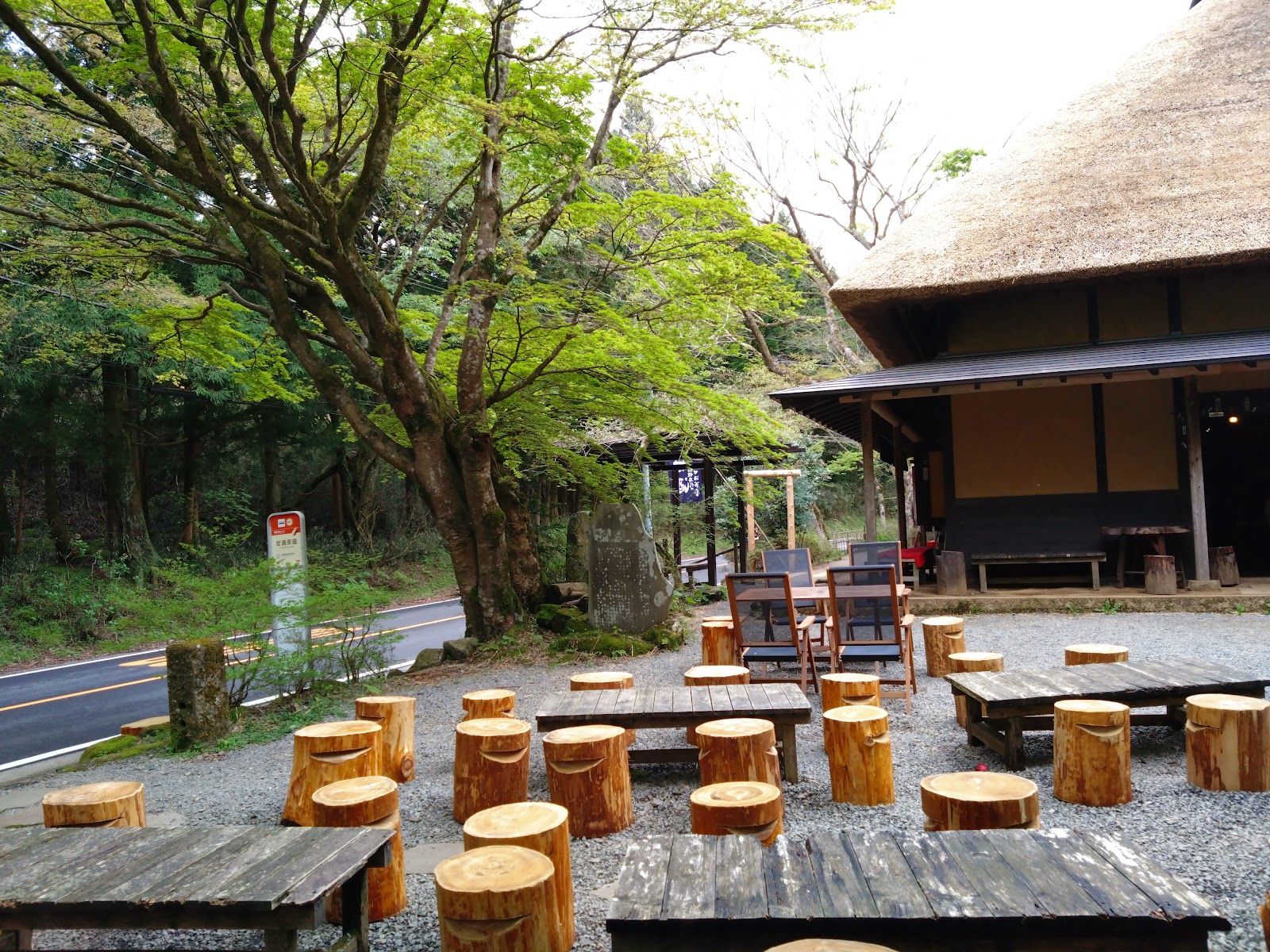
Amazake Chaya is a thatched-roof teahouse standing beside the old Tokaido highway in the Hakone mountains, and it is one of the most remarkable survivals of Edo-period travel culture in Japan. For roughly four hundred years, across some thirteen generations of the same family, it has offered rest and refreshment to travellers on the punishing mountain crossing between Edo and Kyoto, and it continues to do so today in a building and setting that have changed astonishingly little.
In the Edo period, teahouses like this were a lifeline for those on the Tokaido. The climb over the Hakone pass was one of the hardest stretches of the entire route, and a network of 'chaya' grew up along the way where weary walkers could sit, warm themselves, eat and gather strength before or after the ascent. Amazake Chaya is the last of these to survive on the Hakone road in something like its original form, its dim, smoke-darkened interior, low wooden benches and open hearth conjuring the atmosphere of centuries past. Stepping inside from the modern road feels like stepping directly into an old woodblock print.
The teahouse takes its name from its signature offering, amazake, a thick, sweet, non-alcoholic drink made from fermented rice. Served warm, it was prized by travellers as an instant source of energy and warmth for the mountain crossing, and the recipe here has been handed down unchanged for generations, made without added sugar or alcohol. Alongside it the teahouse serves 'chikara-mochi', literally 'strength rice cakes', grilled mochi coated in flavours such as sweet soy, black sesame and 'uguisu' green soybean, which likewise fortified walkers for the road ahead. Enjoying these traditional refreshments in the same spot, in the same way, as Edo-period travellers is the whole point of a visit.
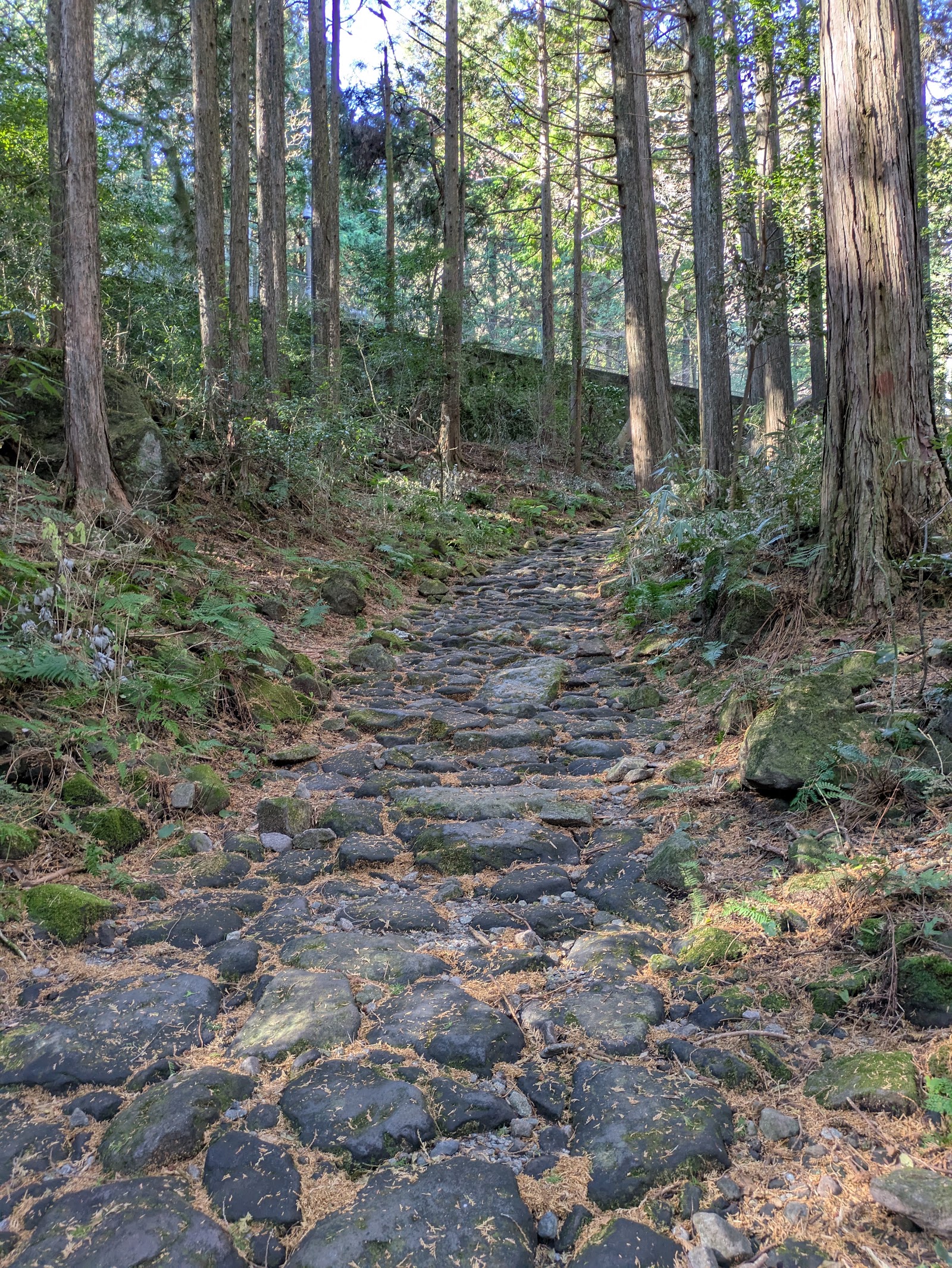
The teahouse sits directly on a preserved, cobbled section of the old Tokaido, shaded by ancient cedars, and it makes a natural pause on a walk along the historic road. Many visitors arrive on foot as part of a hike between Hatajuku, the pass and Moto-Hakone, arriving footsore and grateful just as generations did before them; others come by bus, alighting at the stop right outside. Either way, the continuity of purpose, a rest stop for mountain travellers, unbroken for four centuries, gives the place a quiet magic that no reconstruction could match.
The visiting experience is simple and unhurried. There is no admission charge; you come to sit, drink, eat and soak up the atmosphere. Payment is cash only, in keeping with the old-fashioned character, and the appeal lies precisely in the lack of modern polish. Half an hour is enough for a drink and a snack, though the setting invites you to linger. Basic restrooms are available, and the surrounding forest and stone road reward a short wander.
Any season suits a visit, but the teahouse is at its most welcoming in cold weather, when hot amazake by the hearth is genuinely restorative, and at its most beautiful in autumn, when maples colour the old road outside. As a living link to the world of the Tokaido, Amazake Chaya offers something rare: not a museum recreation of the past, but a piece of it still doing exactly what it always has.
A local's tip
Pair the signature non-alcoholic amazake with a plate of 'chikara-mochi', the grilled rice cakes travellers ate for energy before the steep climb; cash only, and the smoky, dim interior is part of the 400-year atmosphere.
Best time to visit
During a walk along the old Tokaido, or on a cold day for hot amazake
Getting there
On the old Tokaido road between Hatajuku and Moto-Hakone. Take a Hakone Tozan Bus toward Moto-Hakone and alight at the Amazake-chaya stop; the thatched teahouse is right beside the road on the preserved historic route.
Good to know
- Cash only
- Restrooms
- Food & drink
Plan the whole trip offline
Amazake Chaya Teahouse is one of many places in the Real Japan app — with turn-by-turn directions, nearby spots and full offline maps you can use with no signal.