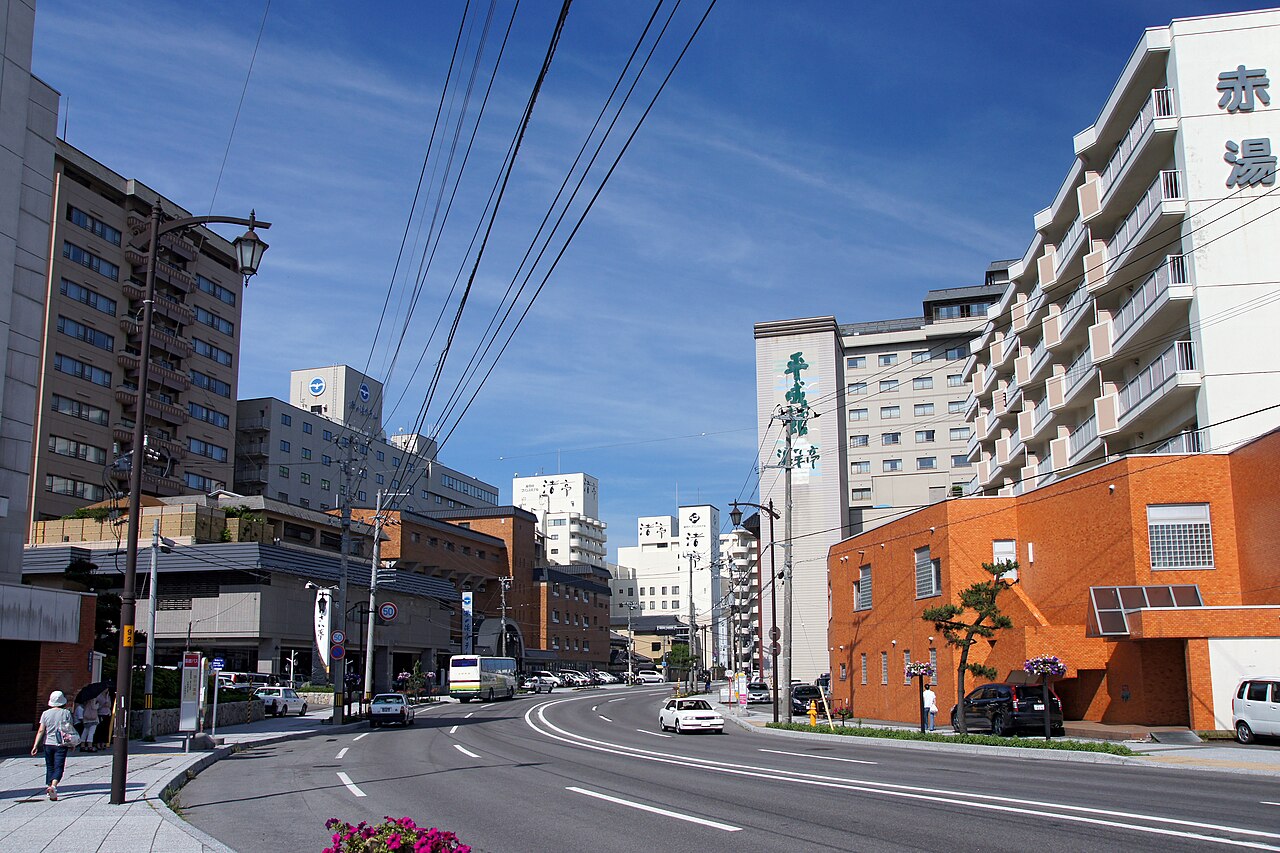
Hakodate's seaside hot-spring resort district, one of Hokkaido's oldest, with public footbaths and bathing monkeys nearby.
Yunokawa Onsen is Hakodate's hot-spring resort quarter, strung along the coast on the eastern side of the city near the airport. Counted among the oldest and most famous hot-spring areas in all of Hokkaido, it offers a relaxed counterpoint to the historical sightseeing of the old town: here the draw is soaking in mineral-rich waters while looking out over the Tsugaru Strait.
The district's history stretches back centuries. Local tradition holds that the springs were discovered in the mid-seventeenth century, and a well-known legend tells of a lord of the Matsumae clan whose sickly son was healed by bathing in the waters, cementing the area's reputation as a place of recuperation. By the modern era Yunokawa had grown into a full resort of ryokan and hotels, and it flourished as a place where Hakodate residents and travellers alike came to unwind. The waters are typically warm and rich in salt and minerals, valued for easing fatigue and warming the body against Hokkaido's cold.
What to do here centres on bathing. The district is lined with hot-spring hotels and traditional ryokan, many of which open their baths to day visitors for a fee, including rooftop and seaside baths where you can soak with a view of the water. For those not staying overnight, there is a free public footbath near the tram terminus where anyone can dip tired feet, a pleasant and sociable ritual after a day of walking the Motomachi slopes.
Yunokawa's most famous attraction, however, is decidedly unusual: the nearby Hakodate Tropical Botanical Garden is home to a troop of Japanese macaques who bathe in their own outdoor hot spring. From roughly December through spring the monkeys sit up to their necks in the steaming water, faces reddened by the cold, in a charming spectacle that draws visitors from across the region. It is one of the more accessible places in Japan to see the celebrated bathing snow monkeys.
The visiting experience is easygoing and flexible. You can make it a quick stop for a free footbath and the monkeys, or a longer indulgence with a day-use bath and a meal at one of the hotels; some visitors base themselves here overnight and commute into the city by tram. The area is flat and easy to walk, with restrooms and shops near the tram stop. Bathing etiquette applies at the hot springs: wash thoroughly before entering, and note that many baths do not admit guests with tattoos, so check in advance.
All seasons suit Yunokawa, but the cold months are arguably the best, when a hot soak is most welcome and the bathing monkeys are in their element. Autumn evenings are crisp and pleasant, summer offers sea breezes, and spring is mild and quiet.
Getting there is simple and one of the district's advantages. From JR Hakodate Station take the historic city tram toward Yunokawa; the line runs directly to its eastern terminus at Yunokawa Onsen in around thirty minutes, and the hotels and footbath are a short walk from the stop. IC cards are accepted on the tram. Because the district sits between the city centre and Hakodate Airport, it also makes a convenient final stop, letting travellers enjoy a last soak before catching a flight home.
A local's tip
Relax at the free public footbath near the tram stop first, then in winter visit the nearby monkeys that bathe in their own hot spring at the tropical botanical garden.
Best time to visit
Evening for a soak after sightseeing
Getting there
Take tram Line 2 or 5 to its eastern terminus at Yunokawa Onsen, then walk a few minutes to the hot-spring hotels and public footbath.
Good to know
- Wi-Fi
- Hotels
- Footbath
- Restrooms
Plan the whole trip offline
Yunokawa Onsen is one of many places in the Real Japan app — with turn-by-turn directions, nearby spots and full offline maps you can use with no signal.