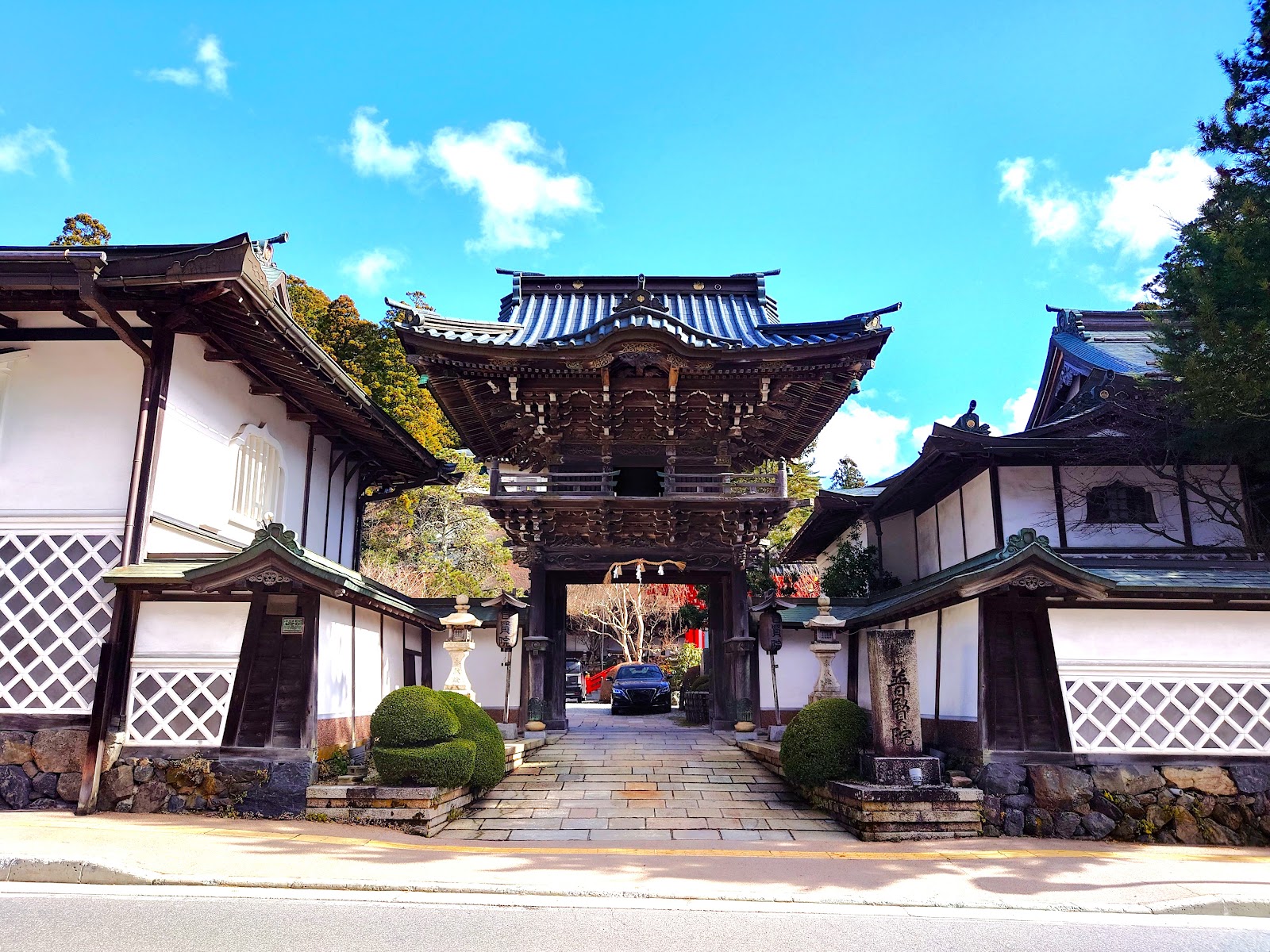
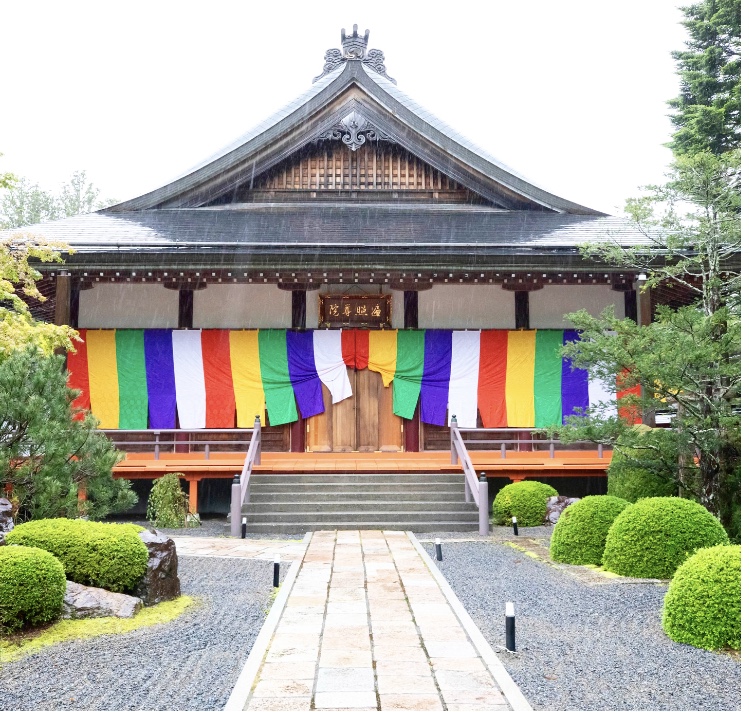
A historic temple lodging near Danjo Garan, home to a renowned Mirei Shigemori stone garden protected as a cultural property.
Yochi-in, whose name is written with the characters for "cherry-pond temple," is one of the older and more storied shukubo of Mount Koya, standing in the quiet western temple district within easy reach of Danjo Garan and the great Daimon gate. Founded centuries ago as part of the Koyasan Shingon monastic community, it has long welcomed pilgrims for overnight stays and continues to do so today, offering travellers a chance to live briefly by the temple's own unhurried rhythm.
Its great treasure is a garden. Just inside the main gate lies a karesansui, or dry landscape garden, created by Mirei Shigemori, the celebrated modern master who spent the mid-twentieth century reinventing the Japanese garden tradition. Using raked gravel and boldly placed stones, Shigemori composed an abstract landscape meant not for strolling but for contemplation from a fixed vantage point. The garden is recognised as a protected cultural property, and sitting before it in the low, slanting light of early morning, when the rake lines throw fine shadows across the gravel, is reason enough to stay the night.
Like all of Koya's temple lodgings, Yochi-in is a functioning place of worship first. Guests sleep in simple tatami rooms, some looking onto the temple's mossy inner gardens, and are served shojin ryori, the elegant vegetarian cuisine of Buddhist monks, built from seasonal mountain vegetables, tofu, pickles and the local sesame tofu. Meals are taken early, the evenings are calm, and the deep silence of the mountain settles in once the last bus has gone.
The heart of a stay comes at dawn. At around 6:30 the monks gather in the main hall for the morning service, chanting sutras amid clouds of incense and the low resonance of bells and drums, and guests are warmly invited to kneel and observe. Many temples, Yochi-in among them, also offer a goma fire ritual, in which wooden prayer sticks are burned to symbolise the consuming of earthly desires, a genuinely arresting thing to witness at close range.
Because it sits in the western part of the temple town, Yochi-in makes an excellent base for exploring Danjo Garan, the sacred central complex crowned by the vermilion Konpon Daito pagoda, as well as the towering Daimon gate that guards the mountain's original entrance. Kongobuji and the Reihokan museum are also within a comfortable walk, and the buses to Okunoin pass nearby.
To reach Yochi-in, ride the Nankai cable car up to Koyasan Station and take a Rinkan bus into the temple district; the temple is a short walk from the stop. A one-night stay including two vegetarian meals typically starts around 12,000 yen per person, and reservations are strongly recommended, especially in the cherry-blossom and autumn-foliage seasons when Mount Koya is at its most beautiful. For travellers who want the garden and the ritual without the crowds of the larger lodgings, Yochi-in is a rewarding and atmospheric choice.
A local's tip
Just inside the main gate sits a stone garden by Mirei Shigemori that is designated a protected cultural property; ask a monk about its meaning before you sit with it.
Best time to visit
Overnight, to see the stone garden in low morning light
Getting there
From Koyasan Station take a Rinkan bus toward the Senjuinbashi area; Yochi-in lies in the western temple district near Danjo Garan and the Daimon gate, a short walk from the bus stop.
Good to know
- Wi-Fi
- Garden
- Vegetarian meals
Plan the whole trip offline
Yochi-in Temple is one of many places in the Real Japan app — with turn-by-turn directions, nearby spots and full offline maps you can use with no signal.