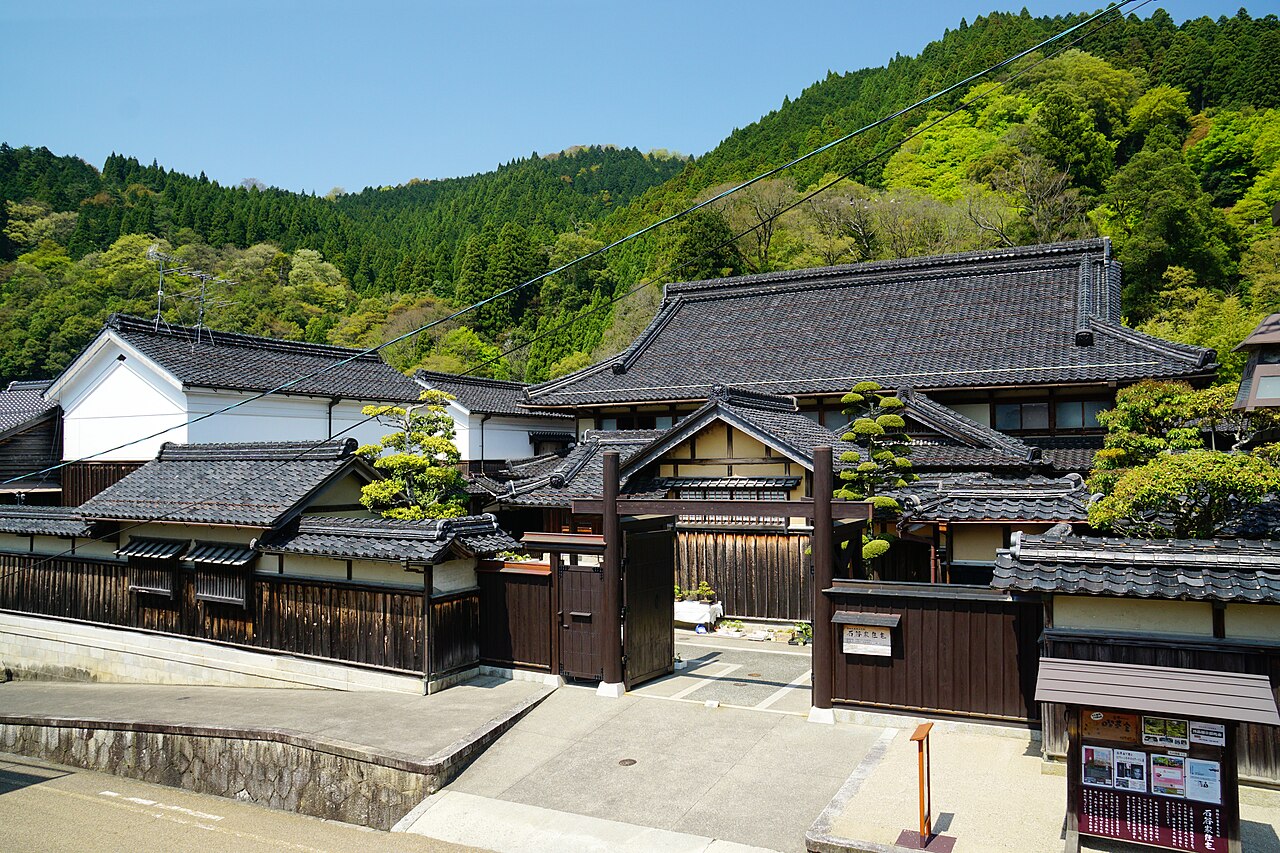
An Important Preservation District of Edo merchant townhouses lining the old Izumo Kaido on the east side of Tsuyama's former castle town.
The Joto district of Tsuyama preserves a long ribbon of Edo-period merchant townscape along the old Izumo Kaido highway, on the eastern edge of what was once the castle town of the Tsuyama domain. Recognized nationally as an Important Preservation District for Groups of Traditional Buildings, Joto retains a remarkable density of historic architecture over roughly a kilometer of street, making it one of the finest surviving merchant quarters in the Chugoku region and a rewarding contrast to the more remote Katsuyama townscape farther west.
Tsuyama grew into a substantial castle town after Mori Tadamasa built Tsuyama Castle in the early 1600s, and the Joto neighborhood developed as the commercial district serving travelers and traders on the Izumo Kaido, the route connecting the San'yo region with the Sea of Japan side of Honshu. As you walk the street you see the hallmarks of prosperous Edo merchant building: namako (sea-cucumber) plaster walls with their distinctive latticed tiling, deep-eaved facades, mushiko-mado insect-cage windows on upper storeys, and long, narrow machiya townhouses that stretch back from modest street frontages. Interspersed among them are charming early-20th-century Showa-era shops and signage, giving the district layers of history rather than a single frozen era.
Several buildings are open to visitors. The Joto Mukashi Machiya is a restored Edo-period townhouse you can enter free of charge to see how a merchant family lived and worked, while the Sakushu Joto Residence is notable for its preserved fire watchtower rising above the rooftops, a rare surviving example. Small museums, craft shops, cafes, and sake-related businesses occupy other historic frontages, and the neighborhood is also celebrated as the birthplace of Western studies pioneers, reflecting Tsuyama's unusual Edo-era engagement with Dutch learning. The district hosts festivals and events through the year and is a favorite location for period film and drama shoots.
The visiting experience is easygoing. The main street is flat and pedestrian-friendly, and you can stroll its length and dip into the open houses in an hour or two. It combines well with the rest of Tsuyama's sights, including the stone ramparts of the former castle at Kakuzan Park just to the west, so many visitors pair Joto with a castle-hill walk for a fuller half-day in the old town.
Getting there is relatively straightforward for northern Okayama, since Tsuyama is a regional rail hub. Tsuyama Station is served by the JR Tsuyama Line from Okayama, the JR Kishin Line, and the JR Inbi Line, all covered by the Japan Rail Pass, though these rural lines lie outside the ICOCA IC-card area and run on limited schedules. From the station it is about a 20-minute walk northeast, crossing the Miyagawa River, to reach the eastern end of the preserved street; buses and taxis are also available. Drivers will find parking near the district.
Any mild season works well, with cherry blossoms on the nearby castle hill in spring, a lively autumn festival season, and comfortable walking weather in between. The streets themselves are always open, while individual museum houses and shops keep daytime hours, so late morning to mid-afternoon is the ideal window to find the district fully alive.
A local's tip
Step inside the free Joto Mukashi Machiya townhouse and look for the Sakushu Joto Residence with its rare Edo-era fire watchtower; the district is also known for its retro Showa-era shopfronts.
Best time to visit
Daytime
Getting there
Take the JR Tsuyama, Kishin, or Inbi Line to Tsuyama Station, then walk about 20 min northeast across the Miyagawa River to the old Izumo Kaido street on the east side of the former castle town.
Good to know
- Restrooms
- Museum Houses
Plan the whole trip offline
Tsuyama Joto Traditional Buildings District is one of many places in the Real Japan app — with turn-by-turn directions, nearby spots and full offline maps you can use with no signal.