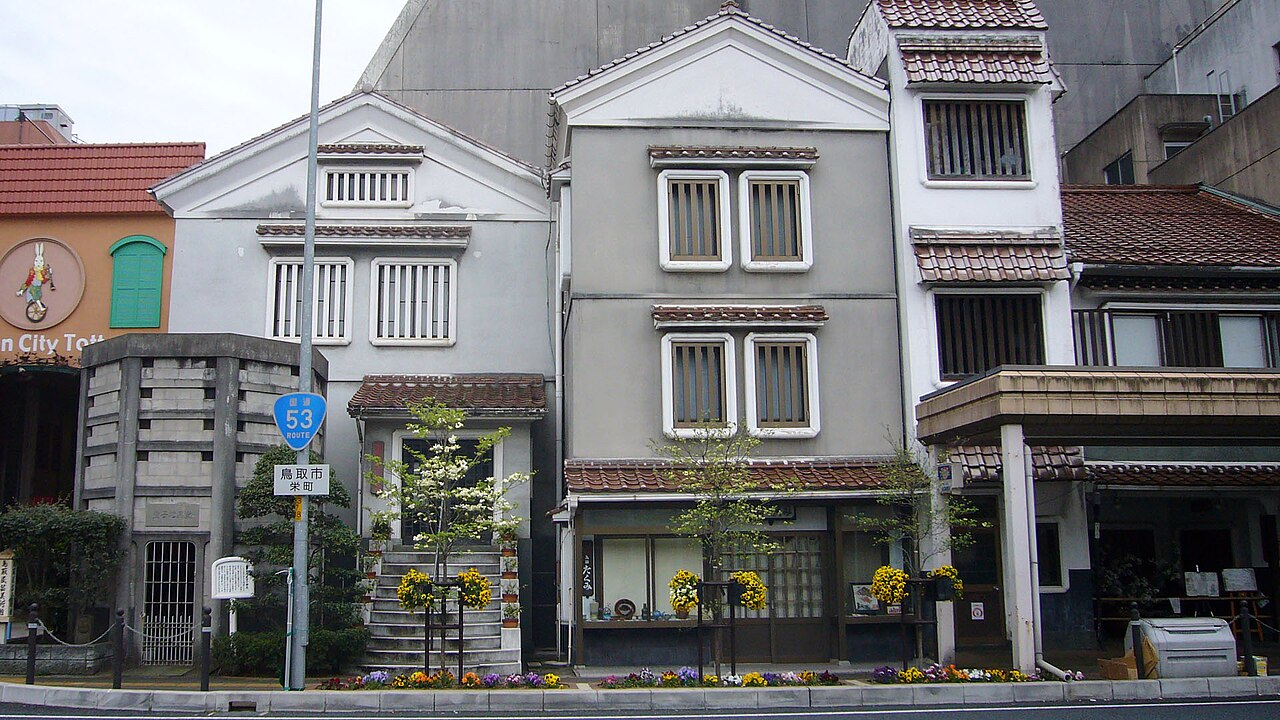
A jewel of the Japanese folk-craft movement, showing everyday ceramics, textiles and woodwork chosen for their unshowy beauty.
The Tottori Folk Crafts Museum is a small institution with an outsized reputation among lovers of Japanese design. Founded in 1949 by the local doctor and thinker Shoya Yoshida, a close ally of the philosopher Soetsu Yanagi, it is one of the most important regional homes of the mingei movement, which celebrated the beauty of ordinary, anonymous, handmade objects made for daily use rather than for display. Housed in a striking dark-plastered building on Tottori's main street, only minutes from the station, it feels less like a stuffy gallery and more like a carefully curated house of good things.
Inside, the collection ranges far beyond Tottori. Yoshida believed that fine everyday craft was a universal human achievement, so alongside local Inshu washi paper, Ushinoto and Nakai pottery and Yumihama-gasuri textiles you will find Korean ceramics, Chinese furniture, English slipware, Windsor chairs and glassware from around the world. The point is comparison: seeing a Japanese rice bowl beside a Welsh jug helps you understand what the mingei eye was actually looking for, which is honesty, balance and the quiet dignity of objects shaped by generations of use.
The displays are deliberately understated. Pieces are grouped by material and function rather than by date or prestige, lit simply and given room to breathe. There is little of the reverent hush of an art museum here; instead the mood invites you to imagine picking the objects up, pouring from the pots, wrapping yourself in the cloth. That domestic intimacy is the whole idea, and it is what keeps designers, potters and architecture students coming from across Japan.
The museum sits at the heart of a small mingei ecosystem that Yoshida helped create. Next door is the Takumi Craft Shop, where you can buy contemporary folk crafts made in the same spirit, and the Takumi Kappo restaurant, where regional food is served on locally made tableware so that the philosophy reaches your dinner as well as your eyes. Visiting all three in sequence turns a quick museum stop into a genuine introduction to a way of seeing.
Because it is compact, an hour is enough to take in the permanent collection, though craft enthusiasts will happily linger longer over the rotating special exhibitions that spotlight particular potters, weavers or regional traditions. English labelling is limited, but the objects largely speak for themselves, and staff are used to international visitors drawn by the mingei name.
Its location makes it effortless to add to any Tottori itinerary. Just an 8-minute walk from Tottori Station, it pairs naturally with the Sand Dunes and Sand Museum for a day that swings from vast natural spectacle to the intimate beauty of a single well-made cup. For anyone interested in Japanese aesthetics, ceramics or design history, it is one of the San'in coast's quiet essentials.
A local's tip
Cross the street to the Takumi Kappo restaurant afterwards, where the same mingei philosophy is applied to the tableware your meal is served on.
Best time to visit
Year-round
Getting there
An easy 8-10 minute walk north from Tottori Station along the main shopping street; the dark-plastered building sits beside the Takumi craft shop and restaurant.
Good to know
- Shop
- Restrooms
Plan the whole trip offline
Tottori Folk Crafts Museum is one of many places in the Real Japan app — with turn-by-turn directions, nearby spots and full offline maps you can use with no signal.