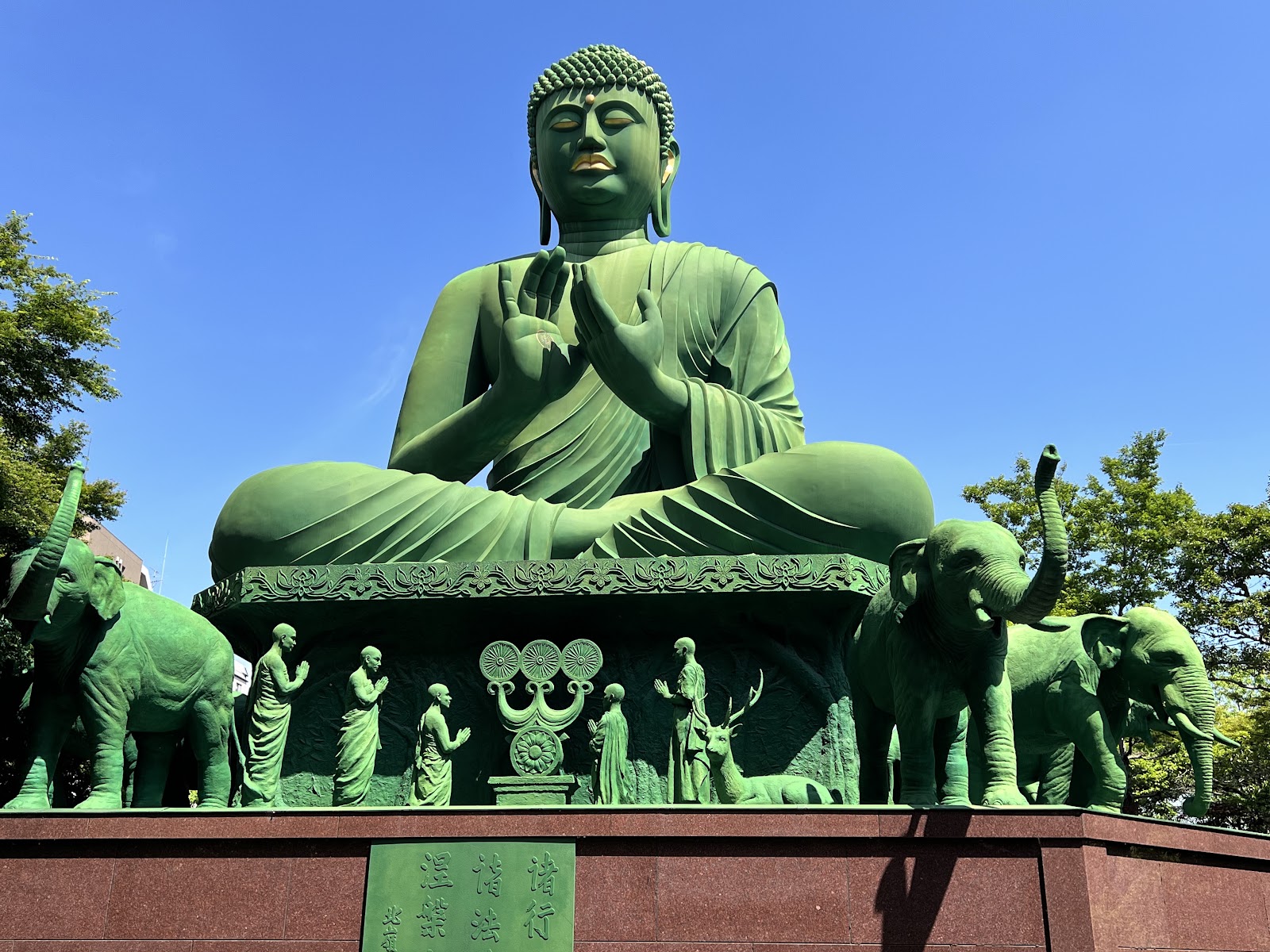
A small Zen temple famous for its startling bright-green Great Buddha, an offbeat gem near Nagoya University.
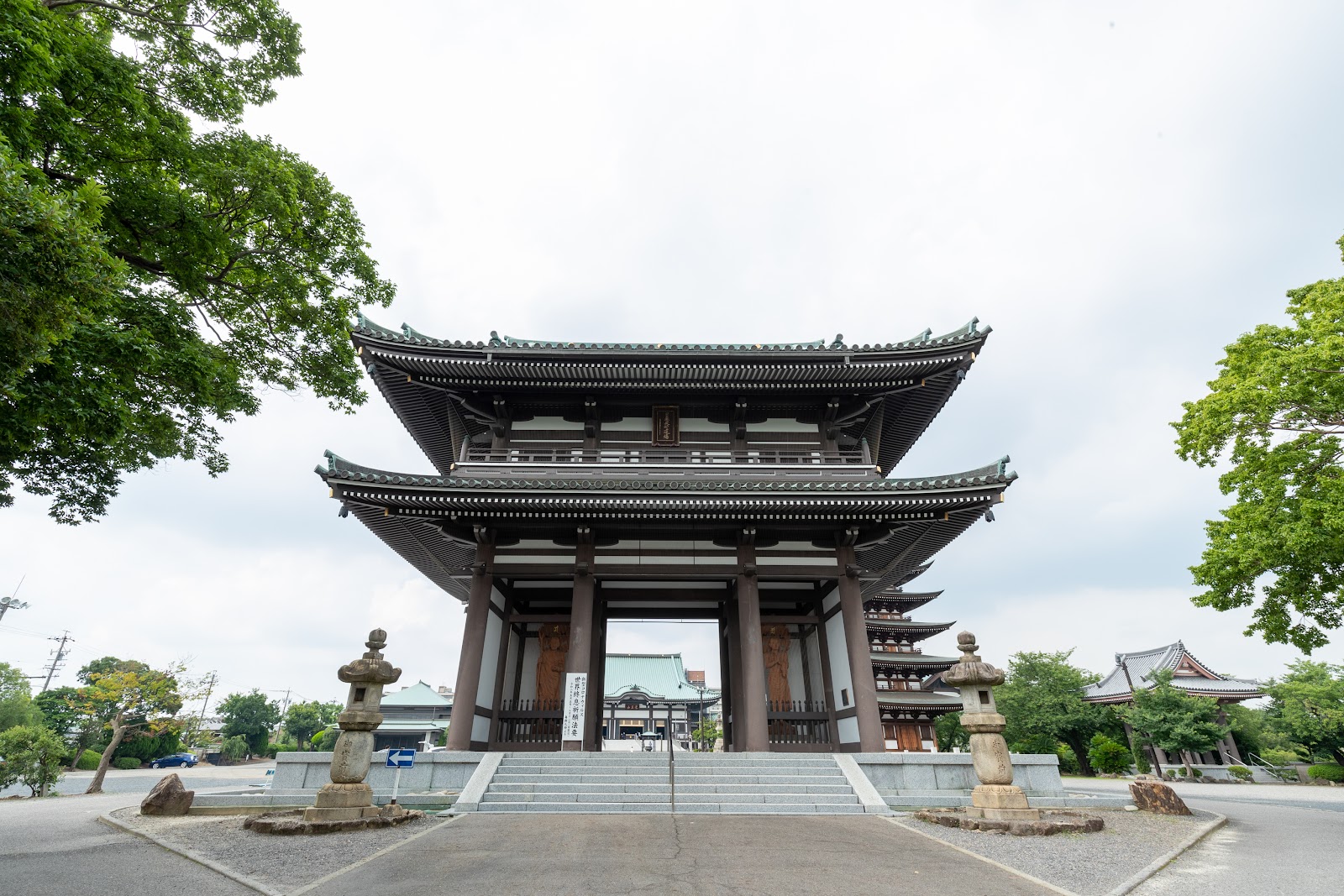
Toganji is one of Nagoya's most endearingly eccentric temples, best known for a single unforgettable sight: a vivid, almost lime-green Great Buddha seated serenely at the back of its modest grounds. Where most of Japan's great bronze Buddhas are dark or gilded, Nagoya's is painted a startling verdant hue, and the surprise of rounding a corner to meet it is a large part of the temple's charm.
The temple itself is a Soto Zen foundation with genuine historical roots. It was established in the sixteenth century by Oda Nobuyuki, lord of nearby Suemori Castle, in memory of his father Oda Nobuhide, the powerful warlord and father of the far more famous Oda Nobunaga. The temple's name borrows a character from Nobuhide's posthumous Buddhist name, tying this quiet suburban compound directly to one of the most consequential warrior families in Japanese history.
The Nagoya Daibutsu that draws most visitors is far more recent, a twentieth-century addition raised on a platform and surrounded by a small retinue of elephant statues. Standing around ten metres tall, the seated figure is not old and is not a designated cultural property, but its cheerful, unexpected colour has made it a minor icon and a favourite for photographs. The elephants and the deity's calm expression give the corner a faintly playful, welcoming feel.
What makes Toganji genuinely unusual, however, is its historic connection to Indian and esoteric Buddhism. The temple has long been associated with the worship of Kangiten and other deities of Indian origin, and its grounds are dotted with statues that draw on Hindu-Buddhist iconography rarely seen in mainstream Japanese temples. This slightly mystical, syncretic atmosphere has given Toganji a reputation as an offbeat, spiritually curious place, and over the years it has attracted an unconventional, artistic crowd.
The visiting experience is short but memorable. The grounds are small and can be explored in half an hour, so most travellers pair Toganji with the fashionable cafes of Motoyama or a visit to Nagoya University nearby. Wander in, greet the green Buddha, examine the eclectic statuary, and enjoy the contrast between this quiet, quirky pocket and the busy student district around it. There is no admission fee and rarely a crowd.
Because it lies away from the main tourist trail, Toganji is a temple for the curious rather than the box-tickers. It will not overwhelm you with grandeur, but it offers something rarer in a big city: genuine surprise. The bright Buddha is enjoyable in any season and any weather, and the flat, compact grounds are easy to reach on foot.
Getting there is simple. Motoyama Station, an interchange between the Higashiyama and Meijo subway lines, is about a seven-minute walk away, and buses also connect the area to Nagoya University. For visitors who like their sightseeing with a dash of the unexpected, Nagoya's green giant is one of the city's small delights.
A local's tip
The giant green Nagoya Daibutsu hides at the back of the grounds; the temple also keeps a quietly Bohemian atmosphere with statues of Hindu deities, reflecting its historic ties to Indian Buddhism.
Best time to visit
Daytime, any season
Getting there
Take the Higashiyama or Meijo subway line to Motoyama Station near Nagoya University, then walk about seven minutes to the temple in the Yotsuya-dori area of Chikusa ward.
Good to know
- Restrooms
Plan the whole trip offline
Toganji Temple is one of many places in the Real Japan app — with turn-by-turn directions, nearby spots and full offline maps you can use with no signal.