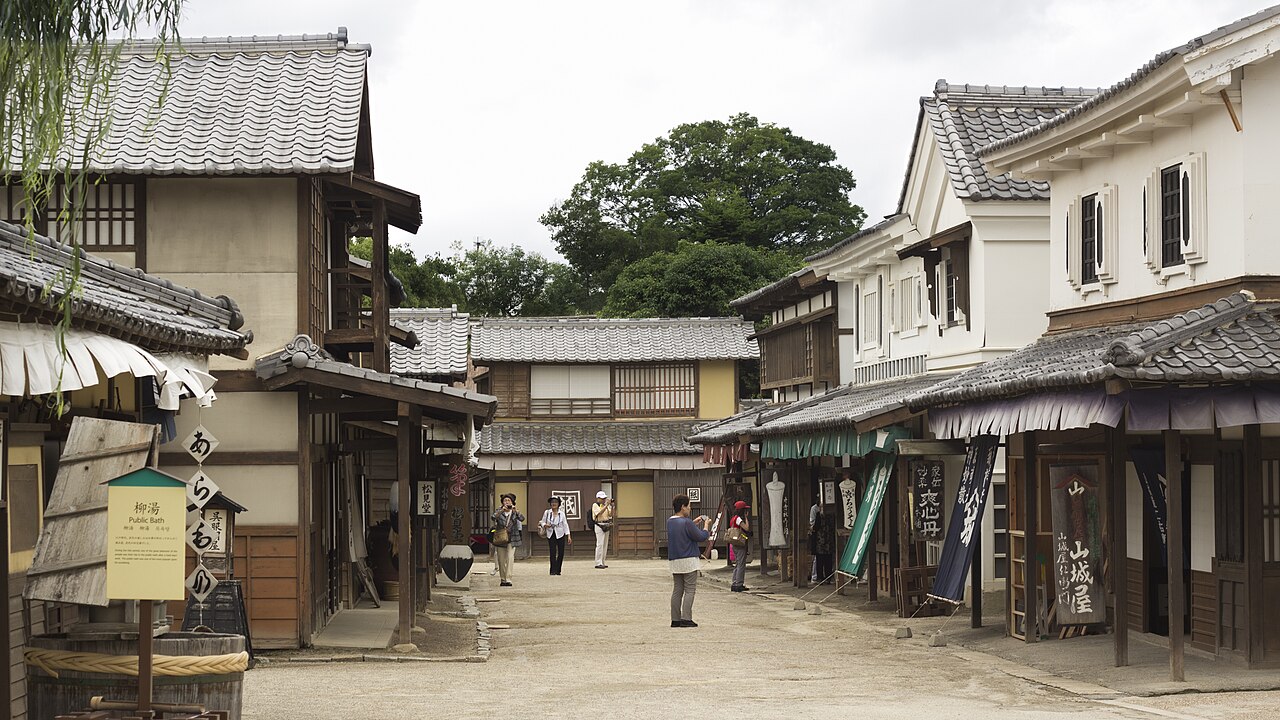
A working Edo-era film backlot and theme park where Japanese period dramas are shot and samurai shows run live.
Toei Kyoto Studio Park, known locally as Uzumasa Eigamura (the “movie village”), is one of Japan’s few working film studios that also opens its gates to the public. Since it began welcoming visitors in 1975, the park has doubled as a living backlot for the countless jidaigeki—samurai period dramas—that Toei has produced here for cinema and television. Wander through the recreated Edo-period streets and you may genuinely stumble onto a film crew shooting a scene, with actors in full topknot-and-kimono costume waiting between takes.
The heart of the park is its open-air set: a convincing recreation of a feudal-era town, complete with a wooden Nihonbashi bridge, a merchant quarter, a red-light district facade, a courthouse, and a ninja house riddled with trick doors and hidden passages. The buildings are film-grade fakes—often just facades—but walking among them gives an immediate, tactile sense of how Japan looked in the age of the shogun. Because the same streets appear in so many shows, fans of Japanese period television experience a jolt of recognition at every corner.
What lifts the park above a simple stroll are the live performances. Several times a day, professional stunt actors stage sword-fight shows with the exaggerated choreography of classic chanbara cinema, and there are ninja action shows aimed squarely at children. Visitors can rent costumes and be transformed into a samurai, a townsperson, a geisha, or an oiran courtesan by the on-site makeover studio—an experience that is enormously popular for photos along the period streets.
Indoors, the park leans into pop culture and family entertainment. There are attractions themed to tokusatsu heroes such as Kamen Rider and the Super Sentai squads (the source material for America’s Power Rangers), both Toei franchises, along with an evil-spirits haunted house, a trick-art maze, and exhibits explaining the practical special-effects tricks—miniatures, matte techniques and staged rain—used in old films.
A visit rewards a relaxed half-day. Weekday mornings are calmest; weekends and Japanese school holidays fill the park with families. Come in spring for cherry blossoms framing the wooden rooftops, or autumn for milder weather. The park sits in the Uzumasa district, historically the center of Kyoto’s film industry, and pairs naturally with a stop at nearby Koryu-ji temple.
Getting there is easy: ride the charming little Randen tram to Uzumasa-Koryuji and it is a five-minute walk, or take the JR Sagano Line to Hanazono and walk about thirteen minutes. It is a rare Kyoto attraction that is unabashedly modern and playful rather than ancient and solemn—a fine counterweight to a temple-heavy itinerary, and a genuine treat for anyone curious about how Japan makes its movies.
A local's tip
Check the daily show schedule at the gate the moment you enter and build your visit around the live samurai sword-fight performances, which only run a few times a day.
Best time to visit
Weekday mornings
Getting there
Take the Randen (Keifuku) tram to Uzumasa-Koryuji, or walk 13 minutes from JR Hanazono Station on the Sagano Line.
Good to know
- Wi-Fi
- Gift Shop
- Restrooms
- Restaurant
Plan the whole trip offline
Toei Kyoto Studio Park is one of many places in the Real Japan app — with turn-by-turn directions, nearby spots and full offline maps you can use with no signal.