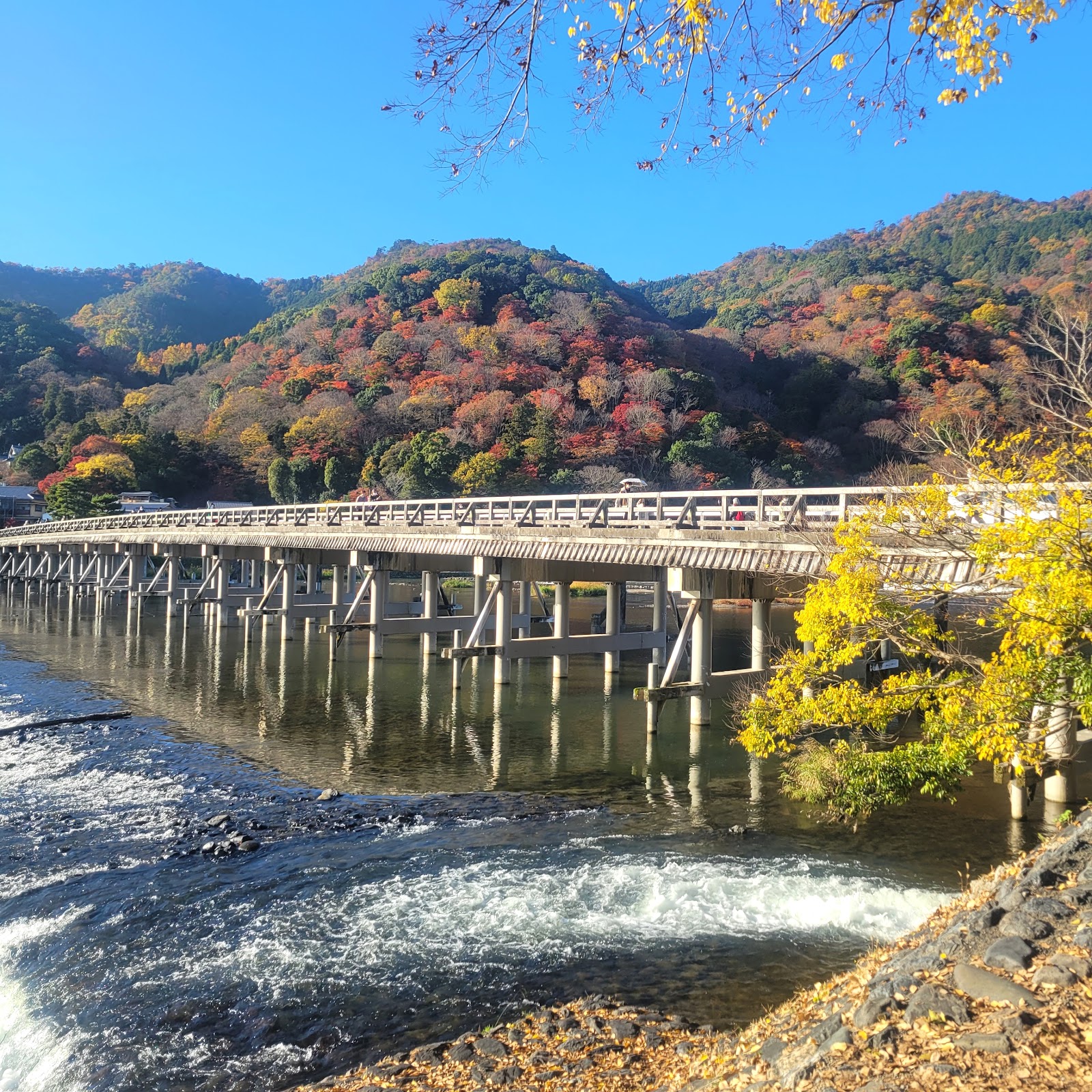
Arashiyama's iconic 155m wooden bridge over the Katsura River, framed by cherry and maple-clad hills.
The Togetsukyo Bridge is the enduring symbol of Arashiyama, the scenic district on Kyoto's western edge, and one of the most photographed spots in the whole city. Spanning roughly 155 metres across the Katsura River — known upstream as the Hozu and locally as the Oi — the low, elegant bridge draws the eye across the water to the forested flanks of Mount Arashiyama and Mount Ogura beyond. Its name, meaning "moon-crossing bridge," is said to derive from a 13th-century emperor's remark that the moon appeared to be walking across it, and on a clear night the poetry of that image still holds.
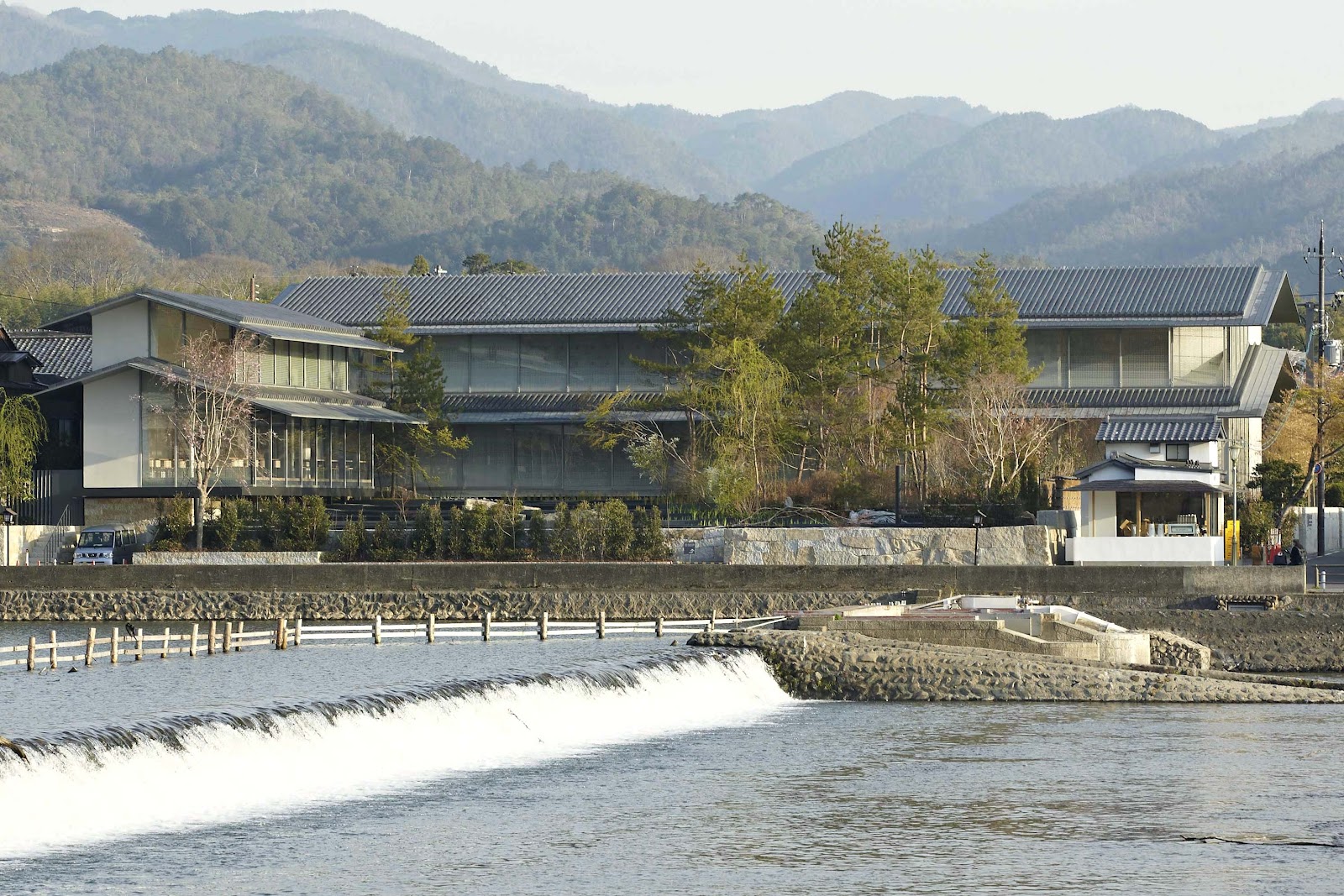
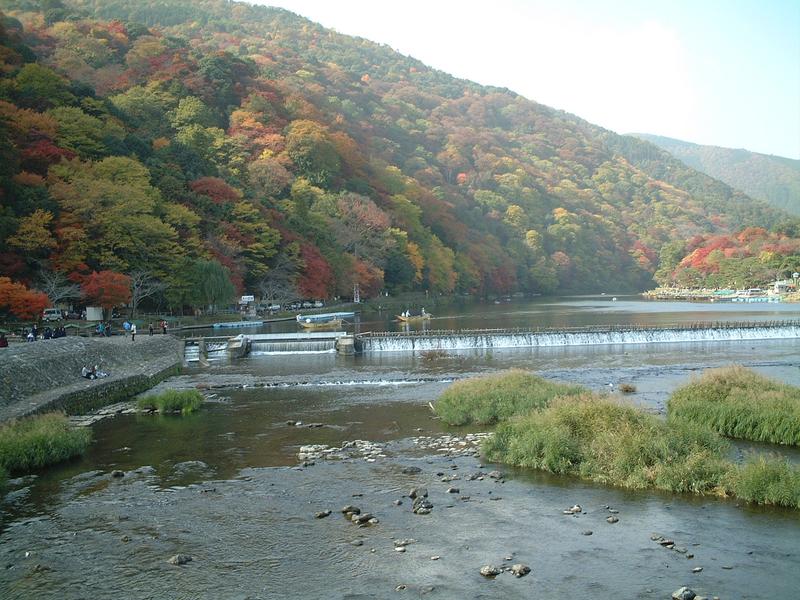
A bridge has stood at or near this crossing since the Heian period, when aristocrats came to Arashiyama to boat on the river, compose poetry and admire the seasons. The present structure, rebuilt in the 1930s, wears traditional wooden railings over a reinforced frame, preserving the classical silhouette while carrying modern foot and road traffic. Standing on it, or better yet viewing it from the banks, you understand at once why this landscape has been celebrated for over a thousand years: the water is broad and clear, pleasure boats and rental rowboats drift beneath the arches, and the mountains rise steeply on the far side, changing costume with every season.
Those seasons are the whole point. In late March and early April, cherry blossoms froth pink across the lower slopes and along the embankments. In November the maples ignite the hillsides in scarlet and gold, and the reflection of the burning forest in the river is a sight that fills every guidebook and camera roll. Even in winter a dusting of snow on the peaks, or the bare structure of the trees, has its own austere beauty, while summer brings deep green and the traditional spectacle of ukai cormorant fishing on the river at night.
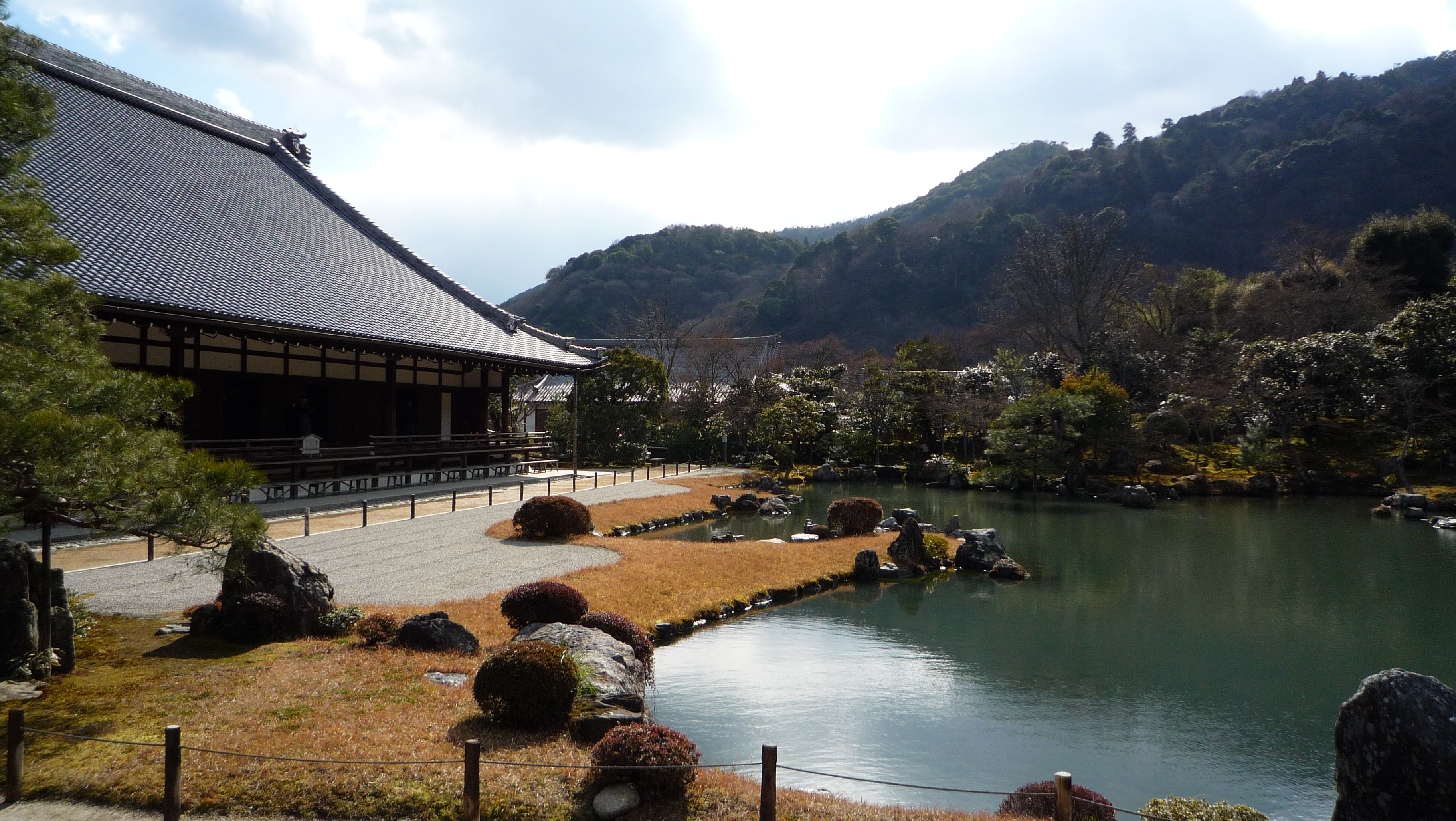
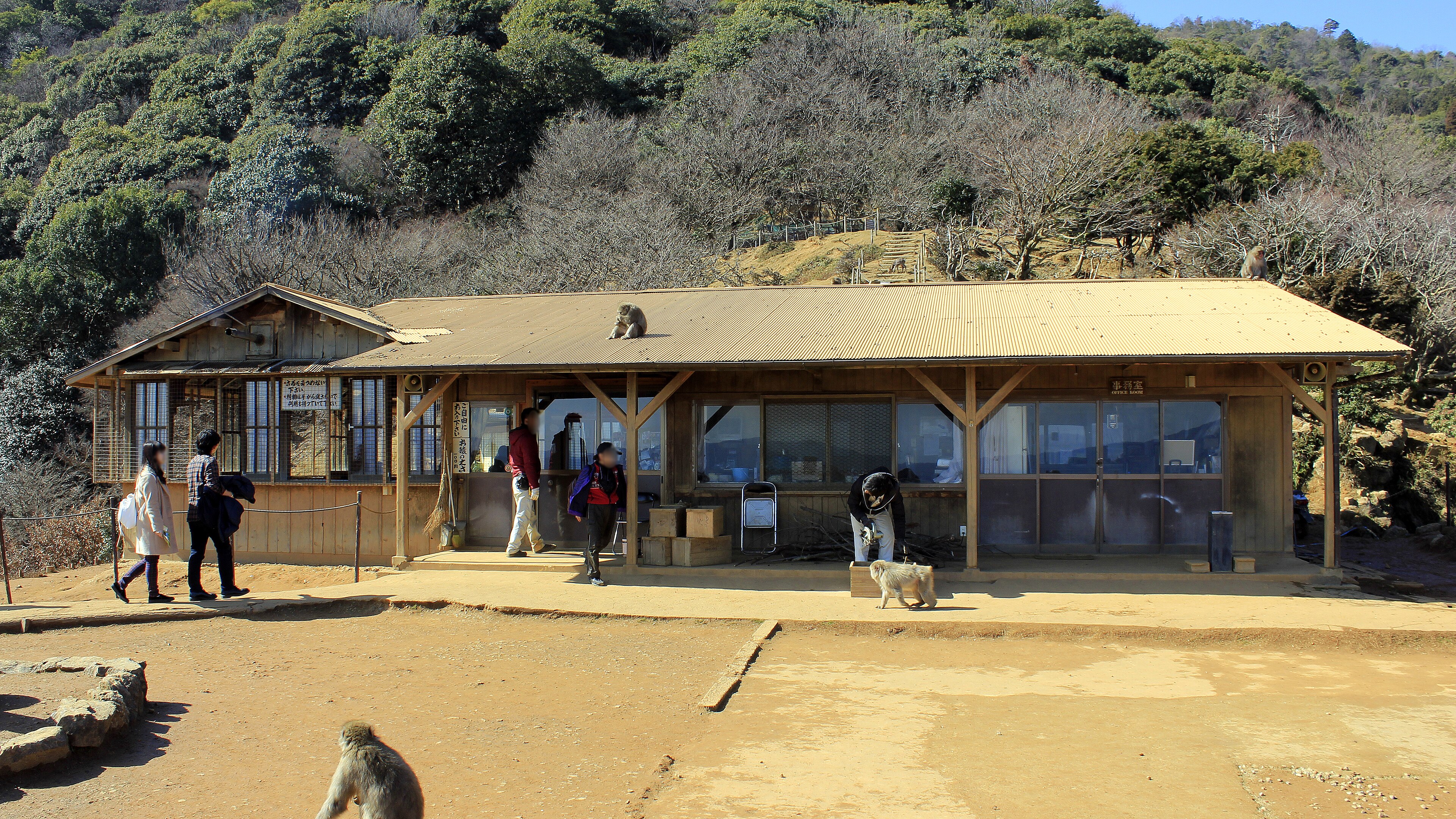
The area around the bridge rewards lingering. The famous Arashiyama Bamboo Grove, the temple of Tenryu-ji with its celebrated garden, the Monkey Park on Iwatayama, and the riverside restaurants and sweet shops are all within a short walk, making the bridge a natural hub for a day of exploring. Rowboats and pleasure craft can be hired from the north bank if you want to see the gorge from the water, and the scenic Sagano Romantic Train and the Hozugawa river cruise both terminate nearby.
Because it is so beloved, the bridge grows extremely crowded from mid-morning onward, especially in the peak blossom and foliage weeks. The trick is to arrive early — soon after dawn the light is soft, the boats are still, and you can enjoy the classic view almost alone. Photographers should cross to the south bank and look back north to frame the wooden span against the mountainside, the composition that has defined Arashiyama for generations.
Access is easy from three separate stations: the Keifuku Randen tram and the Hankyu line both terminate at Arashiyama stops moments from the water, while the JR Sagano Line reaches Saga-Arashiyama, about a 12-minute walk to the north. Entry is free, the setting is timeless, and few first views of Kyoto's western hills are as instantly rewarding.
A local's tip
Cross to the south bank and look back — the classic postcard shot frames the wooden bridge against the forested face of Mount Arashiyama and Mount Ogura.
Best time to visit
Early morning to beat crowds; autumn for the koyo-clad Arashiyama slopes
Getting there
In the heart of Arashiyama. From JR Saga-Arashiyama Station walk about 12 minutes south; from the Randen or Hankyu Arashiyama stations it is a short stroll to the riverbank.
Good to know
- Wi-Fi
- Restrooms
- Boat rental
Plan the whole trip offline
Togetsukyo Bridge Viewpoint is one of many places in the Real Japan app — with turn-by-turn directions, nearby spots and full offline maps you can use with no signal.