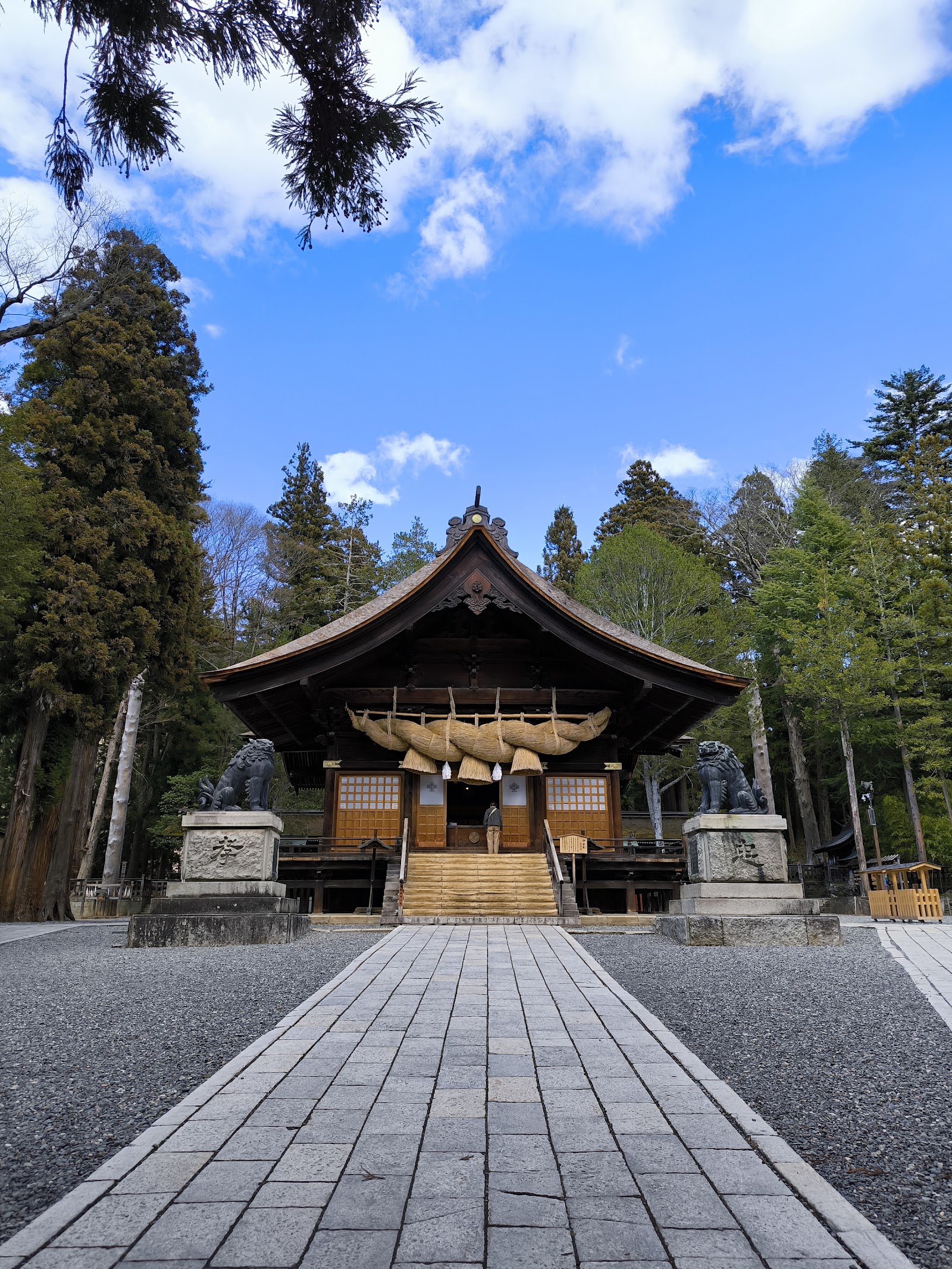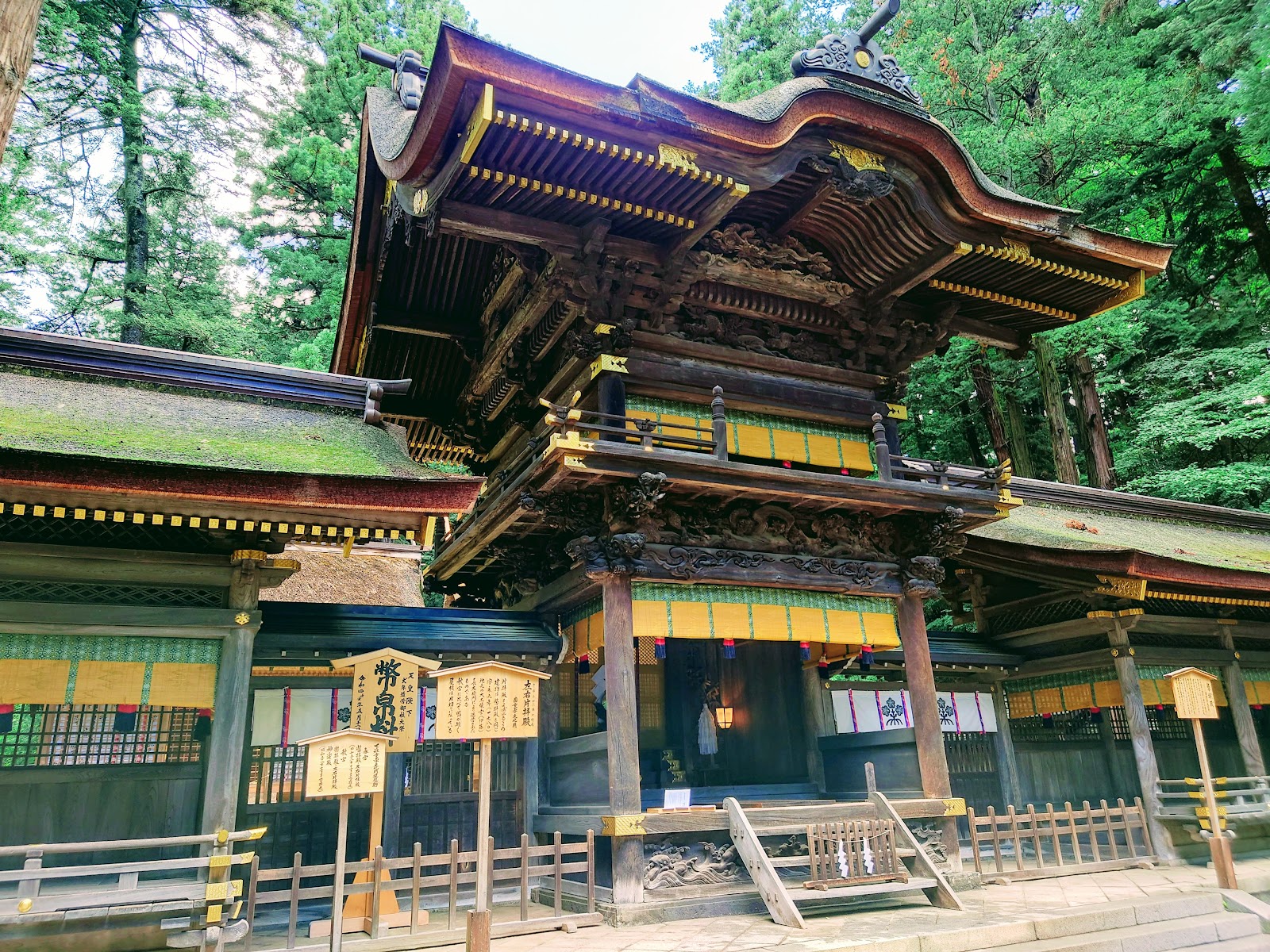
The lower spring shrine of Suwa Taisha, a tranquil precinct beside a clear stream on the old Nakasendo road.
Suwa Taisha Shimosha Harumiya, the Spring Shrine of the lower Suwa complex, completes the quartet of sacred sites that make up Suwa Taisha, the millennium-old Grand Shrine set around Lake Suwa in the mountains of central Nagano. Standing on the old Nakasendo highway a short distance from its sister shrine Akimiya, Harumiya is a place of quiet grace where the god of Suwa is believed to reside during the warmer months before moving to the Autumn Shrine.
The name Harumiya means Spring Shrine, and the deity is said to dwell here from the first lunar month, when the mountains begin to thaw. The seasonal transfer of the kami between the spring and autumn lower shrines is enacted each year in a stately ritual procession that carries the sacred spirit along the road between the two sites, a living tradition that connects modern Shimosuwa to its distant past.
Harumiya's architecture closely mirrors that of Akimiya, with a kaguraden sacred dance hall and, behind it, a richly carved heihaiden worship hall. The intricate wooden carvings of dragons and mythical creatures here are the work of celebrated regional master carvers, and comparing the two lower shrines has long been a pleasure for connoisseurs of Edo-period woodwork. Because Harumiya sees fewer visitors than the more prominent Akimiya, its grounds often feel especially peaceful, shaded by ancient trees and refreshed by the clear stream that runs nearby.
One of the shrine's most endearing features lies just behind the main precinct: the Manji no Sekibutsu, a large seated stone Buddha carved in a naive folk style whose broad, gently crooked smile has made it a much-loved local character. Legend says the sculptor who began it saw the stone smiling and could not bear to finish carving the face, leaving the beatific grin that visitors delight in today. A short riverside walk from the shrine also leads to the Onbashira log-riding slope used during the great festival.
As at every Suwa shrine, four massive onbashira pillars stand at the corners of the sacred ground, renewed every six years when the townspeople of Shimosuwa fell enormous fir trees in the surrounding hills and haul them down to be raised by hand. This Onbashira Festival, held in the Years of the Tiger and Monkey, is among the oldest and most spectacular communal rituals in Japan.
The setting on the historic Nakasendo, once a major highway linking Kyoto and Edo, adds to Harumiya's appeal. The surrounding streets of Shimosuwa retain the flavor of an old post and hot-spring town, and free public foot baths fed by the local springs make a pleasant rest stop. Cherry blossoms in spring and vivid maples in autumn frame the shrine beautifully.
Harumiya is an easy visit from Shimosuwa Station on the JR Chuo Main Line, about a twenty-minute walk, and pairs naturally with Akimiya just a kilometer away. Together with the upper shrines across Lake Suwa, it forms part of a rewarding pilgrimage through one of Japan's most ancient centers of faith. Allow around forty minutes to enjoy the carvings, the smiling stone Buddha and the gentle atmosphere of the Spring Shrine.
A local's tip
Behind the shrine sits the Manji stone Buddha, a folk-art statue with a famously gentle, quirky smile that has become a beloved local mascot.
Best time to visit
Spring; autumn
Getting there
From Shimosuwa Station on the JR Chuo Main Line, walk about 20 minutes along the old Nakasendo route, or continue roughly one kilometer on foot from Akimiya. Taxis and a small free parking lot are available at the shrine.
Good to know
- Parking
- Restrooms
Plan the whole trip offline
Suwa Taisha Shimosha Harumiya is one of many places in the Real Japan app — with turn-by-turn directions, nearby spots and full offline maps you can use with no signal.