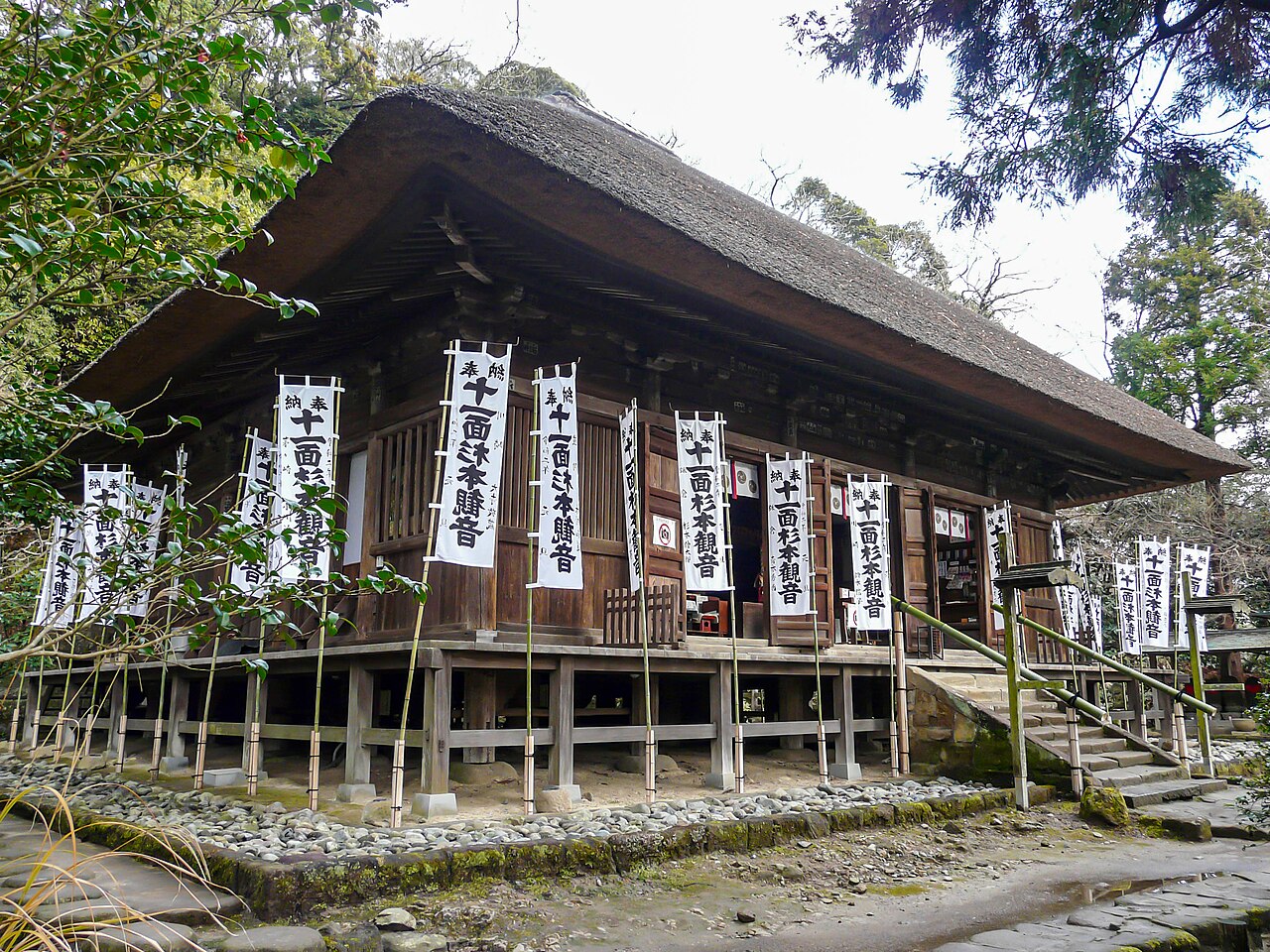
Kamakura's oldest temple, a thatched Kannon hall reached by a mossy stone stair.
Sugimoto-dera is, by tradition, the oldest temple in Kamakura, said to have been founded in 734 by the empress consort Komyo and the priest Gyoki, more than four centuries before the city became the seat of samurai power. That deep antiquity, combined with its rustic, weathered character, gives the small temple an atmosphere quite different from Kamakura's grander Zen monasteries: this is a place that feels genuinely ancient, humble, and untouched by fashion.
The temple is dedicated to Kannon, the bodhisattva of compassion, and enshrines three eleven-headed Kannon statues, attributed to celebrated early monks and normally kept in the dim interior of the main hall. It is the first stop on the Bando Sanjuresho, a historic pilgrimage circuit of thirty-three Kannon temples across eastern Japan, and pilgrims in white still make their way here to begin or continue the route, adding to the sense of living devotion.
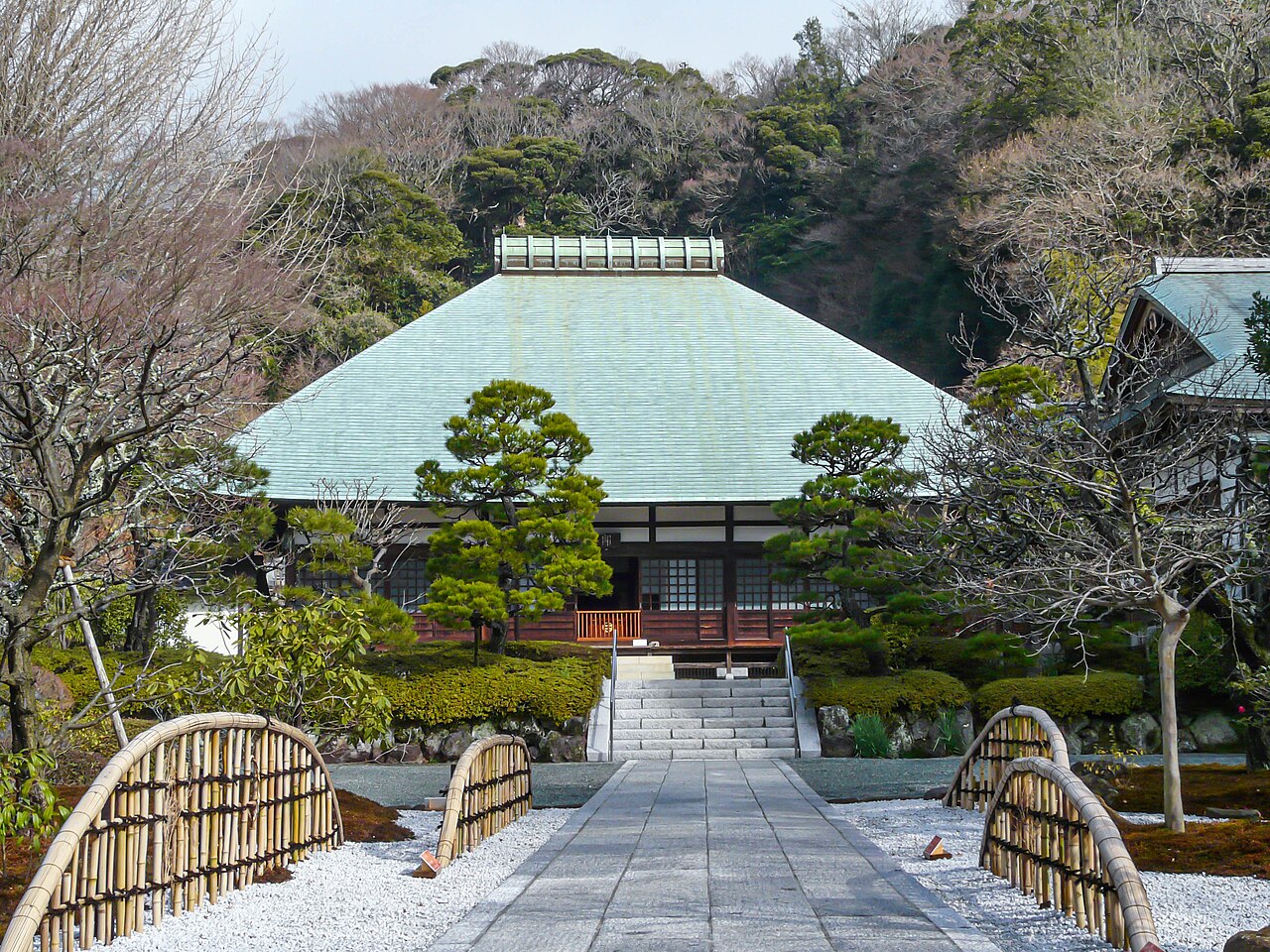
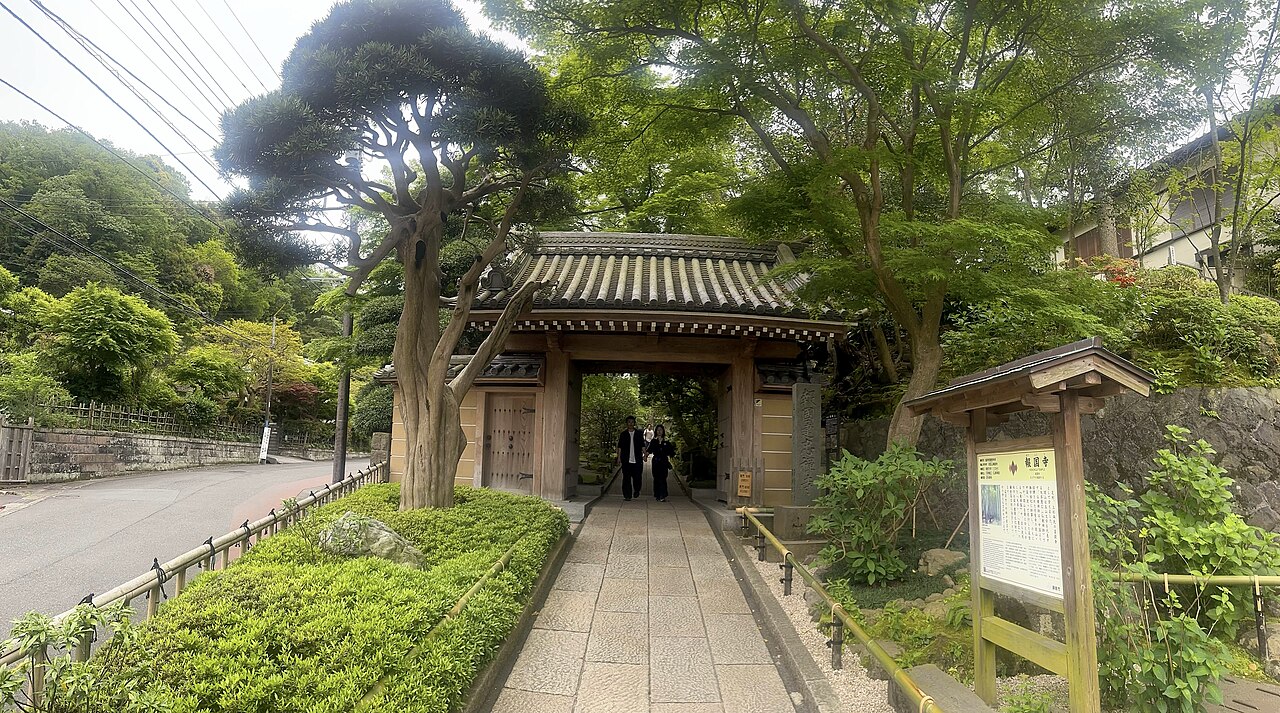
The great pleasure of Sugimoto-dera is its approach. Beyond the Niomon gate, guarded by fierce guardian figures, an old stone staircase climbs the hillside, its steps so thickly carpeted in moss that they have been roped off to protect them; a parallel path lets visitors climb alongside while admiring the green, time-worn originals. At the top stands the main hall, a modest structure with a deep thatched roof of the kind that has almost vanished elsewhere, its eaves dark with age and hung with the paper name-slips of pilgrims. The hall's dim, incense-scented interior, cluttered with banners and offerings, feels a world away from the polished museum-temples on the tourist trail.
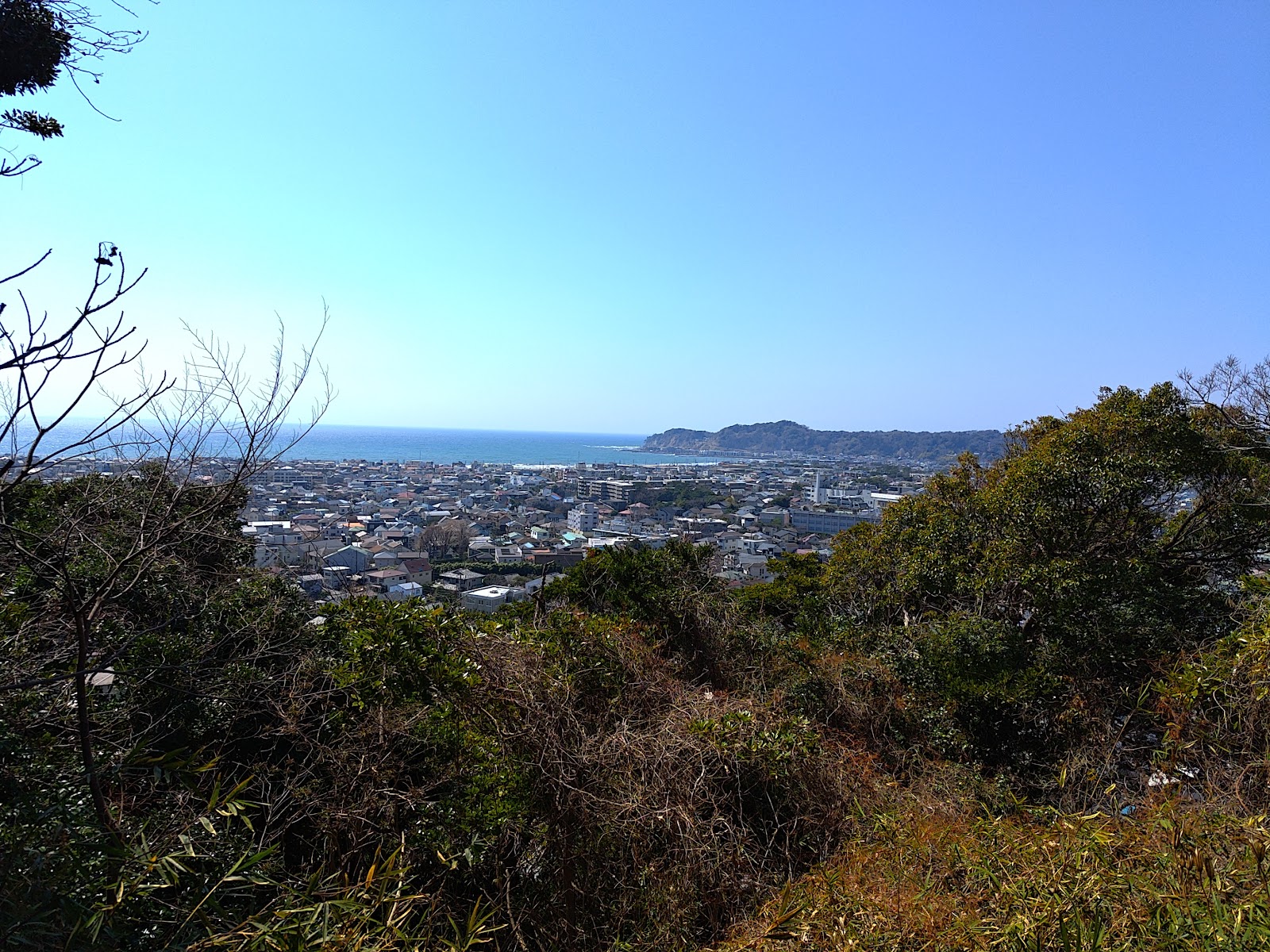
The grounds are small and can be explored in half an hour, but they repay slow attention: rows of stone Jizo and Kannon figures, an old bell, and a hillside setting among trees that turn warm colours in autumn. Because Sugimoto-dera lies out in the eastern Kamakura hills and lacks a single headline attraction like a giant Buddha, it sees far fewer visitors than the famous sights, and on many days you may have the mossy stairs and thatched hall almost to yourself, which is precisely its appeal for travellers seeking the older, quieter soul of Kamakura.
To reach it, take a bus from Kamakura Station bound for Kanazawa-Hakkei or Jomyoji and alight at the Sugimoto-Kannon stop, directly in front of the temple; alternatively it is a walk of around 30 minutes east from the station. The station is served by the JR Yokosuka Line and covered by the Japan Rail Pass. The climb to the hall is short, and while the historic moss steps are off-limits, the adjacent path is straightforward, making a visit easy for most travellers. Allow about 40 minutes. Sitting close to Hokoku-ji and Jomyo-ji, Sugimoto-dera fits neatly into a half-day loop through eastern Kamakura, offering a touch of the town's most venerable history between the bamboo grove and the tea gardens.
A local's tip
Climb the moss-covered stone stairway beside the newer path for the temple's timeless, atmospheric approach.
Best time to visit
Any clear day; quiet year-round
Getting there
From Kamakura Station take a bus toward Kanazawa-Hakkei or Jomyoji to the Sugimoto-Kannon stop, right outside the temple.
Good to know
- Gift Shop
- Restrooms
Plan the whole trip offline
Sugimoto-dera is one of many places in the Real Japan app — with turn-by-turn directions, nearby spots and full offline maps you can use with no signal.