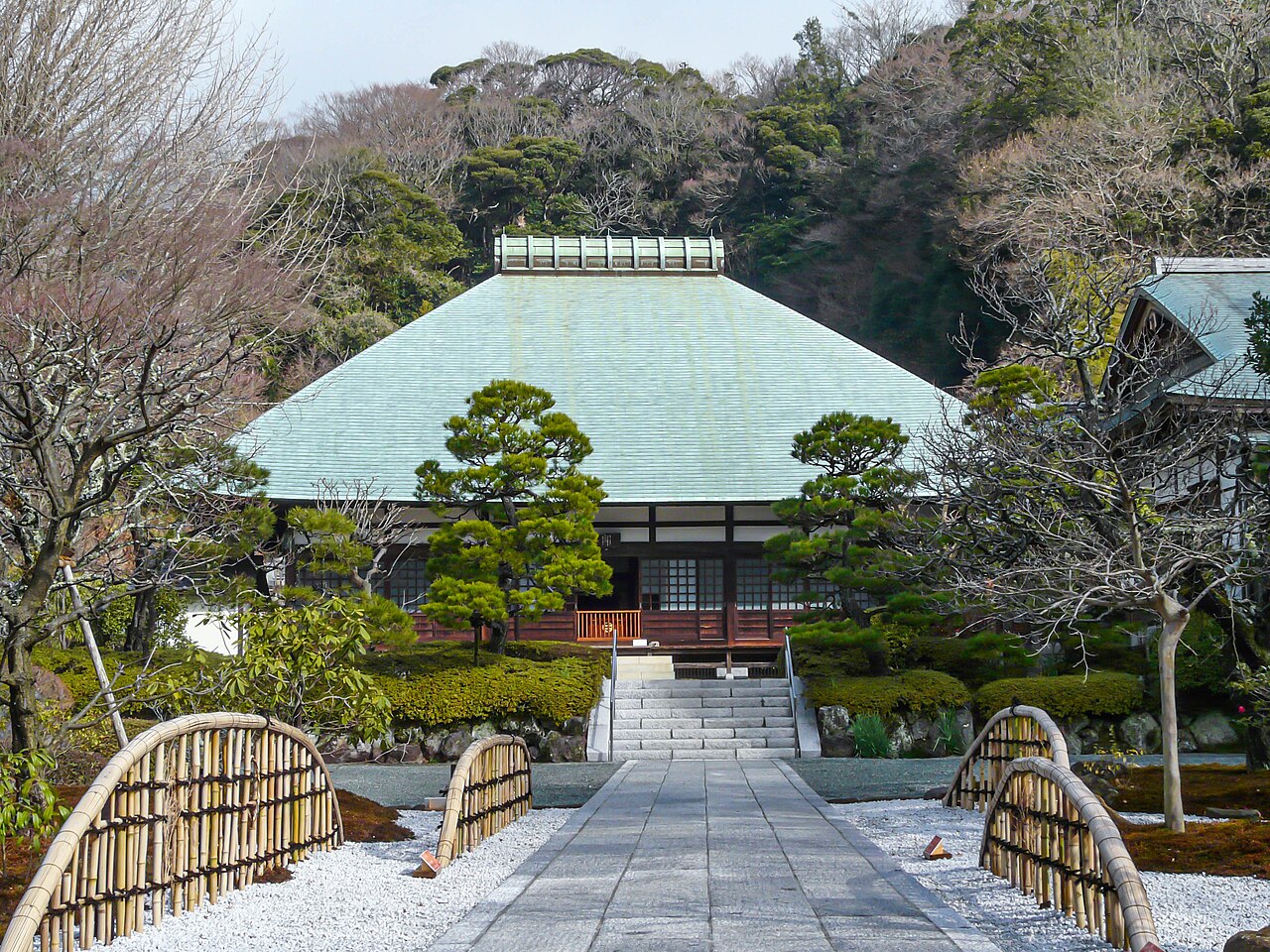
One of the Five Great Zen temples, with a raked stone garden and a hillside teahouse.
Jomyo-ji is one of Kamakura's Gozan, the five officially ranked Great Zen Temples, and though it is the quietest and least visited of them, it offers a refined, restful experience that rewards travellers who venture into the eastern hills. Founded in 1188, in the early years of the Kamakura shogunate, and later reorganised as a Rinzai Zen monastery, it once presided over a sprawling complex of sub-temples. Much has been lost over the centuries, and today Jomyo-ji is a compact, elegant temple whose appeal lies in atmosphere and garden rather than grand scale.
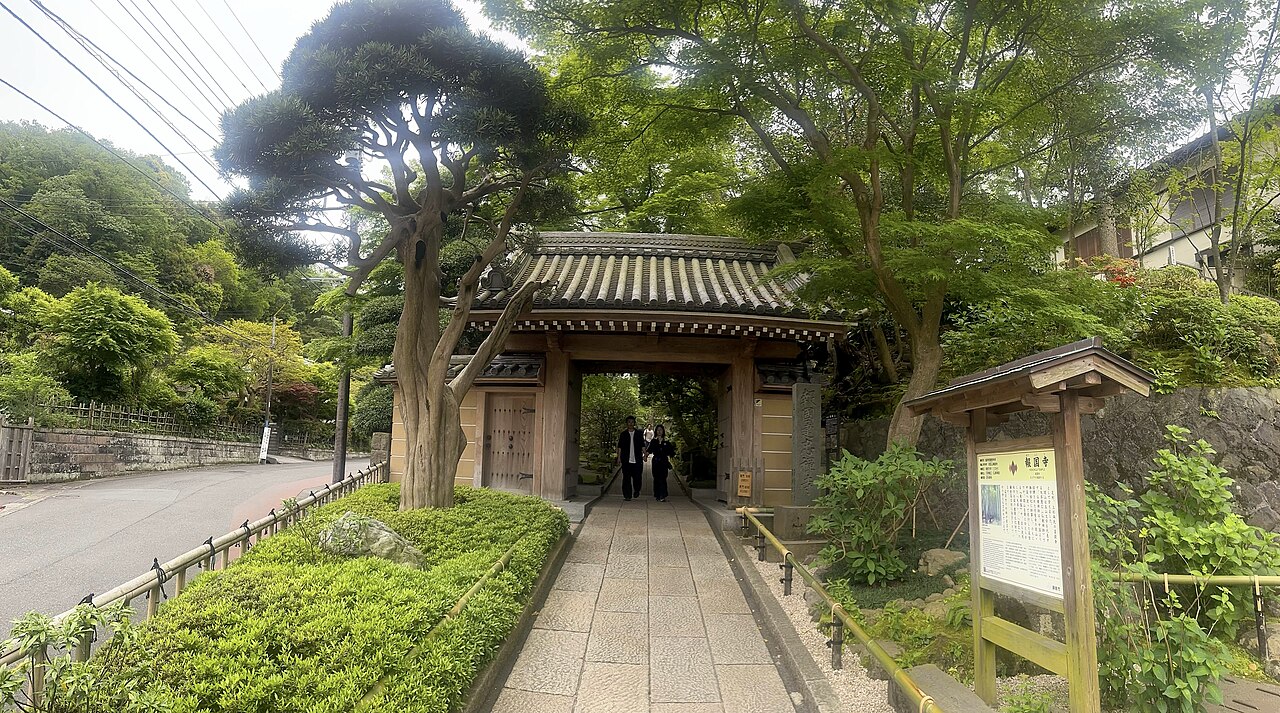
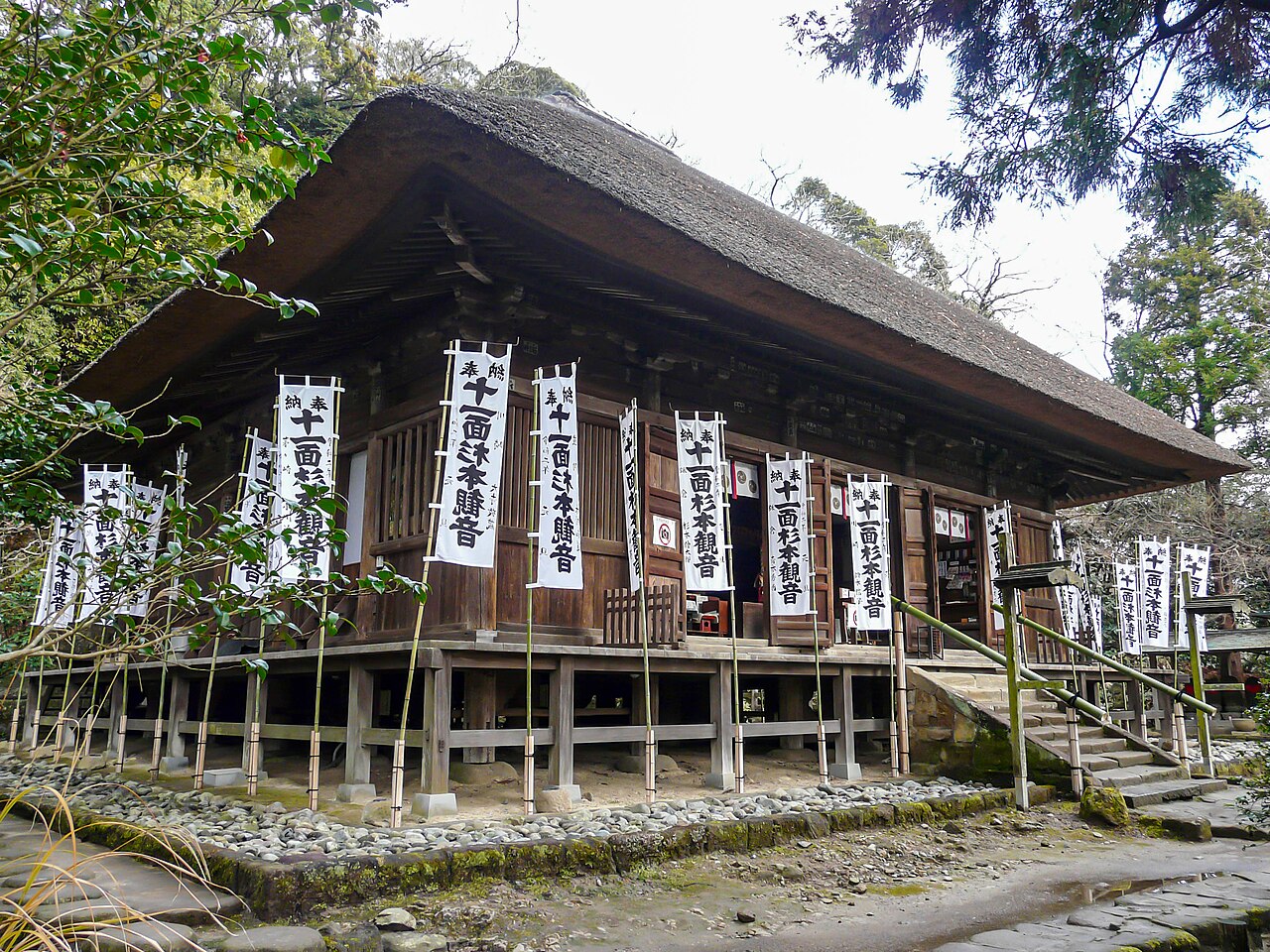
Beyond a simple gate, a straight gravel path leads through a spacious, well-kept precinct to the main hall, a dignified building set against a backdrop of wooded hillside. The grounds are notably open and tranquil, planted with plum, cherry and maple that mark the turning seasons, and the relative absence of crowds lets the Zen restraint of the place come through. To one side, a small graveyard climbs the slope, and the calm here is a genuine contrast to the bustle of central Kamakura only a bus ride away.
The highlight for many visitors is the Kisen-an teahouse, set slightly above the main hall beside a karesansui, a dry landscape garden of raked white gravel, clipped shrubs and carefully placed stones designed for contemplation. For an additional charge you can sit on tatami at the teahouse, receive a bowl of whisked matcha and a seasonal sweet, and gaze out over the raked garden, an experience that distils the meditative spirit of Zen tea culture into a quiet half-hour. The framed view of the dry garden from the teahouse veranda is one of the loveliest and least-known scenes in Kamakura.
The temple grounds also hold an unexpected touch: on the hillside above stands a Western-style building, the Ishigama Garden Terrace, a restaurant and bakery housed in a former residence, where visitors can enjoy bread, tea or a meal with a view, an unusual pairing of Zen temple and European-style garden that speaks to the temple's willingness to blend old and new. Nearby, a small shrine to the god of the kamado, the traditional cooking hearth, gives the surrounding Jomyoji district its name.
Jomyo-ji is reached by bus from Kamakura Station bound for Kanazawa-Hakkei or Jomyoji, alighting at the Jomyoji stop just a couple of minutes away, or by a walk of around 30 minutes east from the station; the station lies on the Japan Rail Pass-covered JR Yokosuka Line. Admission is a token 100 yen, the grounds are gentle and largely level, and around 45 minutes is comfortable, more if you pause for tea. Standing close to Hokoku-ji and Sugimoto-dera, Jomyo-ji completes a satisfying eastern Kamakura loop, offering a rare chance to sit quietly in a Great Zen Temple with a bowl of matcha and a raked garden almost to yourself.
A local's tip
Reserve time for matcha at the Kisen-an teahouse overlooking the raked-gravel karesansui garden.
Best time to visit
Spring for plum and cherry in the dry garden
Getting there
From Kamakura Station take a bus toward Kanazawa-Hakkei or Jomyoji to the Jomyoji stop, then walk about 2 minutes.
Good to know
- Garden
- Teahouse
- Restrooms
Plan the whole trip offline
Jomyo-ji is one of many places in the Real Japan app — with turn-by-turn directions, nearby spots and full offline maps you can use with no signal.