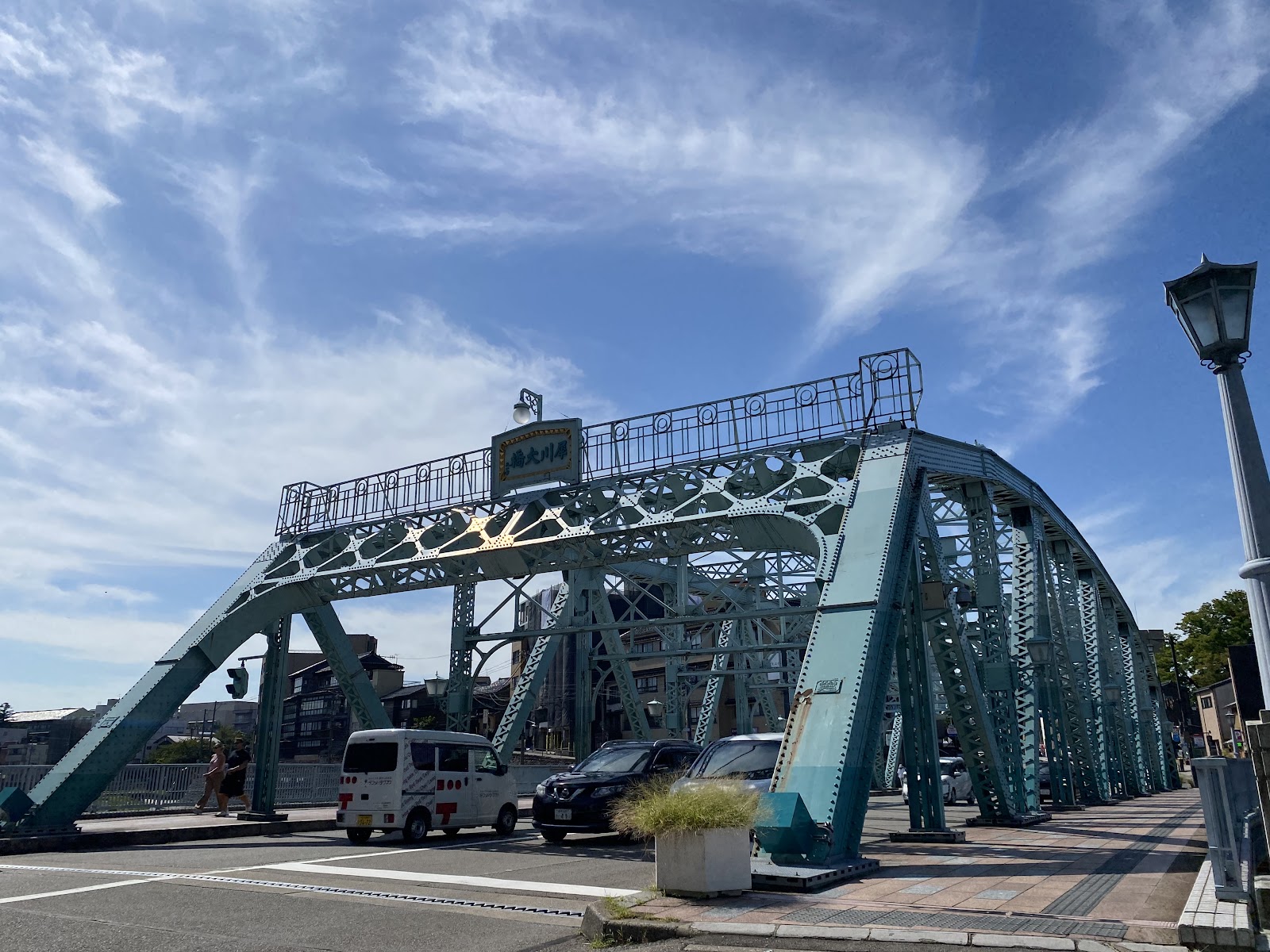
A landmark blue steel-truss bridge over the Sai River, framing the Hakusan mountains one way and the Sea of Japan the other.
The Saigawa Ohashi is the grand old bridge of the Sai River, the broader, faster watercourse that Kanazawa locals traditionally call the city's "masculine" river in contrast to the gentle Asano. Spanning the river between the lively Katamachi entertainment quarter and the temple district of Teramachi, the bridge is both a busy thoroughfare and a genuine viewpoint, a place where you can stand above the water and look out toward mountains in one direction and the sea in the other.
The present structure, completed in 1924, is a single-span steel curved-chord Warren truss painted a distinctive robin's-egg blue, and it carries National Route 157 across the river on a broad deck with sidewalks on both sides. It is a national registered tangible cultural property, and it carries a small piece of international history: because domestic steel was scarce after the great earthquake of the era, some of the structural steel was imported from Britain, with nameplates recording the town of Middlesbrough as its origin.
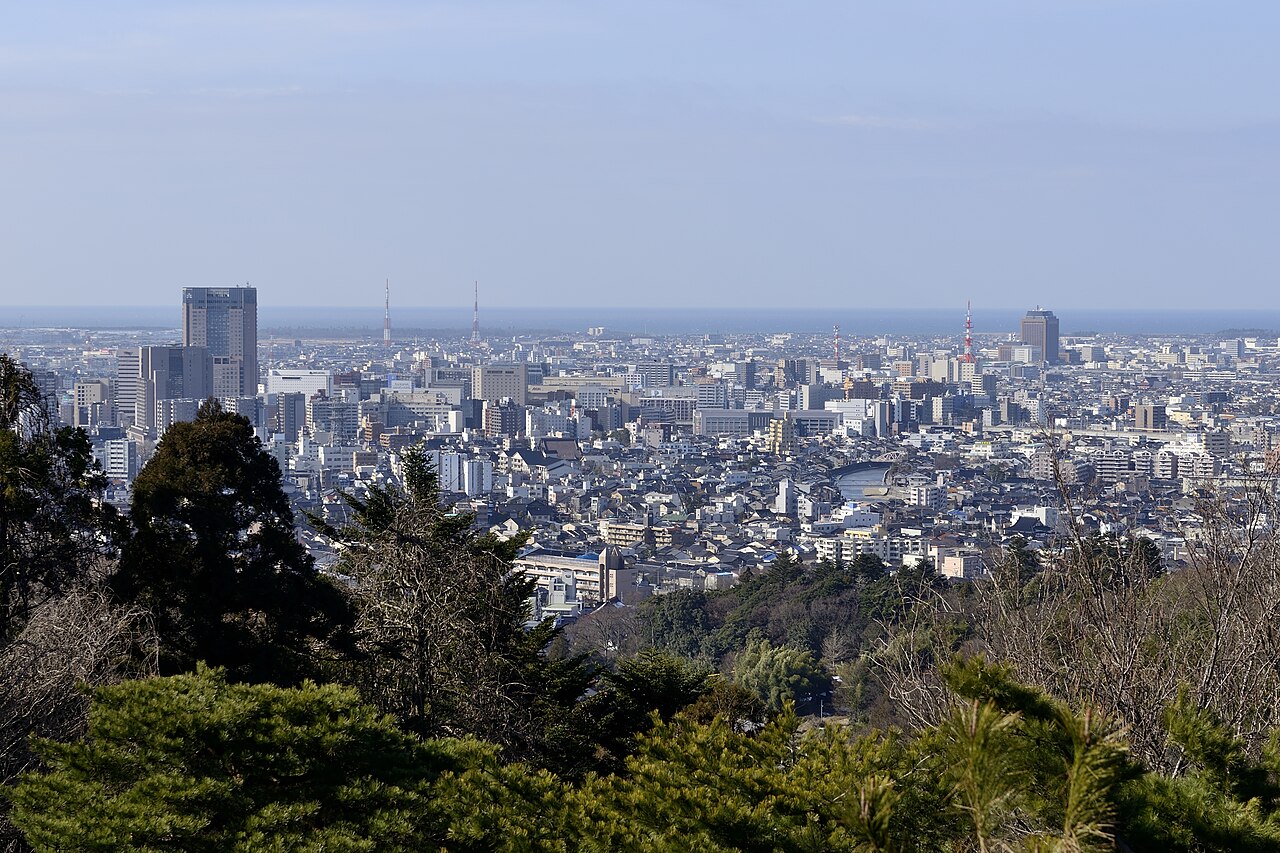
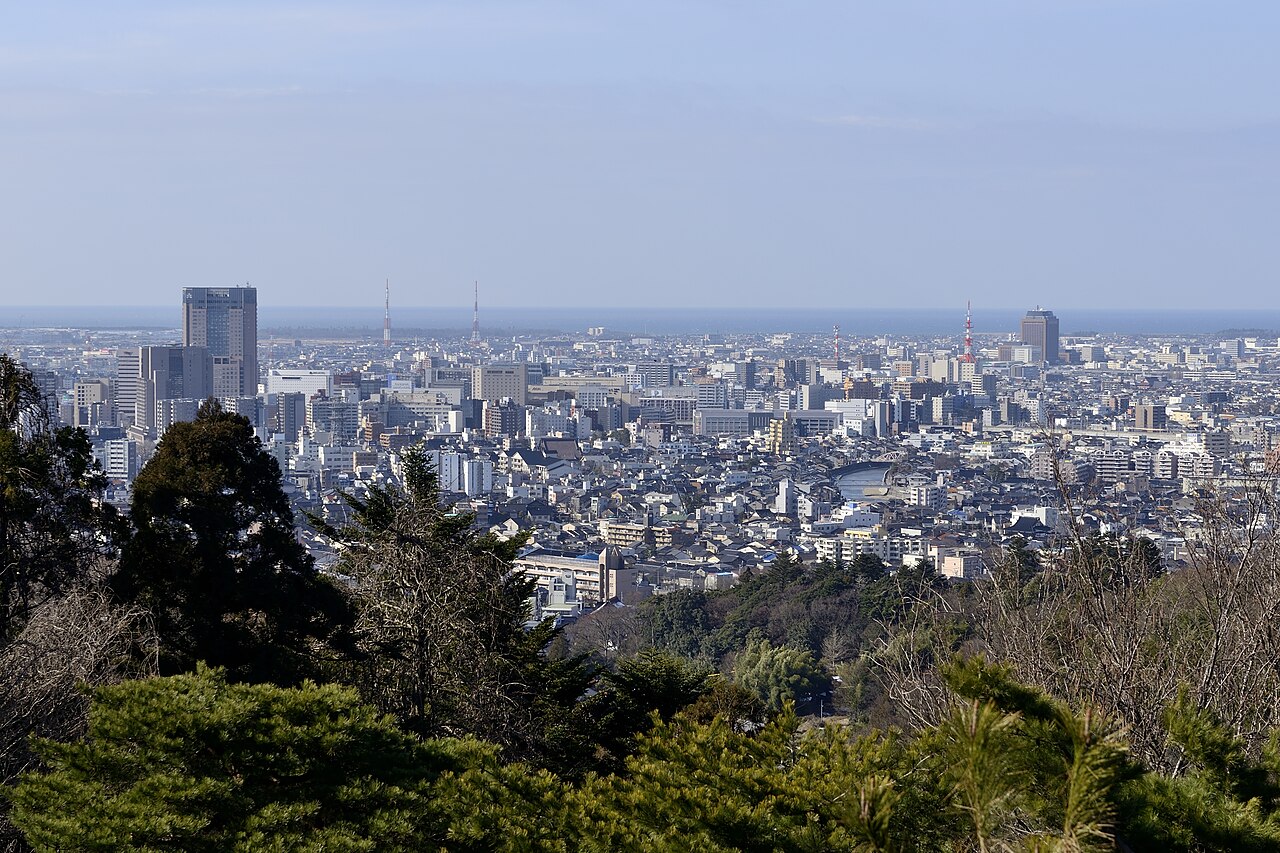
As a viewpoint, the bridge's appeal lies in its open sightlines along the wide river. Look upstream and, on clear days, the Hakusan mountain range fills the horizon, its peaks snow-capped from roughly November through May; look downstream and the river runs toward the Sea of Japan. Cherry trees line both banks, so spring turns the whole outlook pink, while autumn brings warmer tones and crisp, clear air. After dark the blue steelwork is illuminated, giving the bridge a striking presence over the black water.
A notable detail is how the bridge anchors the neighbourhood: just above it, on the Teramachi side, rises the historic bluff of temples, including the celebrated Ninja Temple, and the famous W-shaped Ishikiri Slope climbs the hill nearby. This makes the crossing a natural gateway between Kanazawa's nightlife district and its atmospheric temple quarter.
The experience is straightforward and open to all: wide, flat sidewalks make it easy to walk across and stop for photographs, riverbank paths below let you view the bridge itself, and there is no fee or gate. Because it is a major traffic route, it hums with activity by day, so the calmer light of early morning or the illuminated hours after sunset are the most photogenic. The nearby Katamachi area supplies restrooms, cafes, and refreshments.
Clear winter days deliver the signature Hakusan-over-the-river view, spring adds blossom, and autumn offers colour and clarity, making the cooler half of the year especially rewarding here.
Getting there is easy from the city centre. From Kanazawa Station, take the Kanazawa Loop Bus or a Hokutetsu bus toward Katamachi and alight near Katamachi or Sakurabashi, a short walk from the bridge, about a 10-minute ride. Alternatively, the Hokuriku Railroad Ishikawa Line runs to nearby Nomachi Station, roughly a 12-minute walk away, which is handy if you are already south of the river. IC cards are accepted on the buses and the private railway, so reaching this classic Kanazawa crossing takes minimal effort.
A local's tip
Cross on foot and look upstream toward the Hakusan mountains, then downstream toward the sea; between November and May the snow-capped peaks make the finest backdrop, and the robin's-egg-blue frame is floodlit after dark.
Best time to visit
Clear days for mountain-and-sea views; illuminated at night
Getting there
From Kanazawa Station take the Kanazawa Loop Bus or a Hokutetsu bus toward Katamachi/Nomachi and get off near Katamachi or Sakurabashi, a short walk from the bridge; alternatively ride the Hokuriku Railroad Ishikawa Line to Nomachi Station and walk about 12 minutes.
Good to know
- Seating
- Restrooms
Plan the whole trip offline
Saigawa Ohashi Bridge is one of many places in the Real Japan app — with turn-by-turn directions, nearby spots and full offline maps you can use with no signal.