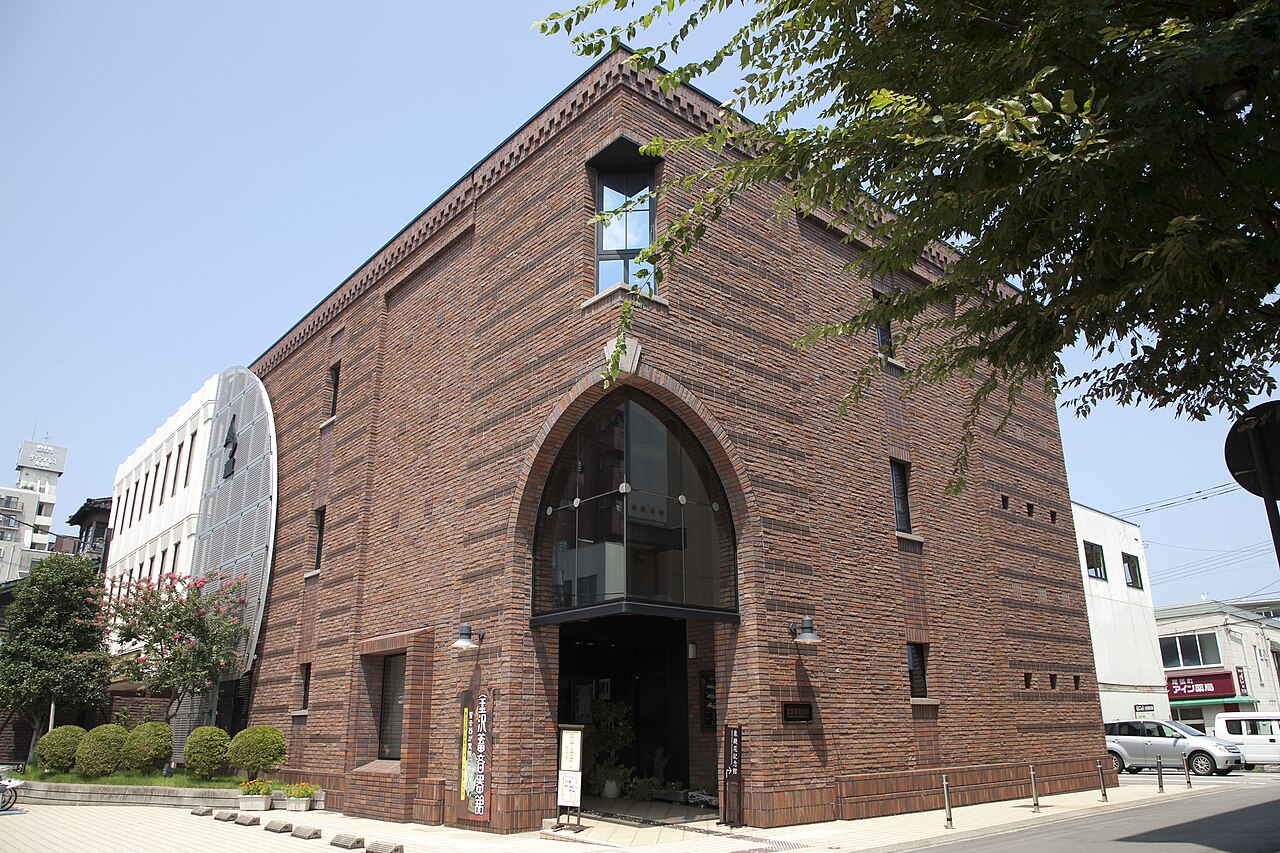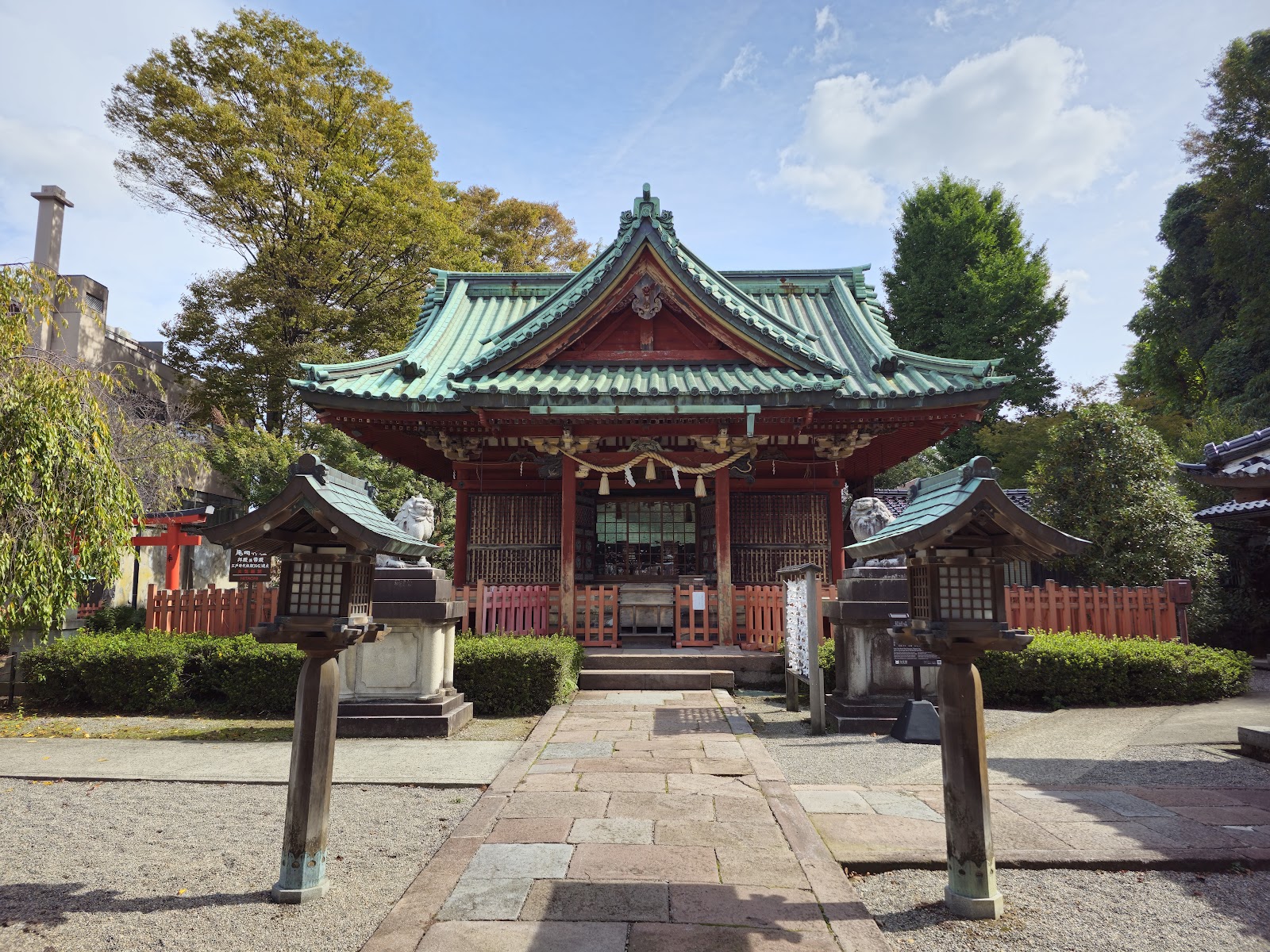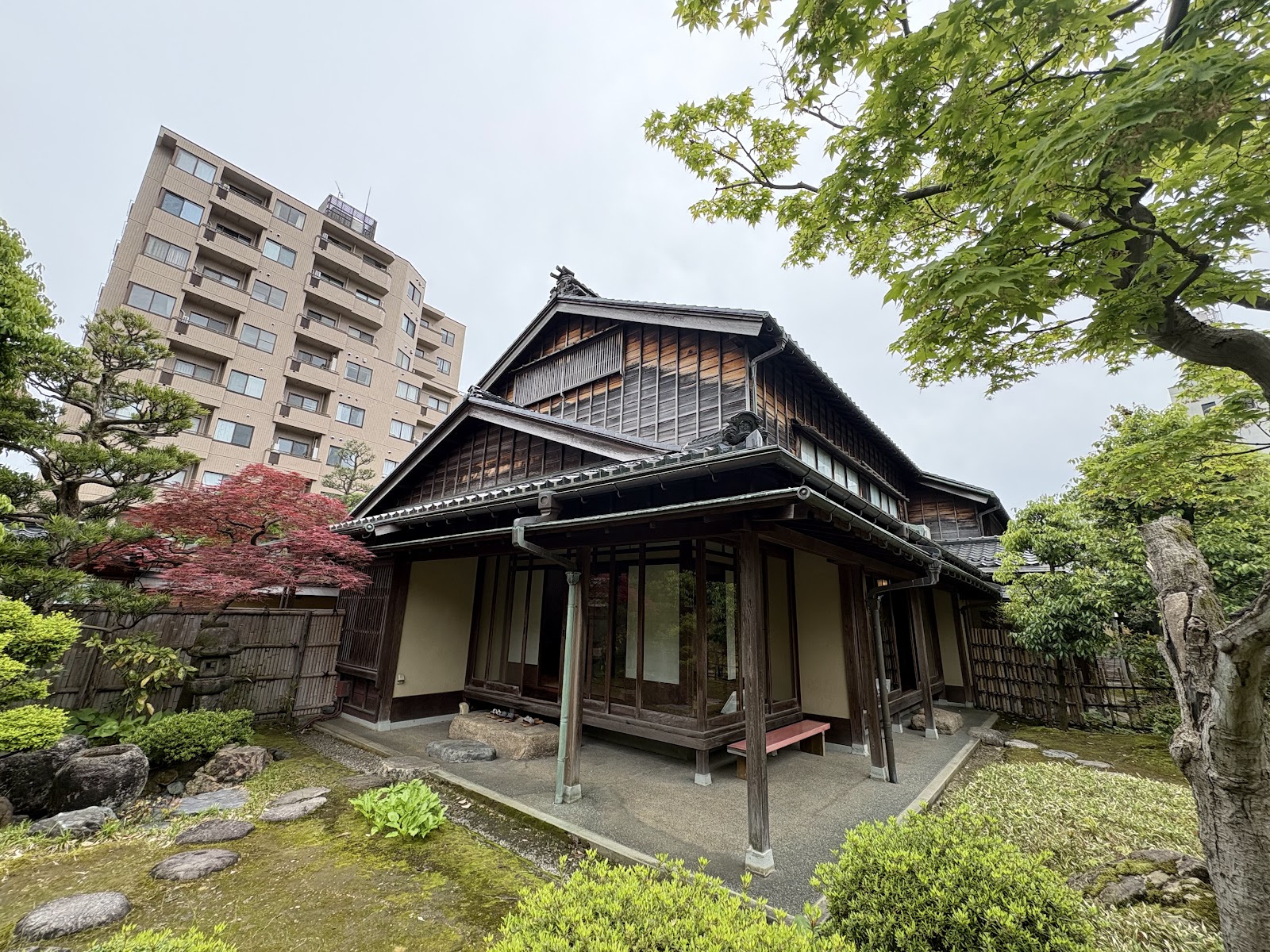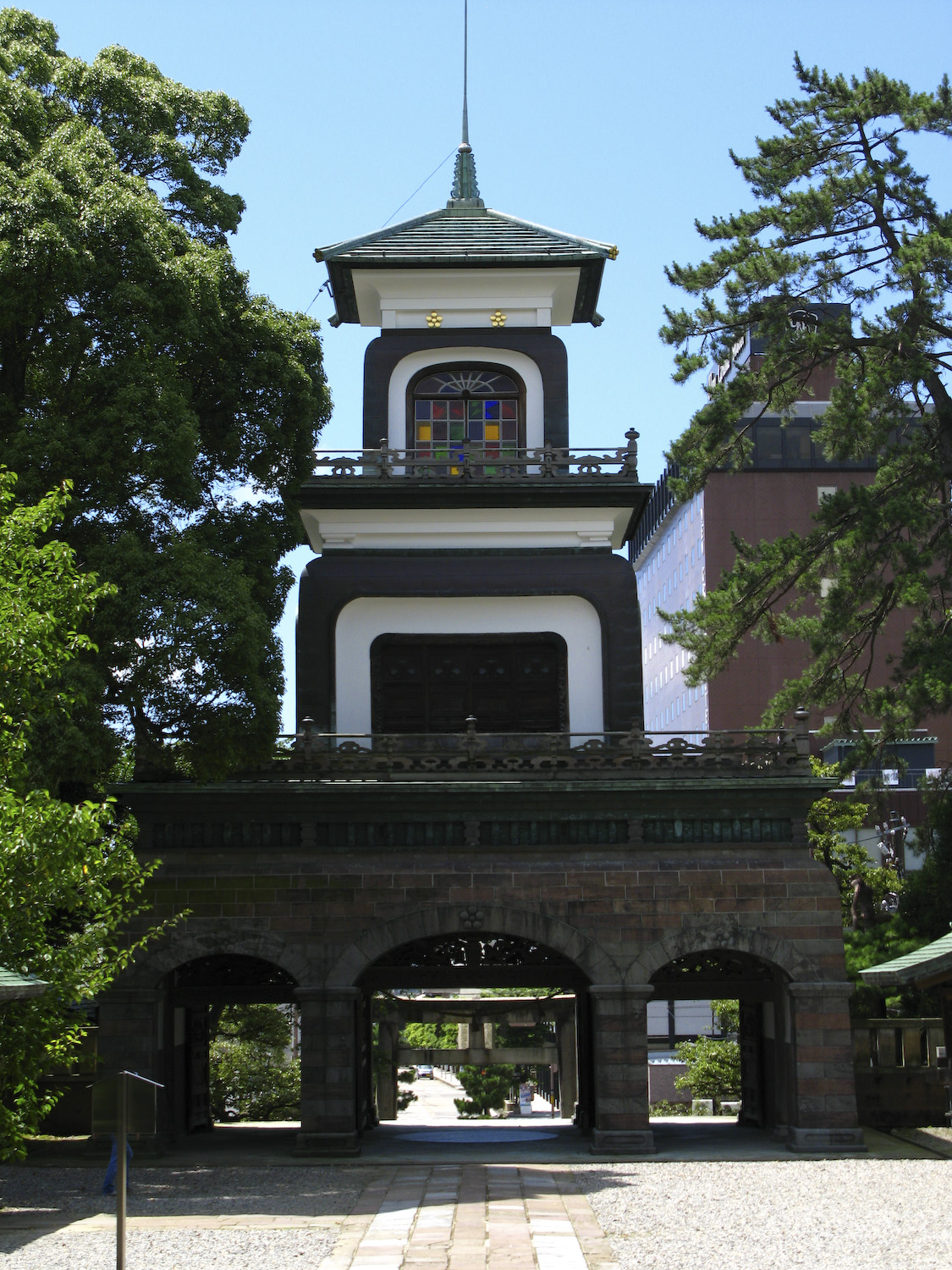
Kanazawa's most distinctive shrine, crowned by a Dutch-designed three-storey gate with stained glass, honouring the founding lord Maeda Toshiie.
Oyama Shrine is Kanazawa's most architecturally surprising sacred site, and for many visitors it is the first place that makes the city's cross-cultural history feel tangible. The shrine is dedicated to Maeda Toshiie, the powerful warlord who founded the Kaga Domain in 1583 and set the Maeda clan on its path to becoming the wealthiest feudal house in Japan after the Tokugawa. His consort, Lady Matsu, is enshrined alongside him.
The shrine was first established in 1599 on Utatsu-yama, the wooded hill east of the city, and moved to its present location in 1873 in the wave of change that followed the Meiji Restoration. Two years later, in 1875, the extraordinary Shinmon gate that now defines the shrine was completed. It is unlike anything else in Japan: a three-storey structure that blends Japanese, Chinese and European elements. The lower tier is stone and traditional in feel, while the upper stories rise in a distinctly Dutch style, topped with a chamber of coloured stained glass. That top level once functioned as a lighthouse, its lamp said to have been visible from the port of Kanazawa. The gate is designated an Important Cultural Property.
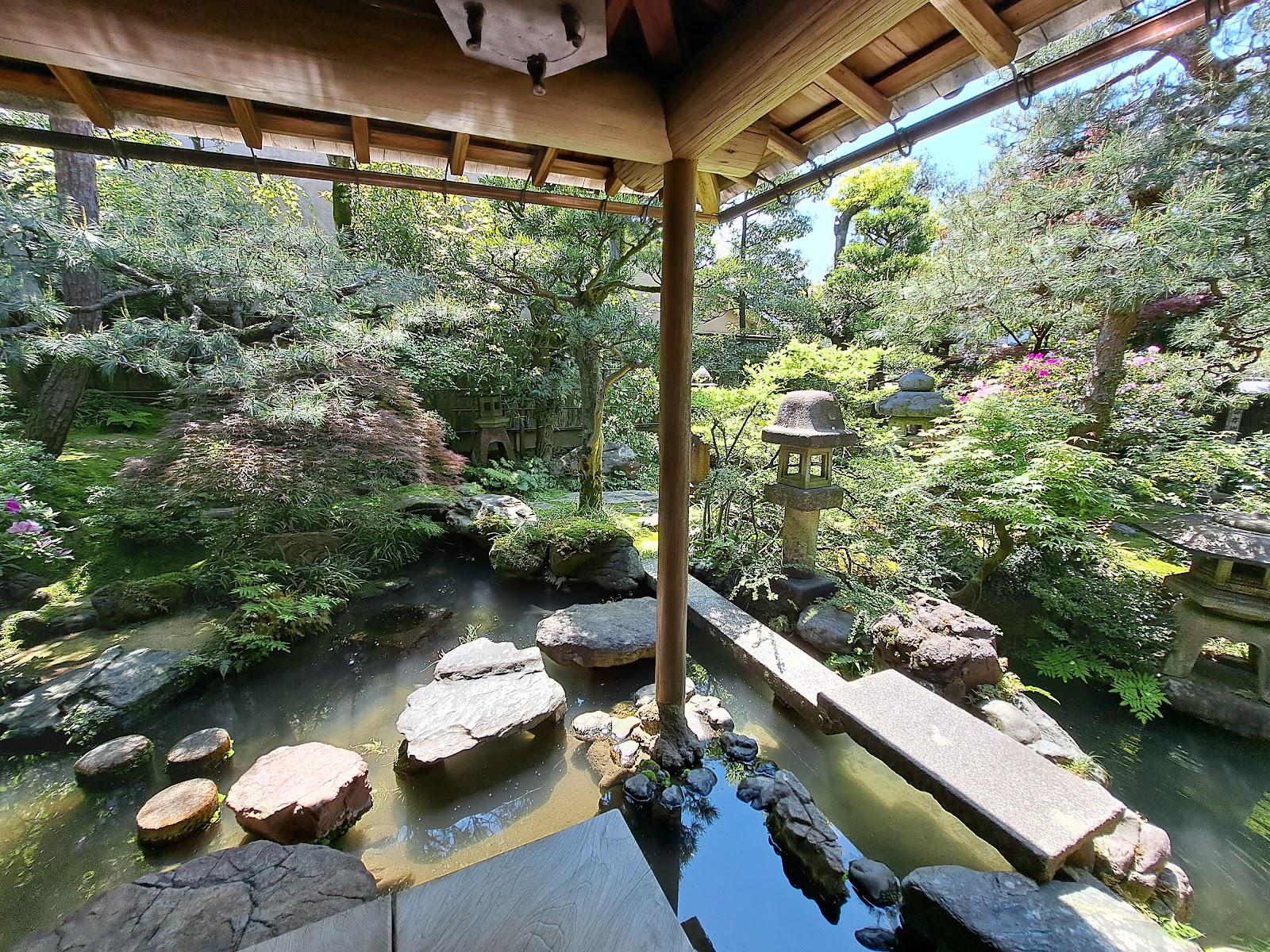
Beyond the famous gate, the grounds reward a slower look. The main hall sits in a calm, tree-shaded precinct, and behind it lies Shinsen-en, a strolling garden that predates the shrine's arrival here and is considered one of the oldest surviving daimyo gardens in the region. Its pond, bridges and carefully placed stones were designed to be read like a landscape painting, and few tour groups venture back to see it.
A notable detail is the bronze statue of Maeda Toshiie in full armour near the entrance, a reminder that this refined cultural city was built on the fortunes of a battle-hardened samurai lord. Locals come here for blessings related to marriage and family harmony, and the shrine is busy but never overwhelming, even in peak season.
The visiting experience is easy and accessible. The main approach has a gentle slope and the principal areas are reachable without stairs, though the garden paths behind the hall involve some uneven ground. Photographers should aim for late afternoon, when low sun lights the stained glass from within and the gate glows against the sky; early morning offers the quietest atmosphere.
Spring brings cherry blossoms to the surrounding streets, and autumn tints the garden maples, but the shrine is worthwhile in any season. Its central location makes it a natural stop on a walking route: Kanazawa Castle Park is a five-minute stroll east, and the Nagamachi samurai district and Korinbo shopping area are equally close. From Kanazawa Station the Loop Bus reaches the Korinbo or Minamicho stops in about ten minutes, and the shrine is a short signposted walk from there.
A local's tip
Walk through to the rear garden (Shinsen-en), a rare surviving early-Edo strolling garden with a pond shaped to evoke a biwa lute - most visitors miss it entirely.
Best time to visit
Late afternoon when the stained glass catches the light
Getting there
From Kanazawa Station East Gate take the Kanazawa Loop Bus (Right or Left Loop, ~10 min) to the Minamicho or Korinbo stop, then walk 3-5 minutes. On foot from the station it is about 20 minutes toward the castle. The shrine sits just west of Kanazawa Castle Park in the Korinbo area.
Good to know
- Restrooms
- Gift charms
Plan the whole trip offline
Oyama Shrine is one of many places in the Real Japan app — with turn-by-turn directions, nearby spots and full offline maps you can use with no signal.