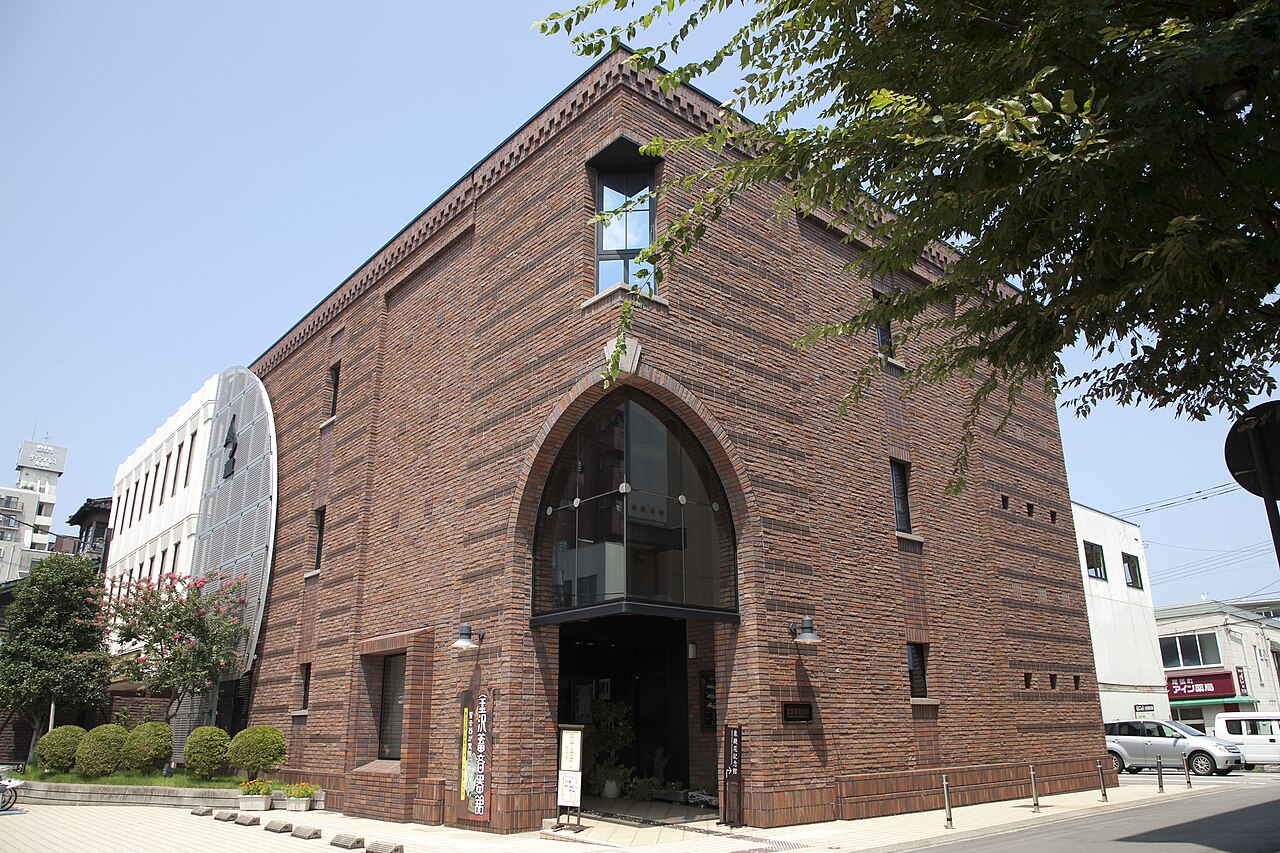
A charming museum of 540 antique phonographs with daily live gramophone demonstrations.
The Kanazawa Phonograph Museum is one of the city's most unexpectedly delightful small museums, a shrine to the history of recorded sound. Its collection began with Yokaichiya Saburo, a Kanazawa record-shop owner who spent decades gathering antique phonographs and records, and it now holds around 540 phonographs and gramophones together with some twenty thousand shellac SP records, most of which can still be played. The museum tells the story of how humanity first captured and reproduced sound, from Thomas Edison's wax-cylinder machines to the elegant horn gramophones and console players of the early twentieth century.
What sets the museum apart from a static collection is that the machines are meant to be heard, not just seen. Three times a day, typically around 11:00, 14:00 and 16:00, staff give live demonstrations, winding up antique phonographs and playing period records so visitors can hear the warm, crackling sound exactly as listeners did a century ago. The demonstrations often trace the evolution of audio fidelity across different machines, and hearing an Edison cylinder followed by a fine horn gramophone is a genuinely moving lesson in how technology and music entwined. For many visitors these live sessions are the highlight, so it is well worth timing a visit to coincide with one.
The displays themselves are beautifully presented across several floors, ranging from the earliest cylinder devices to grand cabinet gramophones in polished wood, and from portable travel players to jukebox-era machines. Alongside the hardware, the collection of SP records captures the popular and classical music of the early recording age, and the museum periodically holds themed listening sessions built around particular artists, genres or eras. There is a strong sense throughout of one enthusiast's passion preserved for the public, and staff are visibly fond of the machines they tend.
The museum is compact and most visitors spend about an hour, longer if they stay for a demonstration and browse the records. It is entirely indoors, which makes it an excellent choice on one of Kanazawa's frequent rainy or snowy days, and it appeals across generations: children are fascinated by the mechanical horns and hand cranks, while older visitors often find the sound genuinely nostalgic.
It sits in the Owaricho area, a historic merchant quarter between Kanazawa Station and the Higashi Chaya District, so it combines naturally with a walk through the old town or a visit to the nearby geisha streets and Omicho Market. Admission is inexpensive, generally around 310 yen. Note that the museum closes on Tuesdays, so plan accordingly.
To reach it, take the Kanazawa Loop Bus or a Hokutetsu bus from Kanazawa Station and alight at the Owaricho stop, from where the museum is only a minute or two on foot; walking from the station takes about fifteen minutes. Check the demonstration times when you arrive, or in advance, so you can build your visit around hearing the machines brought back to life.
A local's tip
Time your visit to catch one of the three daily live demonstrations (typically 11:00, 14:00 and 16:00) when staff play antique wind-up gramophones so you can hear how recorded sound evolved.
Best time to visit
Arrive for one of the daily phonograph demonstrations
Getting there
Kanazawa Loop Bus or Hokutetsu bus from Kanazawa Station to the Owaricho stop, then a 1-2 minute walk. It is about 15 minutes on foot from the station toward the Owaricho merchant quarter.
Good to know
- Restrooms
- Museum Shop
- Demonstrations
- Wheelchair Access
Plan the whole trip offline
Kanazawa Phonograph Museum is one of many places in the Real Japan app — with turn-by-turn directions, nearby spots and full offline maps you can use with no signal.