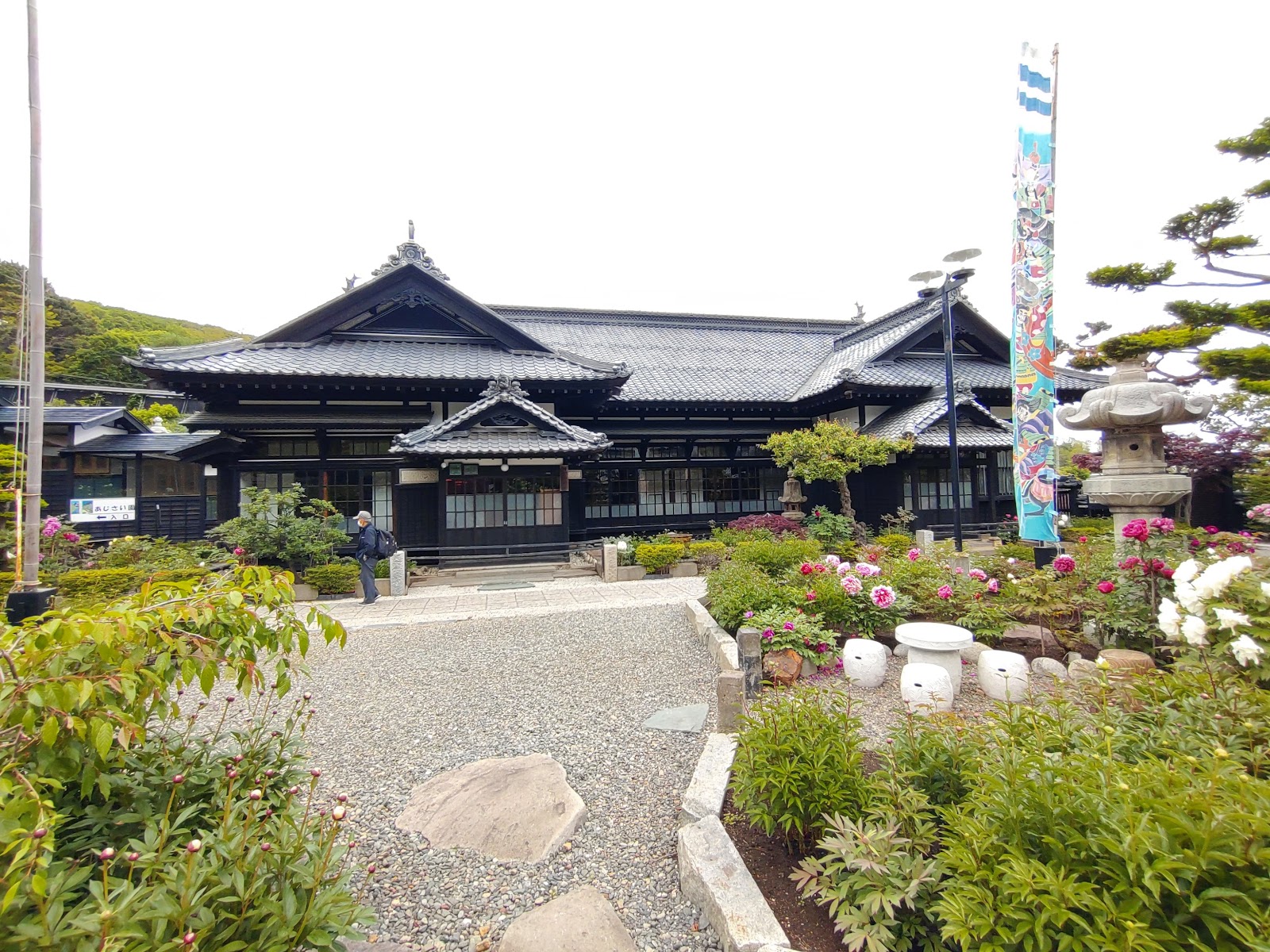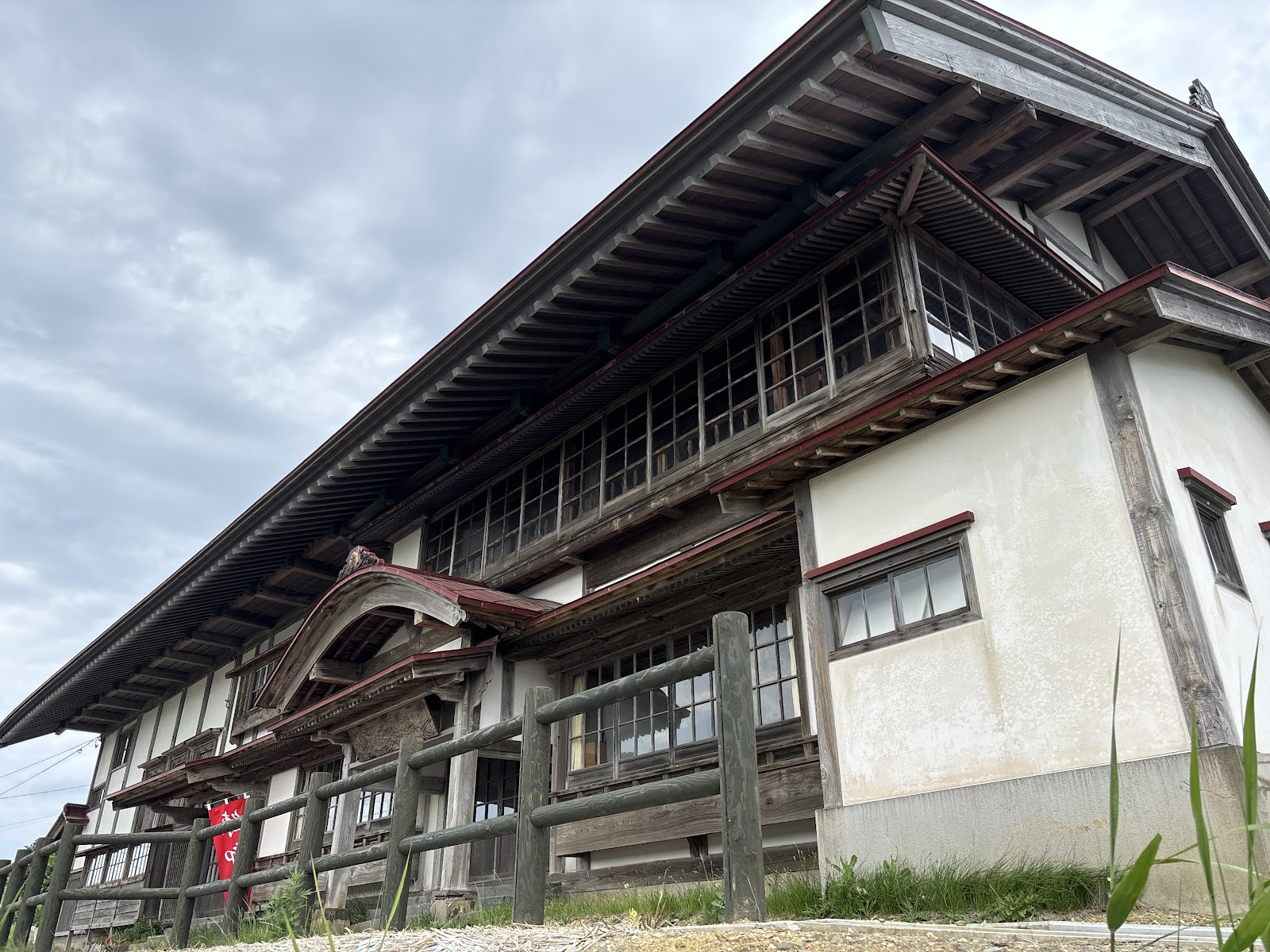
A relocated 1890s herring-fishery mansion on Cape Shukutsu, showing the working world behind Otaru's fishing fortunes.
The Otaru City Herring Mansion, known in Japanese as the Otaru-shi Nishin Goten, preserves the working heart of the herring industry that made this coast rich. Unlike the Aoyama family's ornate private villa nearby, this building was a genuine fishery mansion, a combined residence and workplace where the fishery owner's family lived alongside the seasonal labourers who processed the catch. It was originally built in 1897 on the Shakotan Peninsula by a fishery magnate named Tanaka, then dismantled and relocated to Cape Shukutsu in Otaru in the late 1950s so it could be preserved and opened to the public.
The structure is a designated cultural property and a superb example of the nishin goten form. Its most striking feature is the way a single roof covered two very different worlds: refined living quarters for the owning family at one end, and, at the other, a large open communal space with tiers of sleeping platforms where dozens of hired fishermen and workers, called yan-shu, lived crammed together during the frantic spring herring season. Displays inside show the tools, nets, boats and processing methods of the fishery, along with photographs and explanations of the extraordinary scale of the annual catch.
For a few decades around the turn of the twentieth century, the herring runs along the Sea of Japan coast were almost unimaginably abundant, and processing them into food and, crucially, into fertiliser for the fields of mainland Japan generated vast wealth. The mansions built from that money, and the harsh, communal labour that underpinned them, together tell the full story of the boom, and this building shows the side that the glittering Aoyama Villa does not: the sweat and the numbers.
The mansion occupies a fine position on Cape Shukutsu, and from the headland behind it you can look out over the very stretch of sea that once turned silver with spawning herring each spring. That view adds an elegiac note, because by the late 1950s the shoals had collapsed and never returned, ending an entire way of life along this coast.
The building operates seasonally, generally from spring to late autumn, and admission is a modest 300 yen. It sits close to the Aoyama Villa and the Otaru Aquarium, so the three combine into a satisfying half-day in the Shukutsu area, reached by local bus from Otaru Station. Otaru is an easy JR day trip from Sapporo covered by the Japan Rail Pass, and for travellers who want the real, unglamorous story behind the herring fortunes, this mansion is the essential stop.
A local's tip
Step out to the cape behind the building for sweeping views over the Sea of Japan, the same waters that once boiled with spring herring.
Best time to visit
Summer for coastal views from Cape Shukutsu
Getting there
Take a local bus from Otaru Station toward Shukutsu/Otaru Aquarium (about 25 minutes); the mansion stands on Cape Shukutsu overlooking the sea.
Good to know
- Restrooms
Plan the whole trip offline
Otaru City Herring Mansion is one of many places in the Real Japan app — with turn-by-turn directions, nearby spots and full offline maps you can use with no signal.