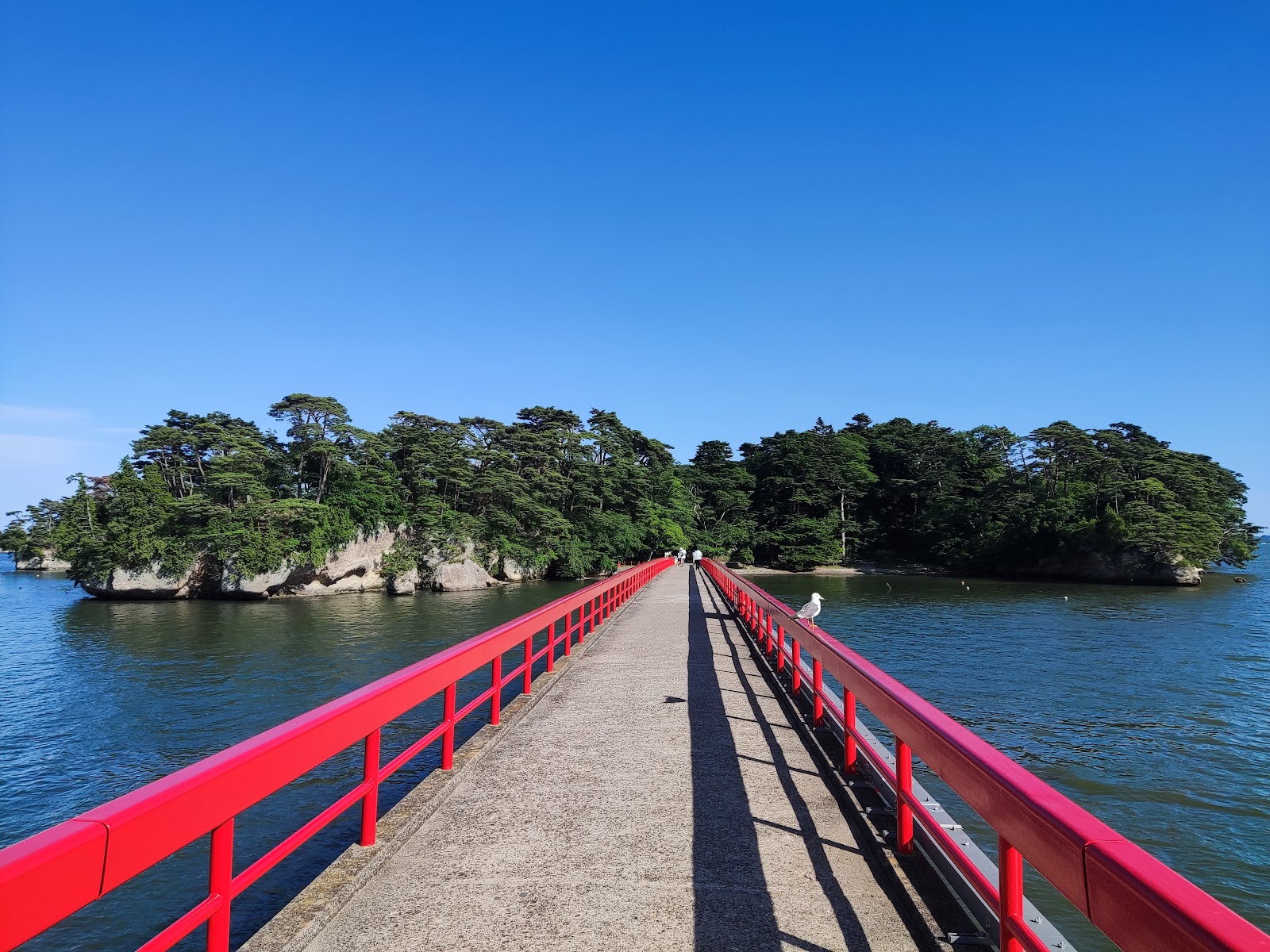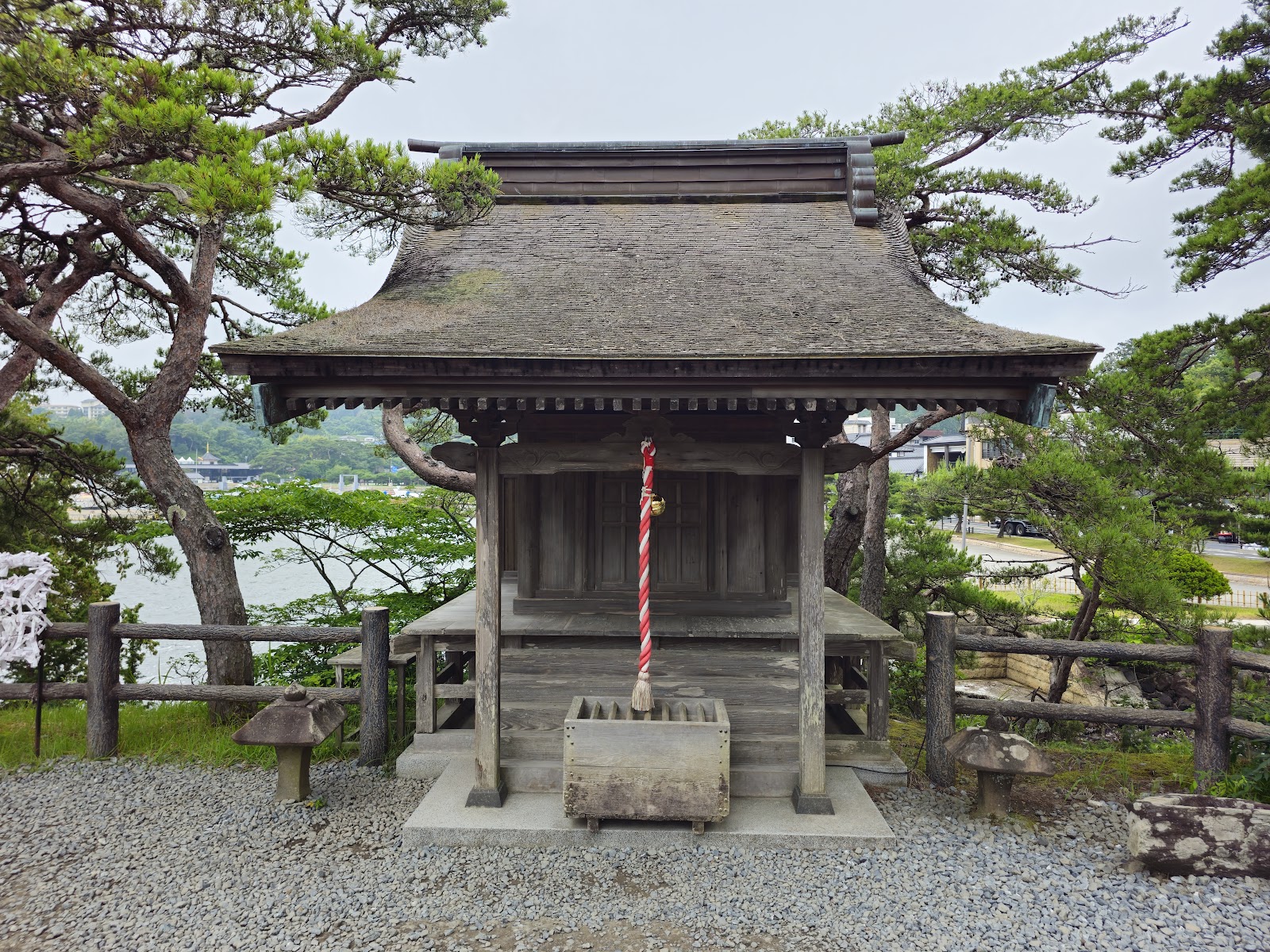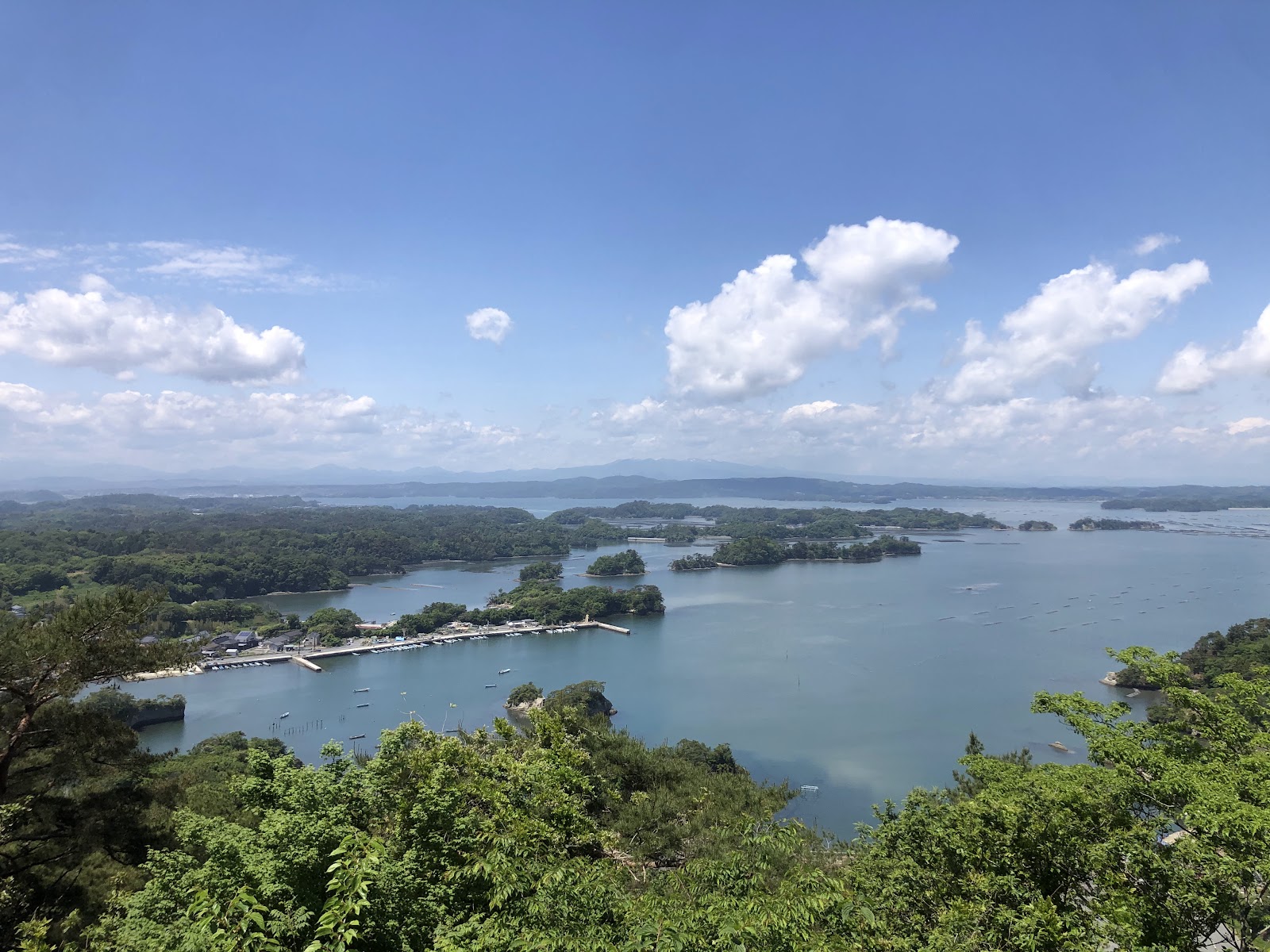
The 'grand view' of Matsushima Bay from Miyato Island, famed for pine-clad islets glowing at sunset.
Otakamori is the Sokan, or grand view, one of the four classic vantage points over Matsushima Bay collectively known as the Shidaikan, named by a Confucian scholar of the Sendai domain in the Edo period. Standing on the summit of a low hill on Miyato Island at the eastern edge of the bay, it looks westward across the water and is widely considered the most dramatic of the four, particularly when the sun sinks behind the scattered islands.
Matsushima Bay is one of the Three Great Views of Japan, a shallow inlet studded with more than 260 small pine-covered islands sculpted by centuries of wind and wave. From most shoreline spots you see only a slice of this archipelago, but from the height of Otakamori the full spread of islets opens beneath you, layered from the near shore out to the horizon, each crowned with the twisted black pines that give Matsushima, literally Pine Islands, its name.
Reaching the viewpoint takes a little effort, which keeps it quieter than the crowded waterfront in Matsushima town. From the trailhead a well-marked path climbs through forest for fifteen to twenty minutes to a wooden observation deck at the top. The walk is shaded and pleasant, and the reveal at the summit, where the trees suddenly part to expose the whole glittering bay, is genuinely breathtaking after the enclosed climb.
Because Otakamori faces west, it is the Shidaikan viewpoint for sunset. As the light lowers, the water turns to beaten gold and the innumerable islands become dark silhouettes rising from the glow, a scene that has drawn poets and painters for centuries. Morning and midday are lovely too, with the islands sharp and green against blue water, but the late afternoon light is what most photographers come for, so aim to be on the deck an hour before the sun goes down.
The surrounding area, Oku-Matsushima, is a designated natural park and noticeably wilder than the bustle around Matsushima's temples and cruise piers. Miyato Island suffered badly in the 2011 tsunami, and the recovery of its coastline and communities gives a visit here a quiet emotional weight; the enduring beauty of the bay from Otakamori feels like a statement of resilience.
Practical access requires planning. The nearest station, Nobiru on the Senseki Line, is about forty minutes on foot or a short taxi from the trailhead, and there is a car park for drivers. Bring sturdy shoes for the climb, water, and insect repellent in summer. There are no shops at the summit, so carry what you need.
For travellers willing to leave the standard Matsushima loop of cruise boats and Zuiganji temple, Otakamori offers the single finest overview of the bay and a taste of the quieter Oku-Matsushima. Pair it with the other three Shidaikan viewpoints if you have a full day, or come here alone for sunset; either way it delivers the definitive image of Japan's beloved pine islands, seen whole from above.
A local's tip
This is the 'grand view' of the four, and it faces west, so it is the only Shidaikan viewpoint that catches the sun setting directly over the islands.
Best time to visit
Sunset over the pine-studded bay
Getting there
From Nobiru Station on the Senseki Line, it is roughly a 40-minute walk or short taxi to the trailhead on Miyato Island, then a 15-20 minute climb to the summit deck.
Good to know
- Parking
- Restrooms
Plan the whole trip offline
Otakamori Observatory is one of many places in the Real Japan app — with turn-by-turn directions, nearby spots and full offline maps you can use with no signal.