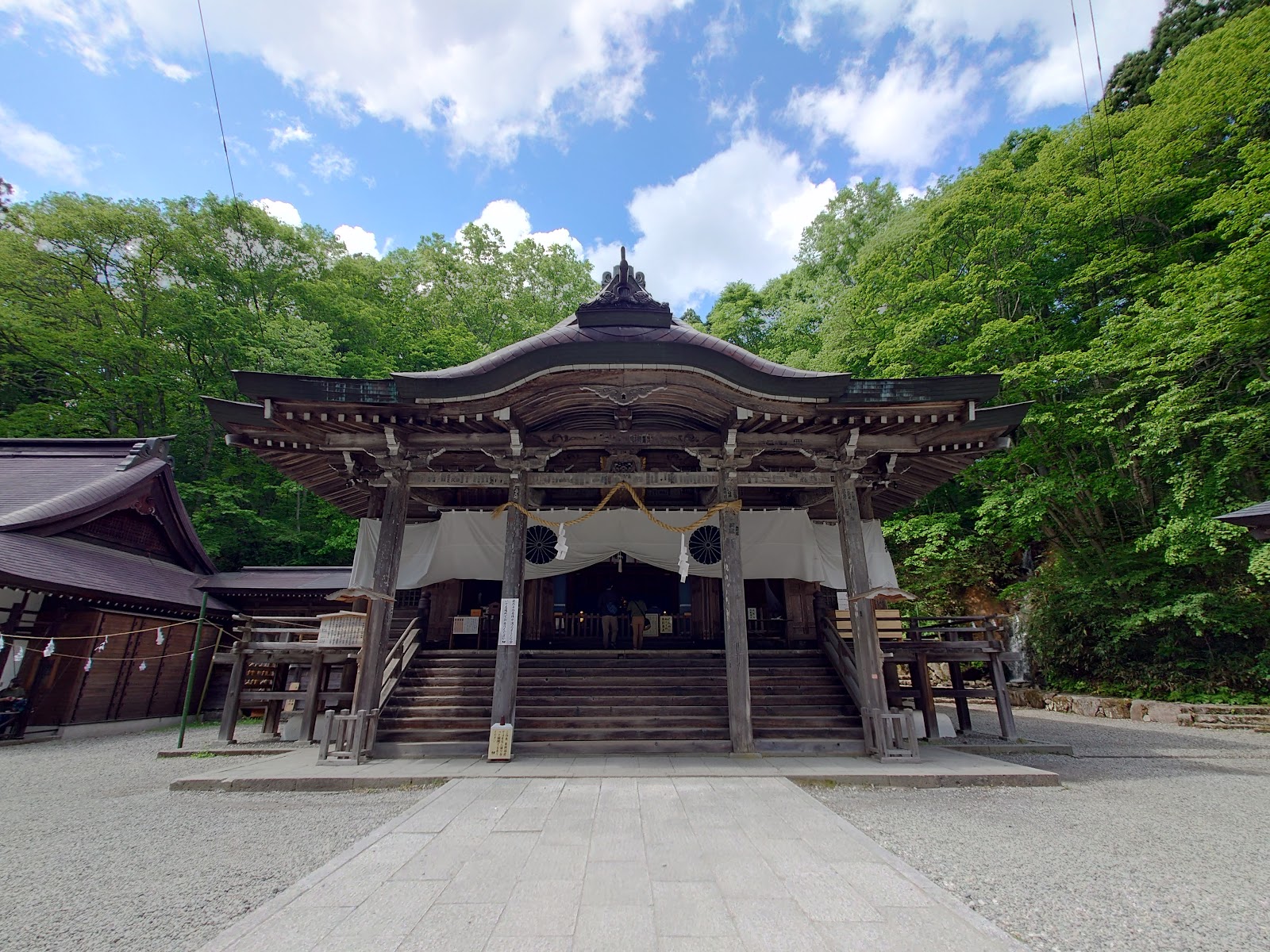
Mountain village complex devoted to oyaki, Nagano's stuffed dumplings, baked over open hearths.
Ogawa no Sho Oyaki Village, in the small mountain village of Ogawa between Nagano city and the Hakuba valley, is dedicated to one of Shinshu's most beloved everyday foods: oyaki. These stuffed dumplings — a savoury wheat-and-buckwheat dough wrapped around a filling of seasonal vegetables and preserves — are a staple of Nagano's mountainous interior, where the cool climate historically made rice cultivation difficult and hardy crops, wild vegetables, and pickles sustained village life. At this rustic complex, visitors can watch oyaki being made in the traditional way, eat them at their freshest, and even try making their own.
The most memorable part is the cooking method. Here the oyaki are prepared over an open 'irori' hearth: first lightly grilled on a griddle, then buried in the hot ash and embers of the sunken fireplace to steam-bake through, giving them a slightly crisp, smoky skin and a soft, piping-hot interior. The fillings are the classic flavours of the Nagano countryside — nozawana (the region's famous pickled leaf mustard greens), eggplant simmered with miso, sweet-savoury pumpkin, mushrooms, and sweet red bean — each reflecting the seasons and the preserving traditions of the mountains. Eaten warm from the hearth, an oyaki is humble, filling, and deeply satisfying, the very definition of Shinshu home cooking.
The village setting adds to the appeal. Ogawa is a quiet farming community set among terraced fields and forested hills, and on clear days parts of the area command views toward the Northern Alps. The complex is built to evoke old rural life, with thatched-style buildings, the smoky scent of the hearths, and staff — often local women — demonstrating techniques passed down through generations. Beyond the food, there are workshops where visitors can shape and fill their own oyaki, making it a hands-on cultural experience as well as a meal, and shops selling oyaki to take away along with local produce and preserves.
Oyaki is more than a snack in Nagano; it is a symbol of the prefecture's resourceful mountain culture, and eating it where it is made — over a real hearth, in a real village — connects visitors to that heritage far more than buying a factory-made version at a station kiosk. It pairs well with a wider exploration of Nagano's rural food traditions, from soba to miso to wild mountain vegetables.
The village is somewhat remote, best reached by car, though seasonal buses from Nagano Station serve the area; it is not on the rail network, so Japan Rail Pass holders will need local transport or a rental car, and hours can vary seasonally, so checking ahead is wise. For travellers willing to venture beyond the city into Nagano's folded green hills, Ogawa no Sho offers an authentic and warming taste of Shinshu's countryside — a hearth-baked oyaki, eaten in the very landscape that created it.
A local's tip
Watch the oyaki being baked over an open 'irori' hearth and buried in ash — the nozawana (pickled greens) and eggplant-miso fillings are the classics. You can also try making your own at the workshop.
Best time to visit
Lunchtime, when the hearth-baked oyaki are freshest
Getting there
In the mountain village of Ogawa, between Nagano city and Hakuba. Realistically reached by car; some seasonal buses serve the area from Nagano Station.
Good to know
- Parking
- Workshop
- Restrooms
- Restaurant
Plan the whole trip offline
Ogawa no Sho Oyaki Village is one of many places in the Real Japan app — with turn-by-turn directions, nearby spots and full offline maps you can use with no signal.