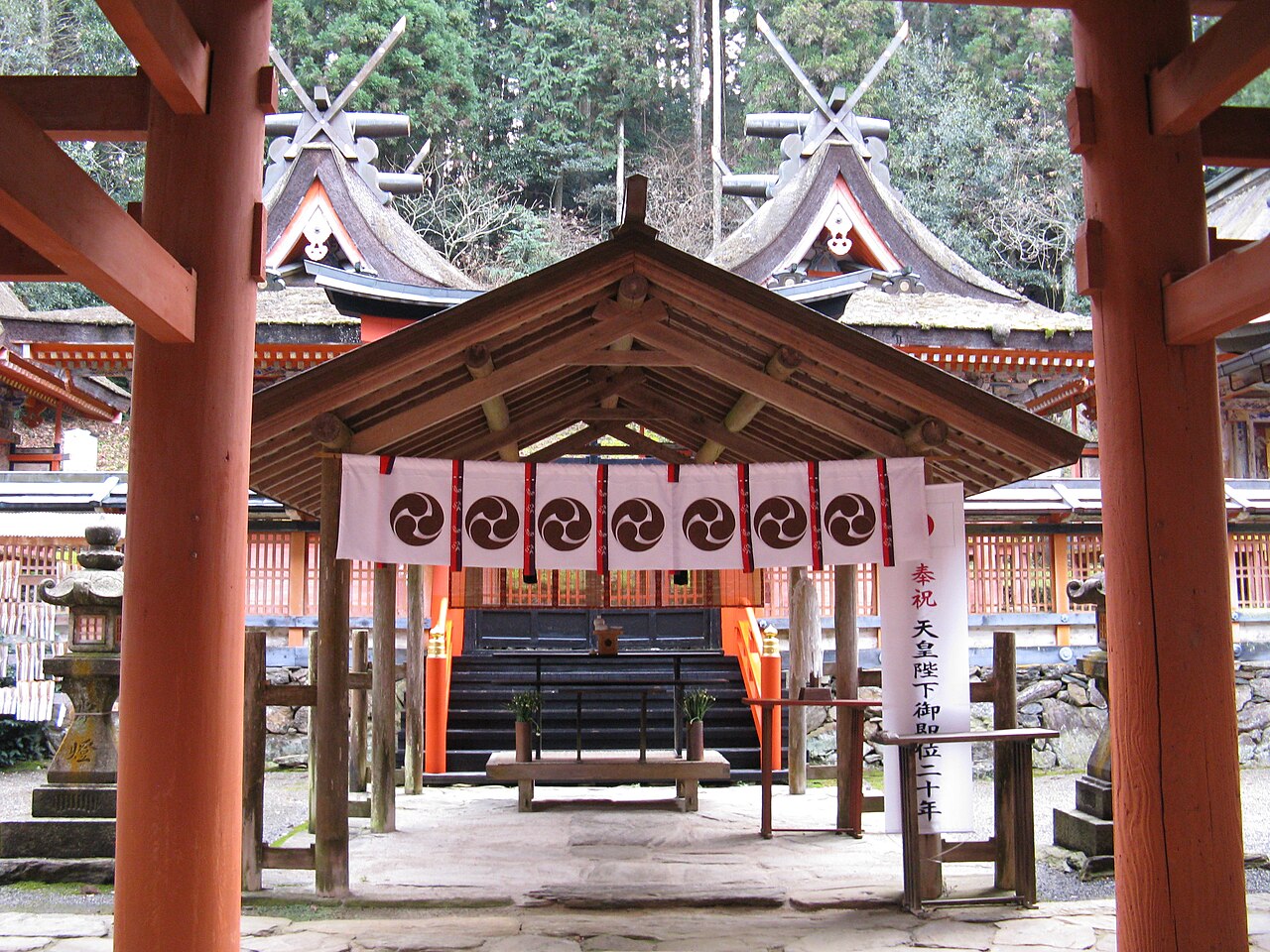
The vermilion Shinto shrine in Amano whose deity granted Kukai the land to found Mount Koya.
Niutsuhime Shrine sits in the tranquil mountain hamlet of Amano, south-west of the Koyasan summit, and holds a special place in the founding legend of Mount Koya. It is dedicated to Niutsuhime-no-Okami, a mountain goddess, and her son Koya-Myojin (Kariba-Myojin), the deities said to have guided Kukai (Kobo Daishi) to the plateau and granted him the sacred ground on which he established his monastic centre in the early ninth century. For this reason the shrine is regarded as the tutelary guardian of Koyasan, and it is inscribed as part of the UNESCO World Heritage “Sacred Sites and Pilgrimage Routes in the Kii Mountain Range.”
The shrine embodies the deep intertwining of Shinto and Shingon Buddhism that characterises the whole Koya region. According to tradition, a hunter with two dogs — a manifestation of Kariba-Myojin — led Kukai to the mountain, and to this day the relationship between the shrine below and the temples above is honoured in ritual. Monks historically paid their respects here as part of the pilgrimage, and the main approach trail to Koyasan, the Choishi-michi, passes close by.
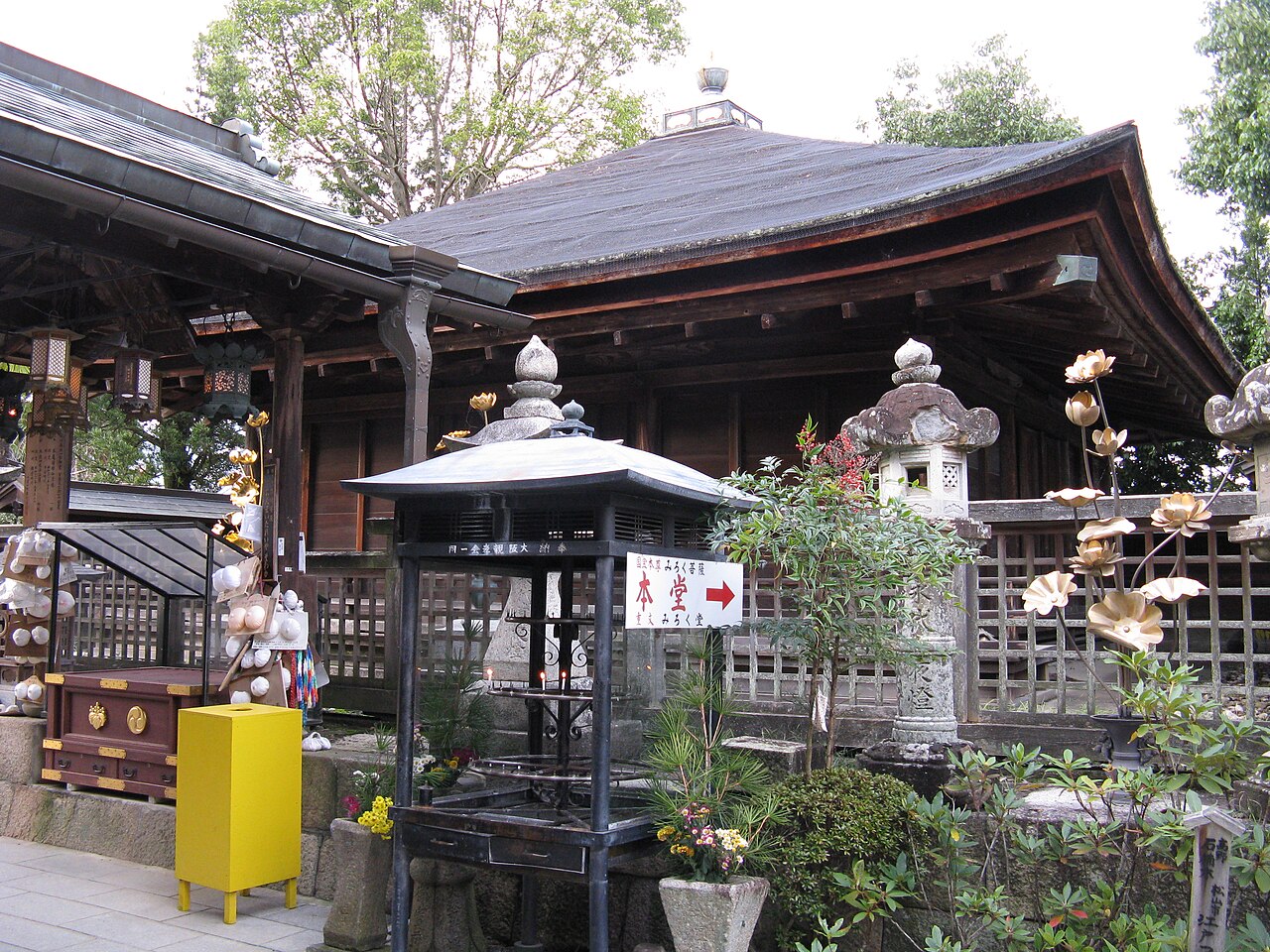
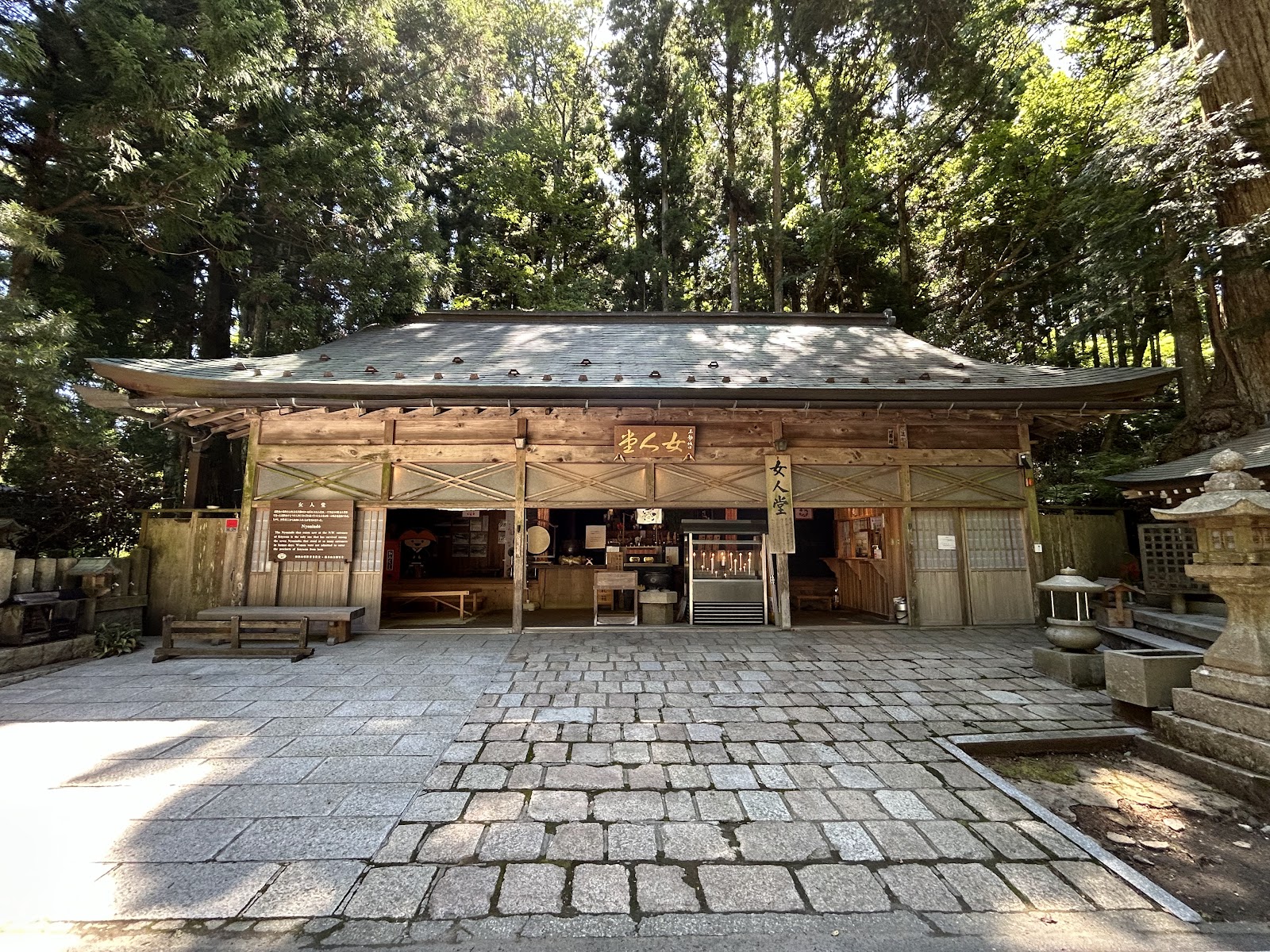
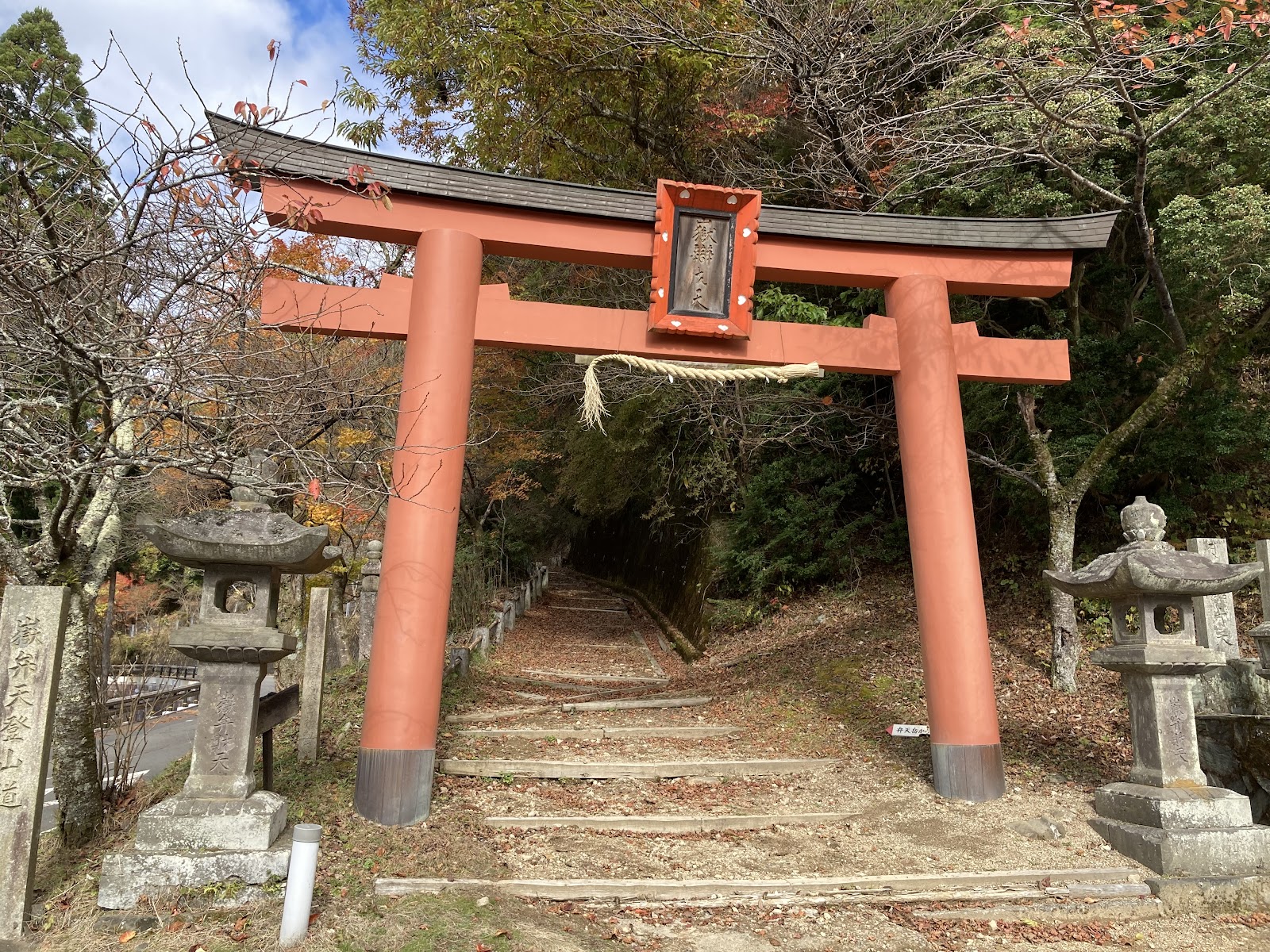
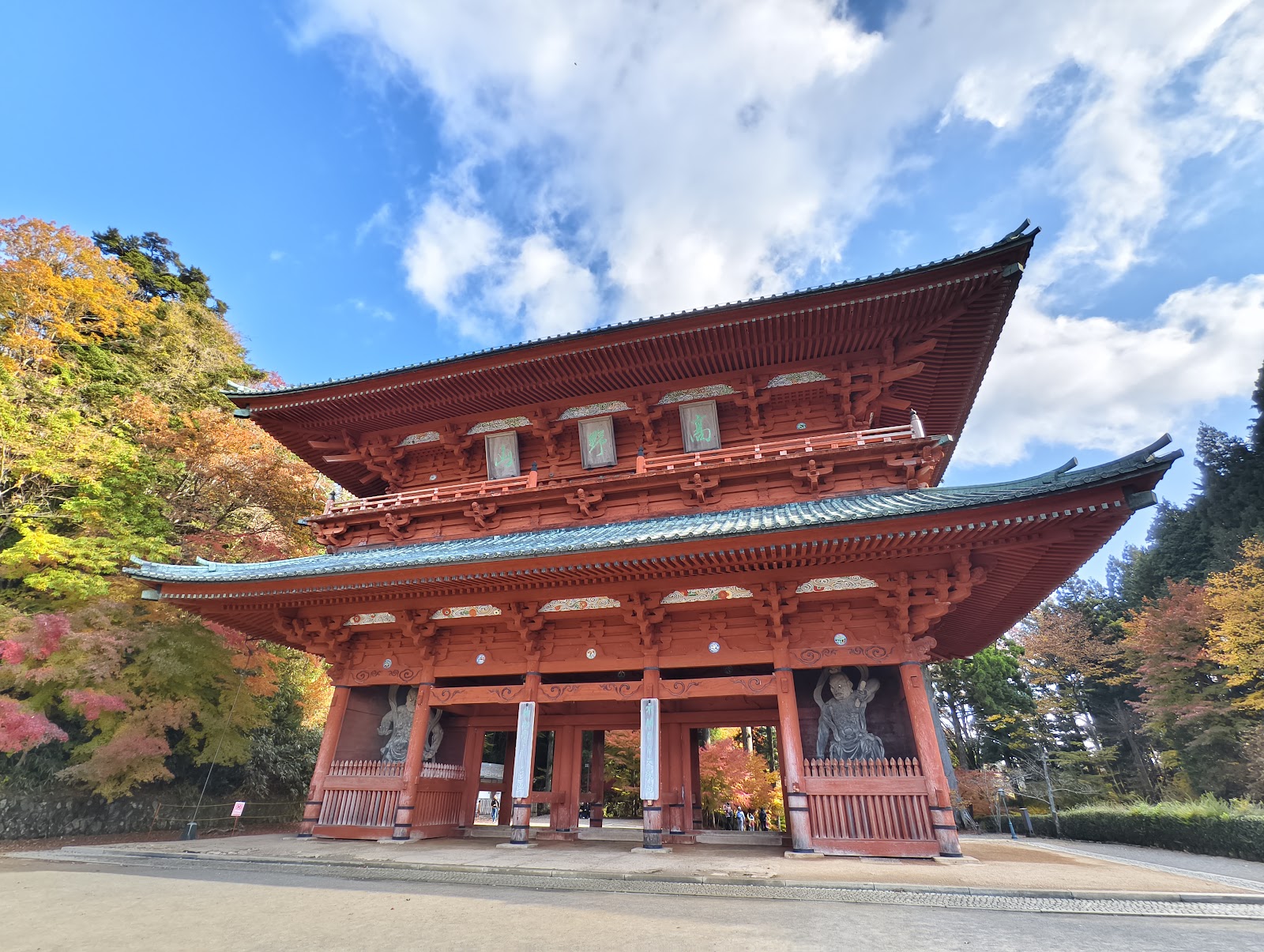
Architecturally, Niutsuhime Shrine is striking. Four vermilion-lacquered main sanctuaries stand in a row, built in the elegant nagare-zukuri style with sweeping cypress-bark roofs, and several structures are designated Important Cultural Properties. The bright red halls set against dark cedar forest and, in season, blazing autumn maples, create one of the most photogenic scenes in the Kii mountains. A graceful arched bridge and a torii gate mark the transition into sacred space. Despite its importance, the shrine sees far fewer visitors than the temple town above, so it retains a quiet, contemplative atmosphere.
The surrounding village of Amano is itself worth lingering in — a small, timeless cluster of houses and rice terraces set on a high plateau, historically a place of retreat and, like Jison-in, associated with the women who could not enter Koyasan proper. The area feels genuinely remote, and reaching it is part of the experience.
Most visitors arrive by car or taxi, as public transport to Amano is very limited. The more adventurous descend from Koyasan on foot along the historic Miyako-michi or the Choishi-michi pilgrimage trail, a half-day walk through beautiful forest that recreates the medieval approach. Autumn, when the maples turn, is the most spectacular season, though spring cherry blossom and the fresh green of early summer are also lovely. Pairing Niutsuhime Shrine with Jison-in and a walk on the Choishi-michi gives a fuller understanding of Koyasan as a living pilgrimage landscape rather than a single mountaintop destination.
The shrine also rewards those simply seeking calm. Set among towering cedars far from traffic and shops, with only the sound of wind and birdsong, it offers a depth of quiet that the busier summit rarely allows. Standing before the four red halls, it is easy to sense why the founders of Koyasan believed this to be sacred ground, and why the bond between mountain and shrine has been honoured for more than a thousand years. For anyone drawn to the spiritual roots of Mount Koya rather than only its temples, Niutsuhime Shrine is a genuinely rewarding pilgrimage in itself.
A local's tip
This is the guardian shrine that gave Kukai the land for Koyasan — visiting it before or after the mountain completes the pilgrimage the way medieval monks intended.
Best time to visit
Autumn for foliage; any clear day for the vermilion halls
Getting there
Best reached by car or taxi to the village of Amano, south-west of the Koyasan summit. Walkers can descend via the historic Koya-sando (町石道) or Miyako-michi trails from Koyasan, roughly a half-day hike.
Good to know
- Parking
- Restrooms
Plan the whole trip offline
Niutsuhime Shrine is one of many places in the Real Japan app — with turn-by-turn directions, nearby spots and full offline maps you can use with no signal.