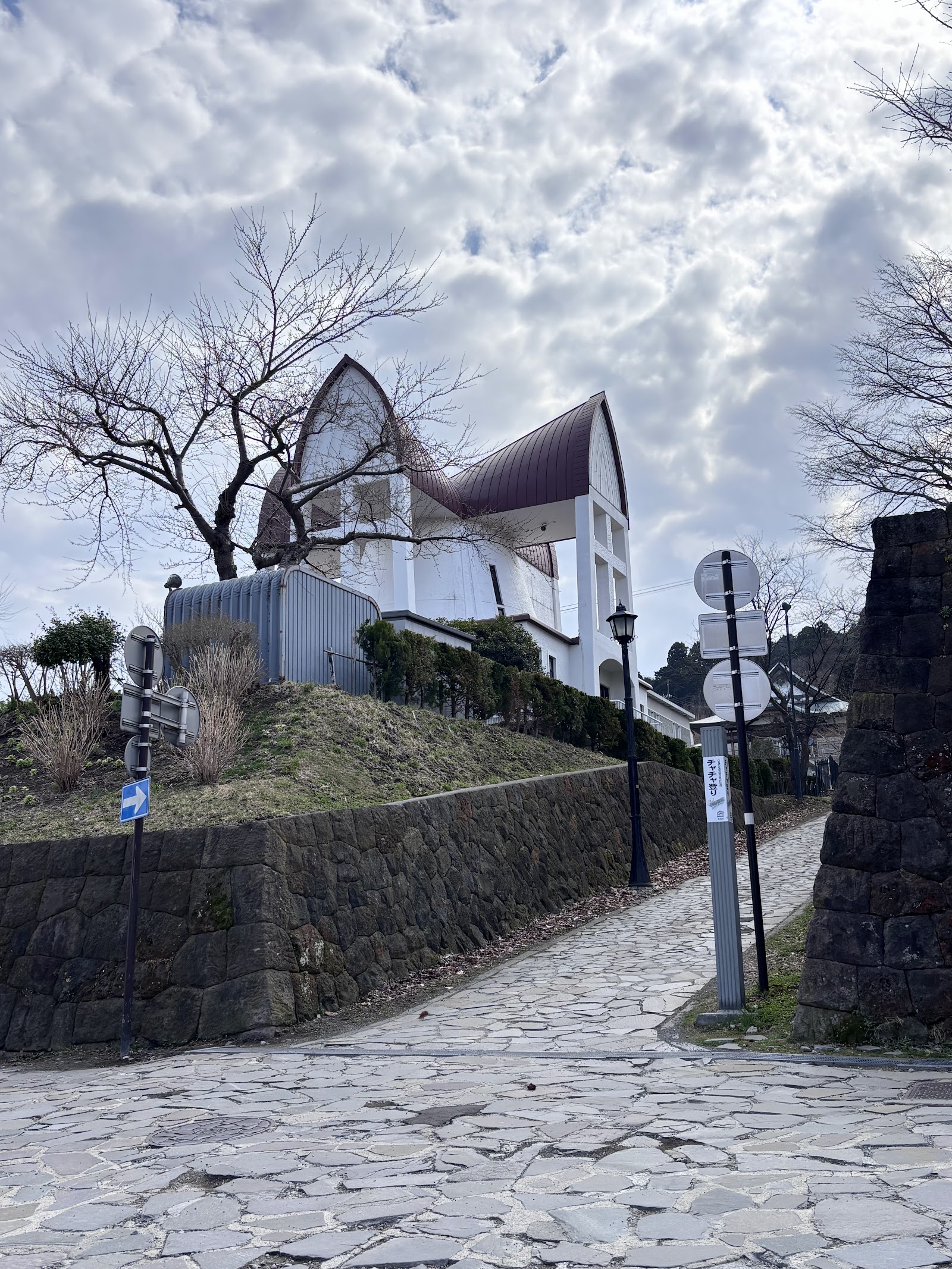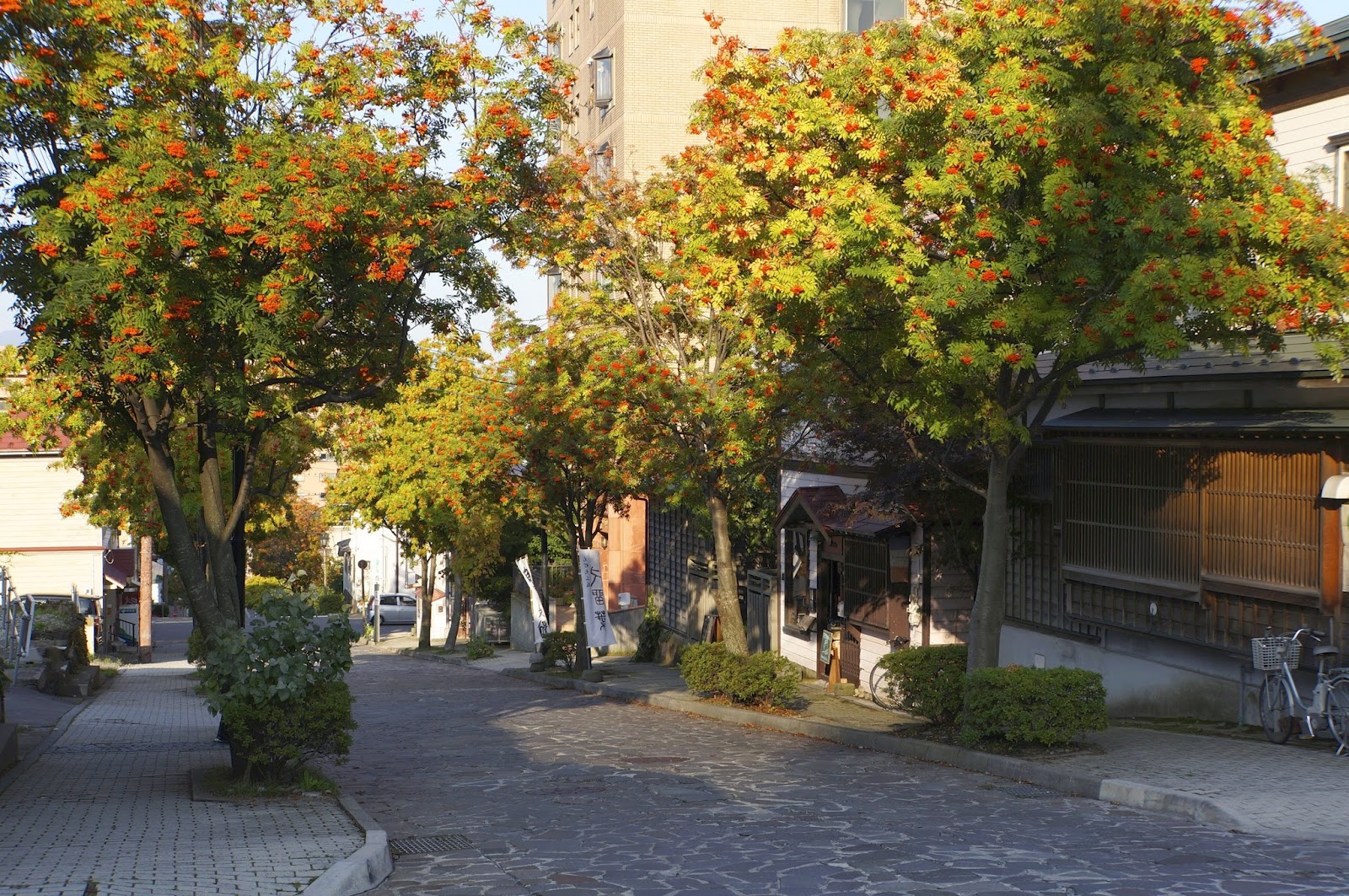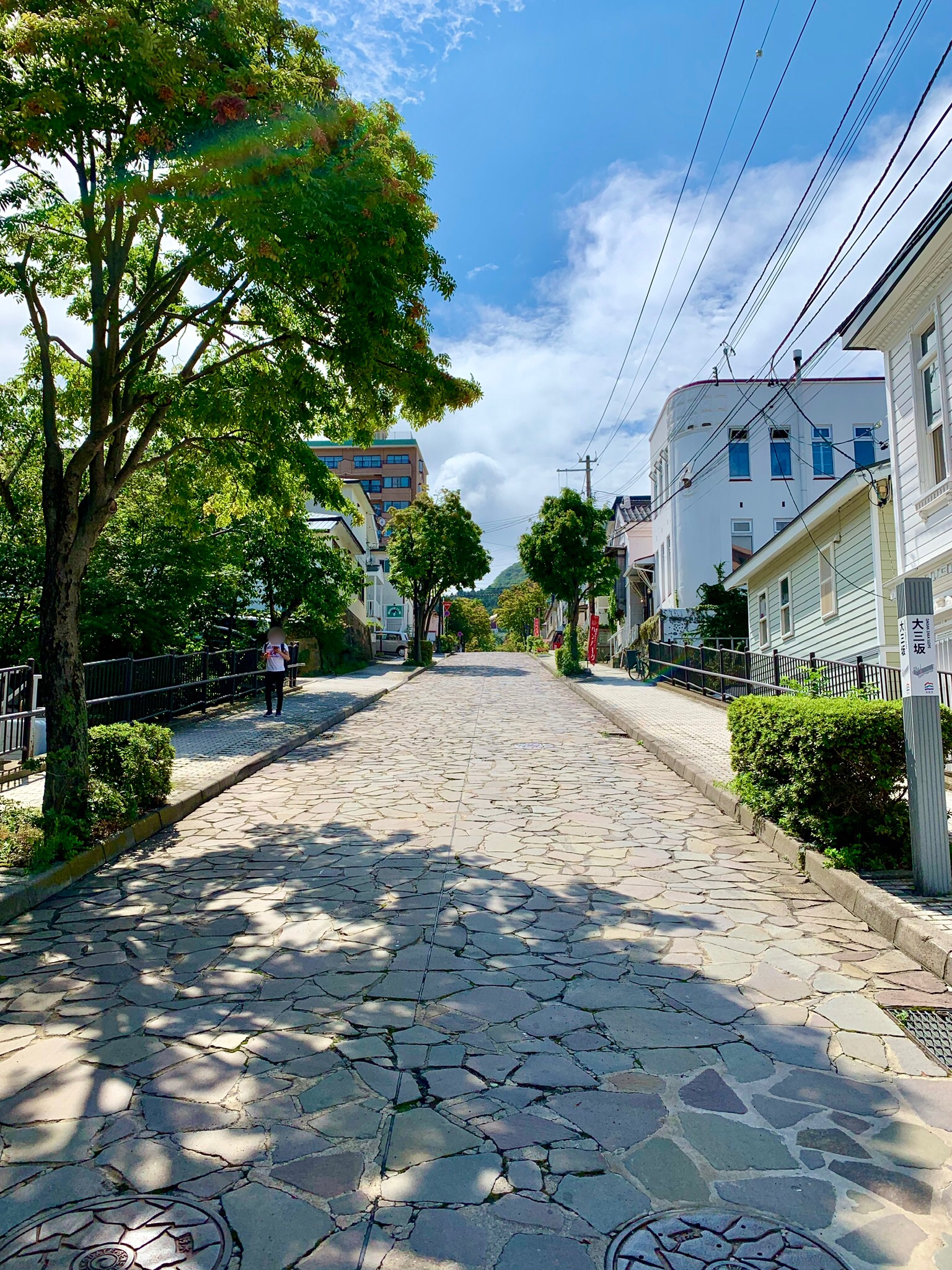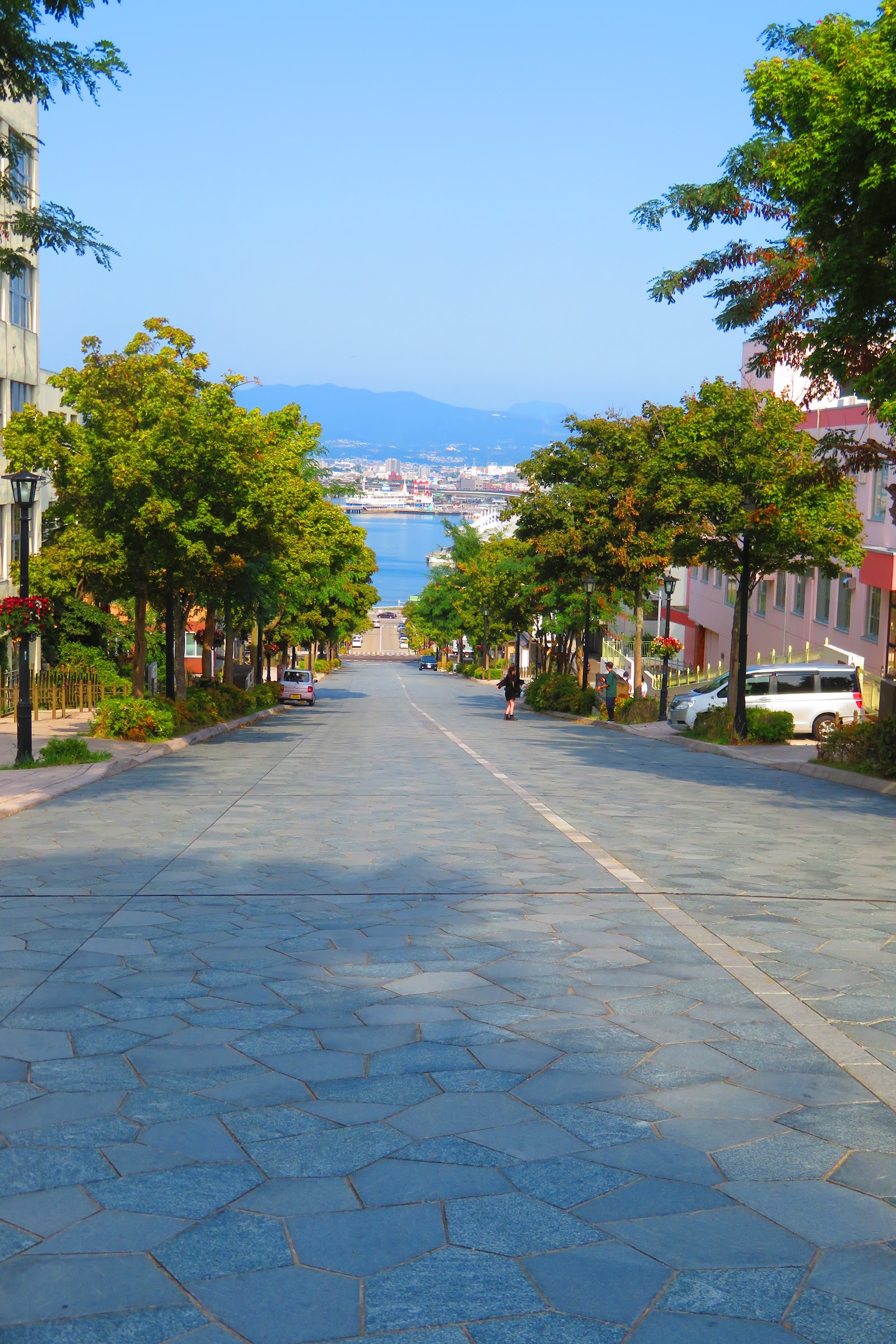
The broadest of Hakodate's Motomachi slopes, a wide firebreak avenue with open views toward the sea.
Nijukken-zaka is the widest and most open of the historic slopes that rise through Hakodate's Motomachi district, and its unusual breadth gives it a character quite distinct from the narrower, more intimate streets nearby. Its name derives from its width, roughly twenty ken in old Japanese measurement, about 36 metres, and that generous scale is the key to both its history and its appeal as a viewpoint.
The slope was deliberately widened to serve as a firebreak. Hakodate suffered repeatedly from devastating fires through its history, the hillside packed with wooden buildings and swept by strong winds off the sea, and after major conflagrations the city rebuilt with broad avenues designed to halt the spread of flames. Nijukken-zaka is the most striking survivor of that fire-conscious planning, and today its width makes it feel more like a leafy boulevard than a back lane, with a spacious, airy quality that sets it apart from the other Motomachi slopes.
As with the district's other slopes, the pleasure lies in the view. Standing on Nijukken-zaka and looking downhill, the wide street opens toward the harbour and the sea, the breadth of the avenue giving an especially expansive, uncluttered sightline. The generous space also means the slope is planted with trees along its length, and these come into their own in autumn, when the foliage turns and the coloured leaves frame the broad descent toward the water in a scene beloved by local photographers.
Motomachi as a whole is Hakodate's historic foreign quarter, settled by Western traders and diplomats after the port opened to international commerce in the nineteenth century, and its slopes connect the waterfront warehouses and piers to the hillside churches, consulates, and residences above. Nijukken-zaka fits into this network as the grand, open thoroughfare among the cluster, a natural spine for a walking tour of the district. Its width also makes it one of the more relaxed slopes to climb, with room to pause, sit, and take in the surroundings.
The slope is a public street, free and always open, walkable in every season. In summer the trees provide welcome shade and greenery, autumn brings the colour that shows the avenue at its best, and winter can drape the broad street in snow, though the gradient calls for careful footing when icy. Cafes and shops in the surrounding lanes offer places to rest and warm up.
Practically, Nijukken-zaka is a short uphill walk from the Suehirocho tram stop, within easy reach of the rest of Motomachi, the Kanemori Red Brick Warehouses, and the Mount Hakodate ropeway. Because it is broad and relatively gentle, it is among the more accessible of the slopes, though the climb is still a genuine ascent. Allow around twenty minutes to walk it and enjoy the view, and combine it with the neighbouring slopes and historic buildings for a fuller appreciation of the quarter.
For visitors, Nijukken-zaka offers a slightly different flavour of the Motomachi experience, spacious, tree-lined, and airy rather than narrow and steep, and at its most beautiful in autumn when the coloured leaves frame its long, open descent to the sea.
A local's tip
Its name means '20-ken wide'; the slope was widened as a firebreak, and its unusual breadth makes it the most open and airy of the Motomachi slopes.
Best time to visit
Autumn for coloured trees framing the slope
Getting there
A short walk uphill from the Suehirocho tram stop into the Motomachi district; Nijukken-zaka is the notably wide slope east of the main Motomachi cluster.
Good to know
- Cafes
- Restrooms
Plan the whole trip offline
Nijukken-zaka is one of many places in the Real Japan app — with turn-by-turn directions, nearby spots and full offline maps you can use with no signal.