Home to a colossal 12-meter lion-head stage whose gaping mouth is said to swallow bad luck and grant success.
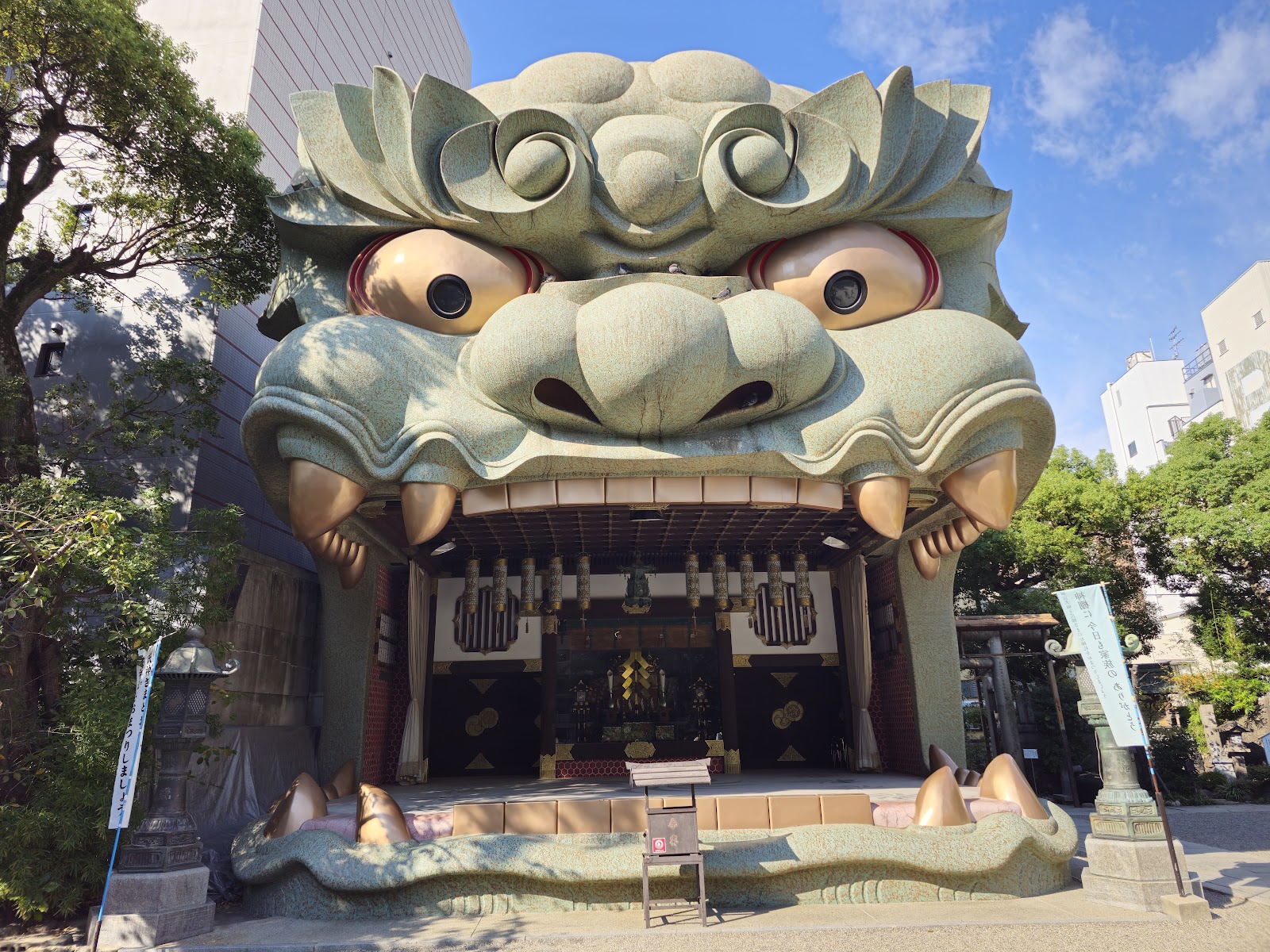
Namba Yasaka Shrine has become one of Osaka's most photographed spots for a single, unforgettable reason: a giant lion's head, twelve meters high and eleven wide, its eyes flashing gold and its mouth flung open wide enough to walk into. Officially the Shishi-den, or lion hall, it is a performance stage built in the shape of the shrine's guardian lion, and it looks like nothing else in the country. In an age of social media it has propelled a once-quiet local shrine into the itineraries of visitors from around the world.
Beneath the spectacle is a genuine, old place of worship. The shrine enshrines Susanoo-no-Mikoto, the storm god of Japanese mythology, together with his consort Kushinadahime and their offspring. Its origins are tied to the wider Gion and Yasaka tradition centered on Susanoo, historically invoked to ward off plague and misfortune. The shrine suffered in the 1945 air raids like much of Namba, and the great lion head was built in 1974 as part of its postwar revival, quickly becoming a beloved landmark.
The lion is far more than a photo backdrop. In Japanese belief the lion, or shishi, devours evil spirits and misfortune, and this enormous open-mouthed head is understood to swallow bad luck and swallow up the bad energy of those who stand before it, sending them away cleansed and blessed with success and good fortune. Students pray here before exams and job-seekers before interviews, and the stage is used for ceremonial performances of kagura sacred dance and music during festivals. Standing in the shadow of that gaping golden maw, dwarfed by the teeth above you, is genuinely striking.
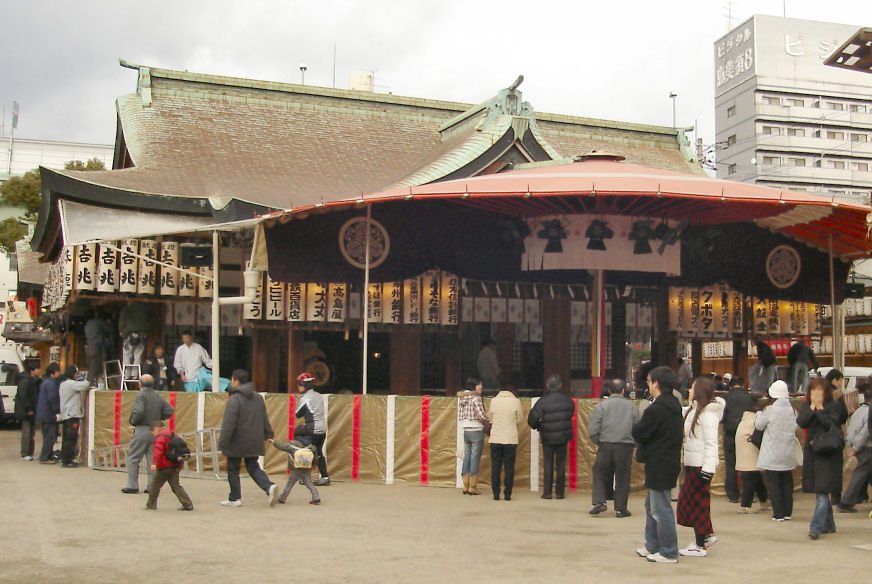
The shrine's liveliest day is the third Sunday of January, when it holds a traditional tug-of-war festival, the Tsunahiki Shinji, an Intangible Cultural Property that reenacts the myth of Susanoo slaying the eight-headed serpent Yamata-no-Orochi; a great rope braided in the serpent's image is hauled by teams of participants. It is a rare chance to see the shrine as a working center of community ritual rather than a photo stop.
A visit is short, free and rewarding. Beyond the lion stage, the grounds hold the modest main hall, an ema rack, and a charm stall selling amulets themed to the lion and to victory. The best shot is taken head-on at eye level, letting the lion's face fill the frame; mornings are quietest before the day's stream of visitors arrives. The grounds are compact and largely level, with restrooms on site.
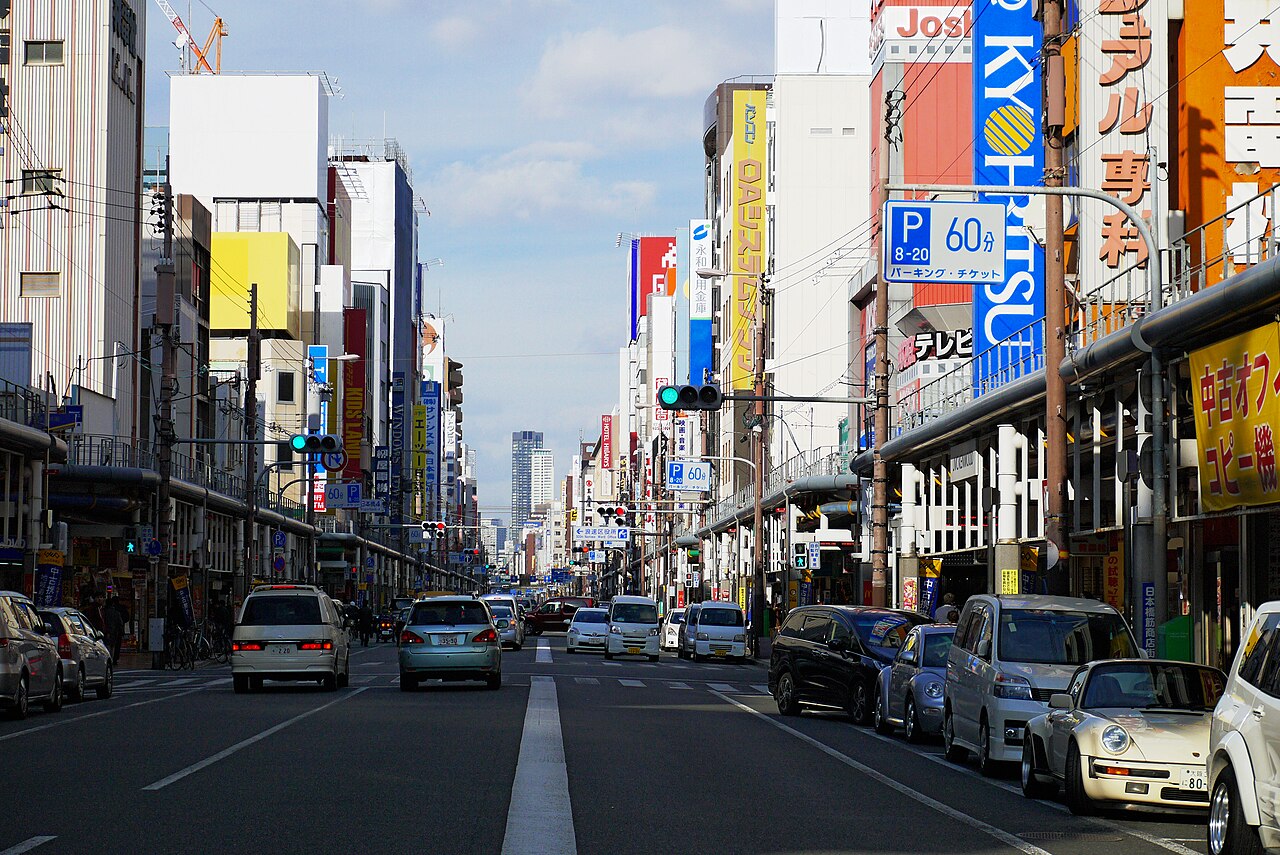
Because it sits just west of the Namba entertainment district, it slots easily into a day around Dotonbori and Hozen-ji. Getting there is straightforward: from the huge Namba interchange, served by the Midosuji and Sennichimae subways and the Nankai line, it is about a seven-minute walk west, or roughly six minutes from Daikokucho Station. Budget half an hour, more if a festival is on.
A local's tip
Stand directly in front of the giant lion head at eye level for the iconic shot; the open mouth is said to swallow evil spirits and bring good luck.
Best time to visit
Daytime for photos; the third Sunday of January for the tug-of-war festival
Getting there
From Namba Station walk about 7 minutes west, or roughly 6 minutes from Daikokucho Station on the Midosuji and Yotsubashi lines.
Good to know
- Restrooms
- Charm stall
Plan the whole trip offline
Namba Yasaka Shrine is one of many places in the Real Japan app — with turn-by-turn directions, nearby spots and full offline maps you can use with no signal.