A quiet rim-top viewpoint on the Milk Road, renowned for sunrise seas of cloud pooling across the Aso caldera.
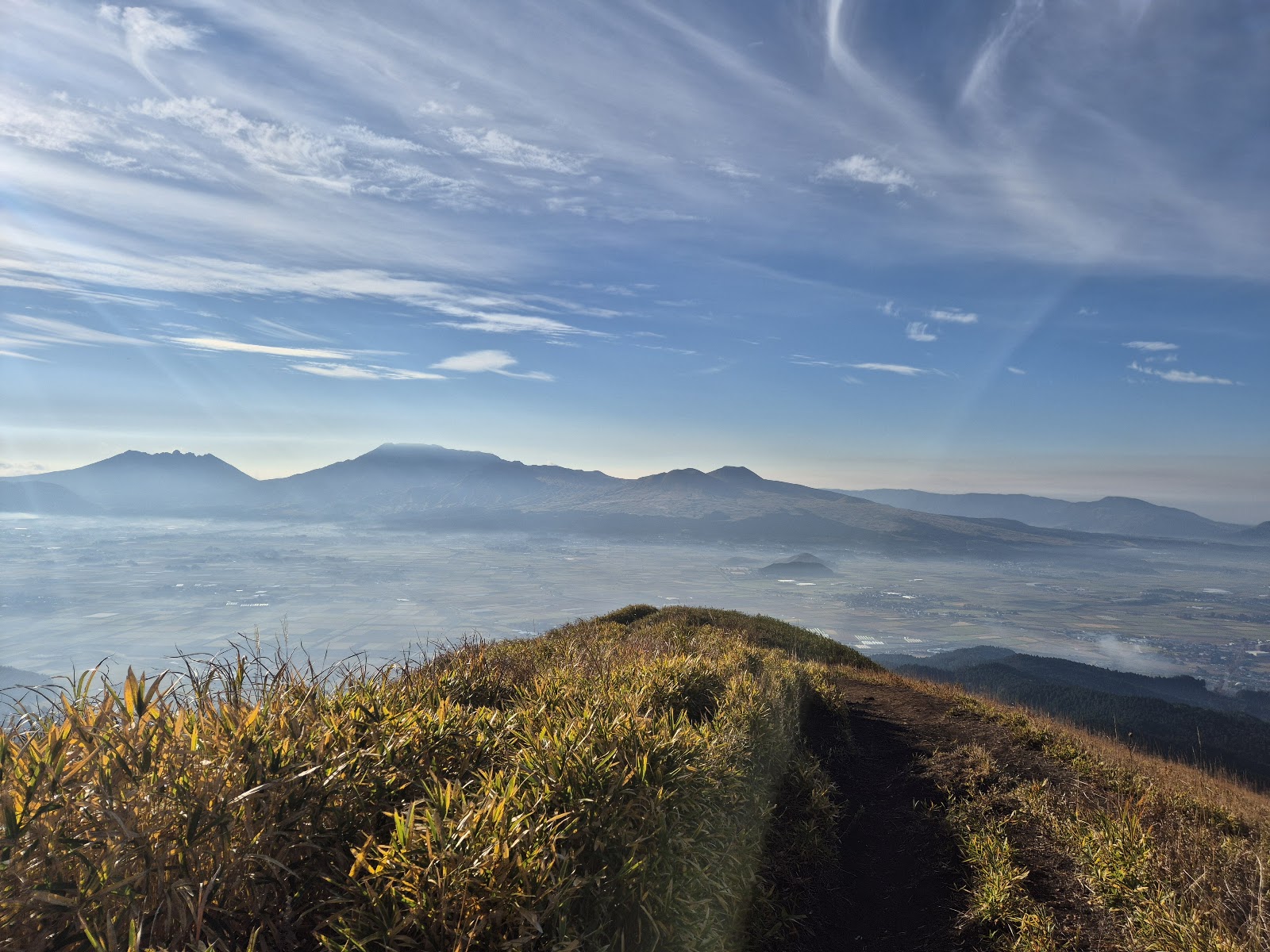
Momoiwa Observatory is one of the lesser-known jewels of Mount Aso's northern rim, a small roadside vantage point on the scenic Milk Road that delivers a view every bit as sweeping as its more famous neighbour, Daikanbo, but with a fraction of the crowds. Perched high on the outer wall of the caldera, it looks straight across the immense basin to the central cone group, with the five Aso peaks arrayed on the horizon and the checkerboard of farms, rice fields and towns spread across the caldera floor far below.
The observatory takes its name from the rock outcrop beside it, and it is above all a place for early risers. Aso's northern rim is celebrated for its unkai, or sea of clouds, a phenomenon in which cold, still air pools overnight in the vast caldera and fills it with a shifting ocean of white mist. On the right morning, most common from late autumn into winter when nights are cold and skies are clear, visitors who arrive before dawn are rewarded with the surreal sight of the entire basin drowned in cloud, the central peaks rising like islands and the first sunlight turning the mist to gold and rose. It is one of the defining images of Kyushu, and Momoiwa is among the finest and least busy places to witness it.
Even outside the sea-of-clouds season, the panorama is superb at any hour. By day the view stretches across the whole caldera to Nakadake's plume of volcanic steam, with the patchwork agricultural floor showing just how thoroughly people have made a home inside this ancient volcano. At dusk the low sun rakes across the grasslands of the rim, and on clear nights the lack of light pollution makes it a fine spot for stargazing. The surrounding Milk Road itself is a highlight, a ridgetop route winding through open pasture grazed by Aso's famous cattle, dotted with pull-offs and small viewpoints.
Understanding what you are looking at deepens the experience. The wall you stand on is the outer rim of the caldera, formed when four gigantic eruptions between roughly 300,000 and 90,000 years ago emptied the underlying magma chamber and collapsed the ground into a basin 18 kilometres east to west and 25 north to south. Everything below, right up to the active central cones, is the floor of that vanished super-volcano, one of the largest calderas on Earth still inhabited and farmed.
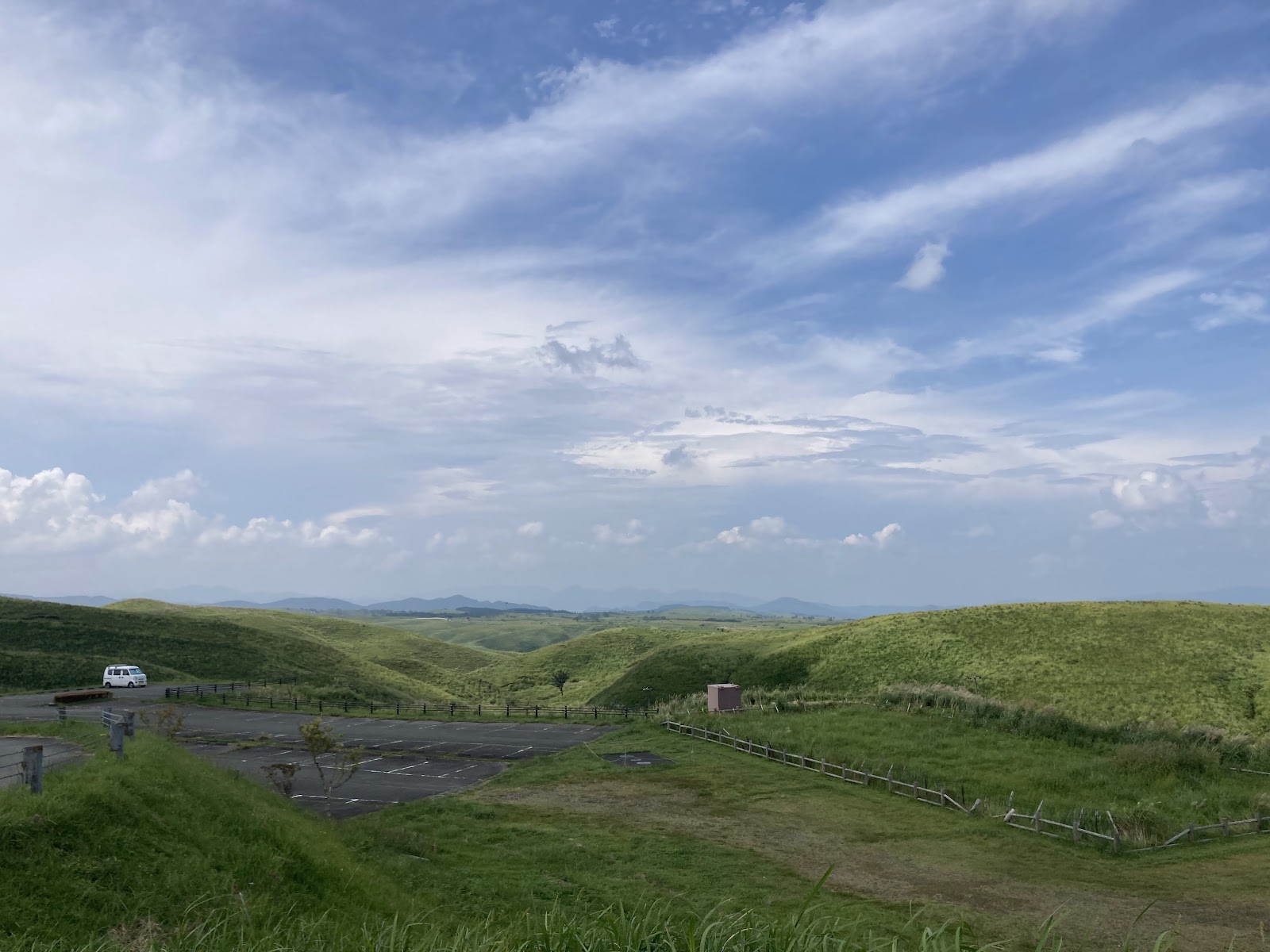
Momoiwa is very much a driving destination. It sits on Prefectural Route 339, the Milk Road, along the northern rim near Daikanbo, and there is no practical public transport, so a rental car is effectively essential. From the caldera floor and Aso Station it is a short but winding climb up to the rim. There is roadside parking, and restrooms are available a little further along at Daikanbo. Dress warmly for dawn visits even in autumn, as the rim is exposed and often several degrees colder than the valley, and bring a tripod if you hope to capture the sea of clouds in the soft pre-sunrise light.
A local's tip
Arrive before dawn from late autumn to early winter for the caldera's famous sea of clouds, when the whole basin fills with mist and only the central peaks float above it.
Best time to visit
Sunrise on calm autumn and winter mornings
Getting there
Located on the northern caldera rim along the Milk Road (Prefectural Route 339) near Daikanbo. A rental car is essentially required; it is a short drive up from Aso Station on the caldera floor.
Good to know
- Parking
- Restrooms
Plan the whole trip offline
Momoiwa Observatory is one of many places in the Real Japan app — with turn-by-turn directions, nearby spots and full offline maps you can use with no signal.