A ridgetop scenic road along the Aso caldera's northern rim, threading open grasslands with sweeping views over the volcano.
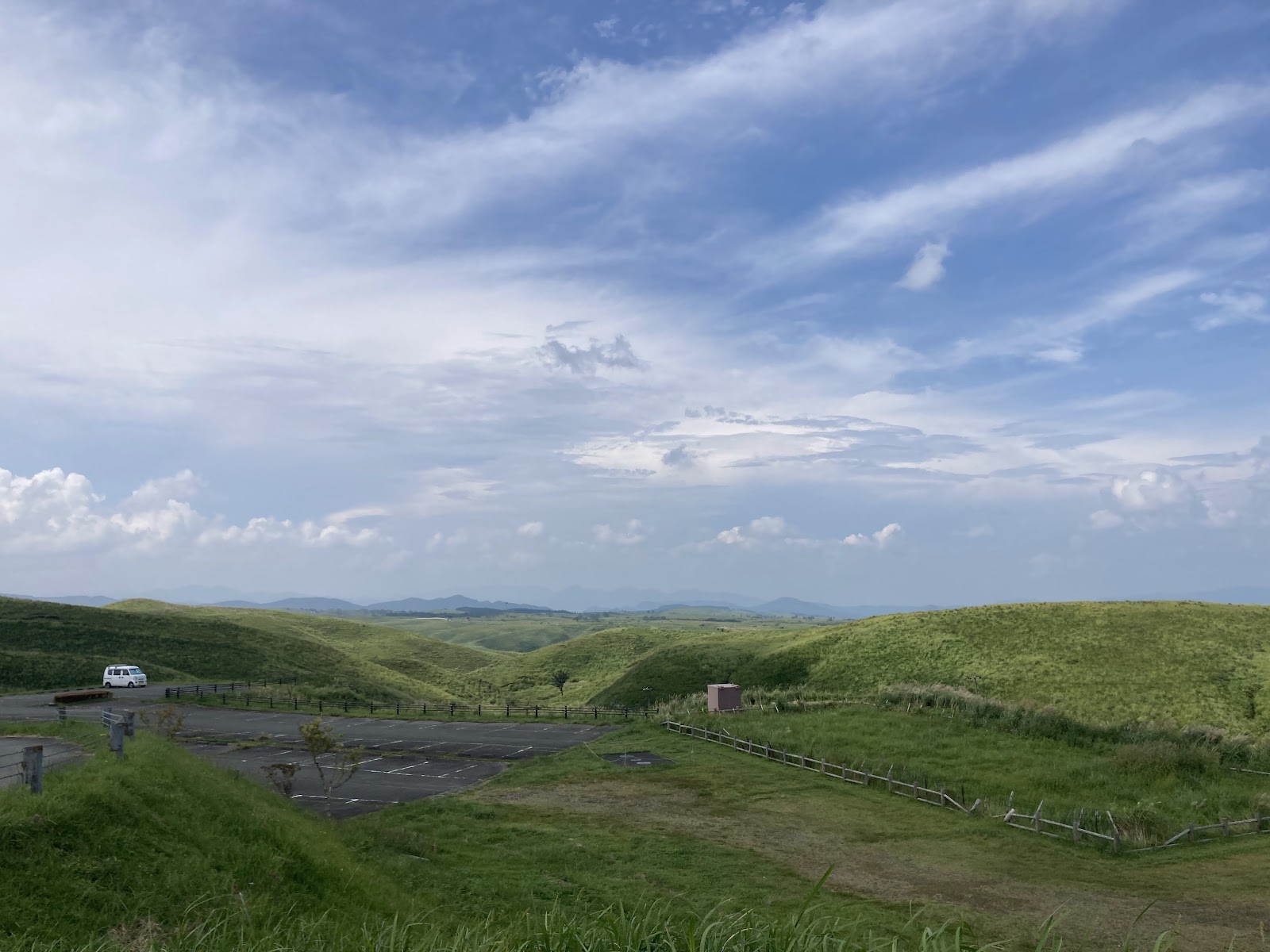
The Milk Road is the great scenic drive of the Aso caldera, a ribbon of asphalt that runs for many kilometres along the grassy northern rim, threading through open cattle pastures with the entire volcanic basin falling away on one side and rolling highland meadows on the other. Its unofficial name comes from the dairy country it crosses, where Aso's famous cattle graze on rim-top grasslands, and for many travellers driving it is the single most memorable experience in the region, a moving panorama that changes with every bend.
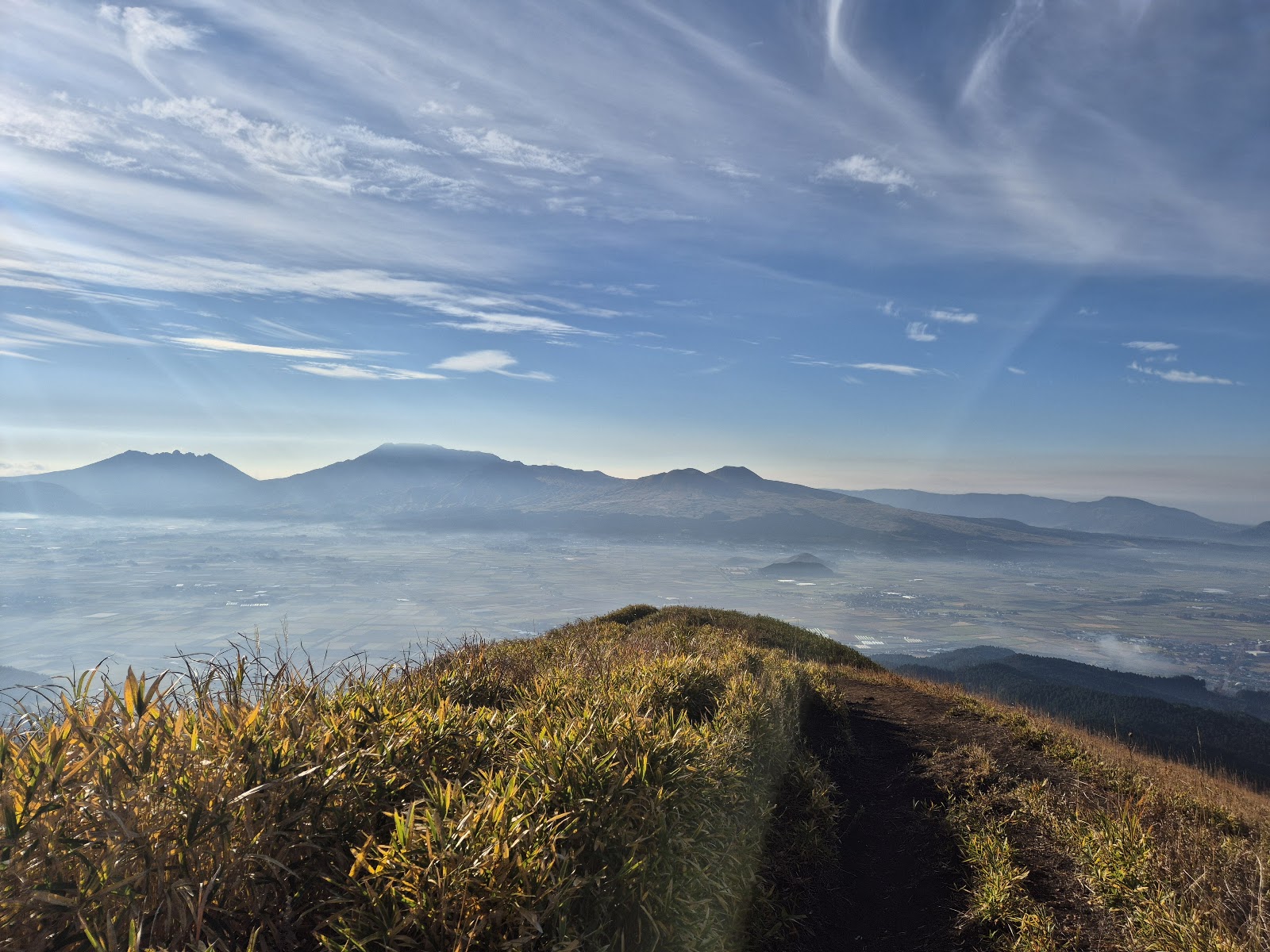
Unlike a fixed observatory, the Milk Road is a viewpoint you travel through rather than stand at, and that is its charm. Following largely Prefectural Route 339 along the caldera's outer wall, it links a string of famous overlooks, including Daikanbo and the quieter Momoiwa Observatory, with countless unmarked pull-offs where you can stop, step out into the wind, and take in the whole caldera at once: the five central peaks strung across the horizon, Nakadake's steam drifting skyward, and the patchwork of farms, forests and towns filling the vast basin floor far below. The road itself, curving through treeless pasture beneath enormous skies, is so photogenic that it regularly features in car commercials and road-trip photography.
Each season transforms the drive. Spring, after the traditional controlled burning of the grasslands, brings an intense fresh green; summer is lush and warm, with grazing cattle and towering cloudscapes; and autumn sets the susuki pampas grass shimmering silver and gold, arguably the finest time of all. In the coldest months the rim can catch snow, and while this creates beautiful scenes it also brings the risk of ice, so winter driving demands caution and the road may close temporarily. Early mornings offer the chance of the caldera's celebrated sea of clouds pooling below the road, while the golden hour before sunset lights the grasslands like fire.
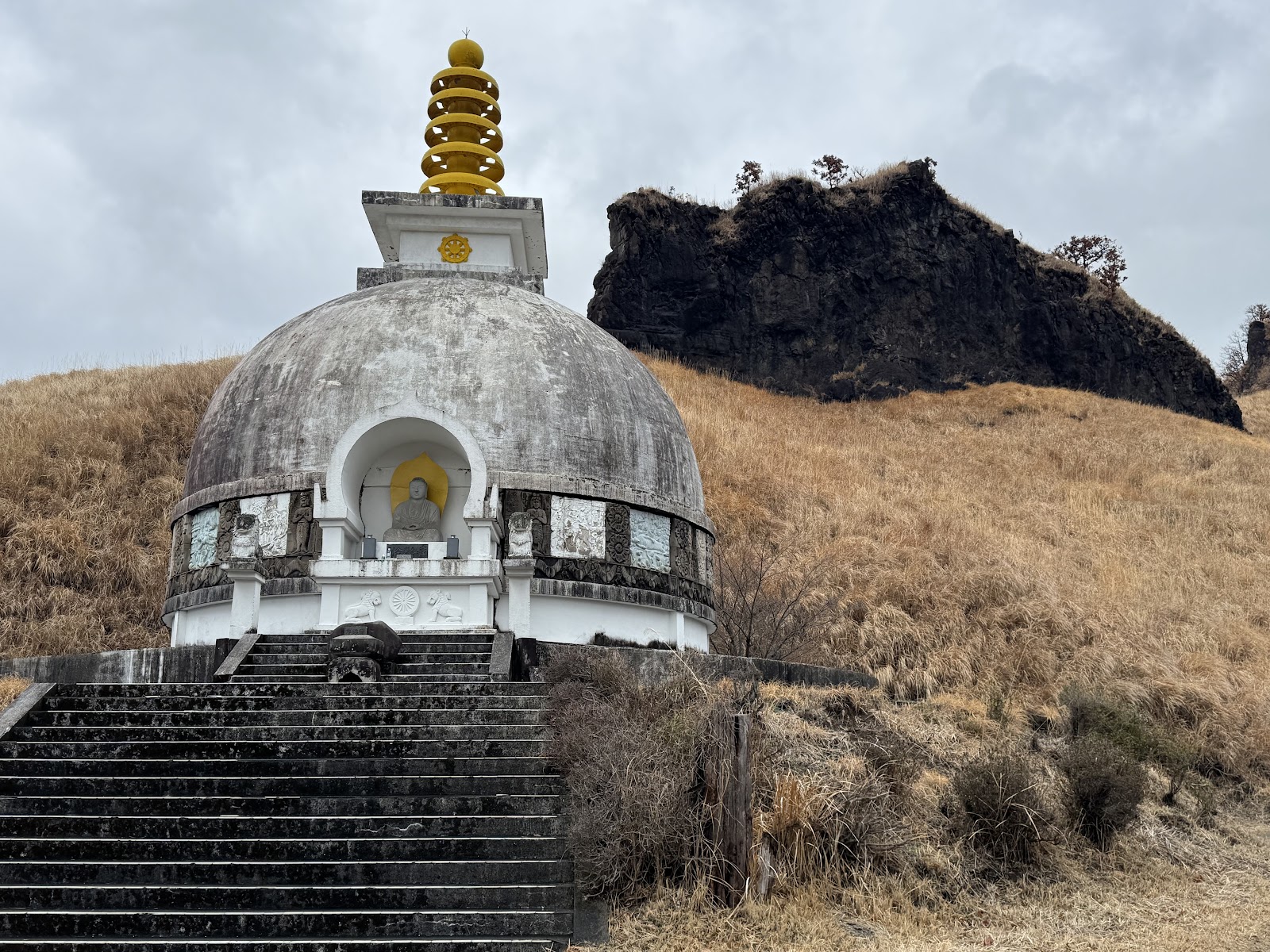
The grasslands the road crosses are not wilderness but a cultural landscape maintained for more than a thousand years by controlled burning and grazing, a tradition that keeps the rim open and treeless and supports Aso's distinctive ecology and dairy farming. Understanding this adds depth to the drive: the sweeping green slopes are the product of a long partnership between people and volcano, as much a part of Aso's story as the eruptions that built the caldera in the first place.
The Milk Road is unambiguously a driving destination and effectively requires a rental car, as there is no useful public transport along the rim. It connects the Ozu and Kumamoto side of the outer wall with the caldera towns, and can be combined with the Daikanbo and Momoiwa viewpoints for a leisurely half-day loop. Fuel up before you start, as services are sparse on the ridge, and take your time: the pleasure here is in stopping often, at the small nameless overlooks as much as the famous ones, letting the scale of the caldera sink in. Few roads in Japan pack so much scenery into so short a distance.
A local's tip
Drive it from west to east in the late afternoon so the sinking sun lights the grasslands, and stop at the small unmarked pull-offs rather than only the main observatories.
Best time to visit
Clear days spring to autumn; golden hour
Getting there
The Milk Road runs along the northern rim of the Aso caldera, largely as Prefectural Route 339. Access is by rental car; the road links the Ozu/Kumamoto side with the caldera towns via the Daikanbo area.
Good to know
- Parking
- Restrooms
Plan the whole trip offline
Milk Road (Aso Caldera Rim Drive) is one of many places in the Real Japan app — with turn-by-turn directions, nearby spots and full offline maps you can use with no signal.