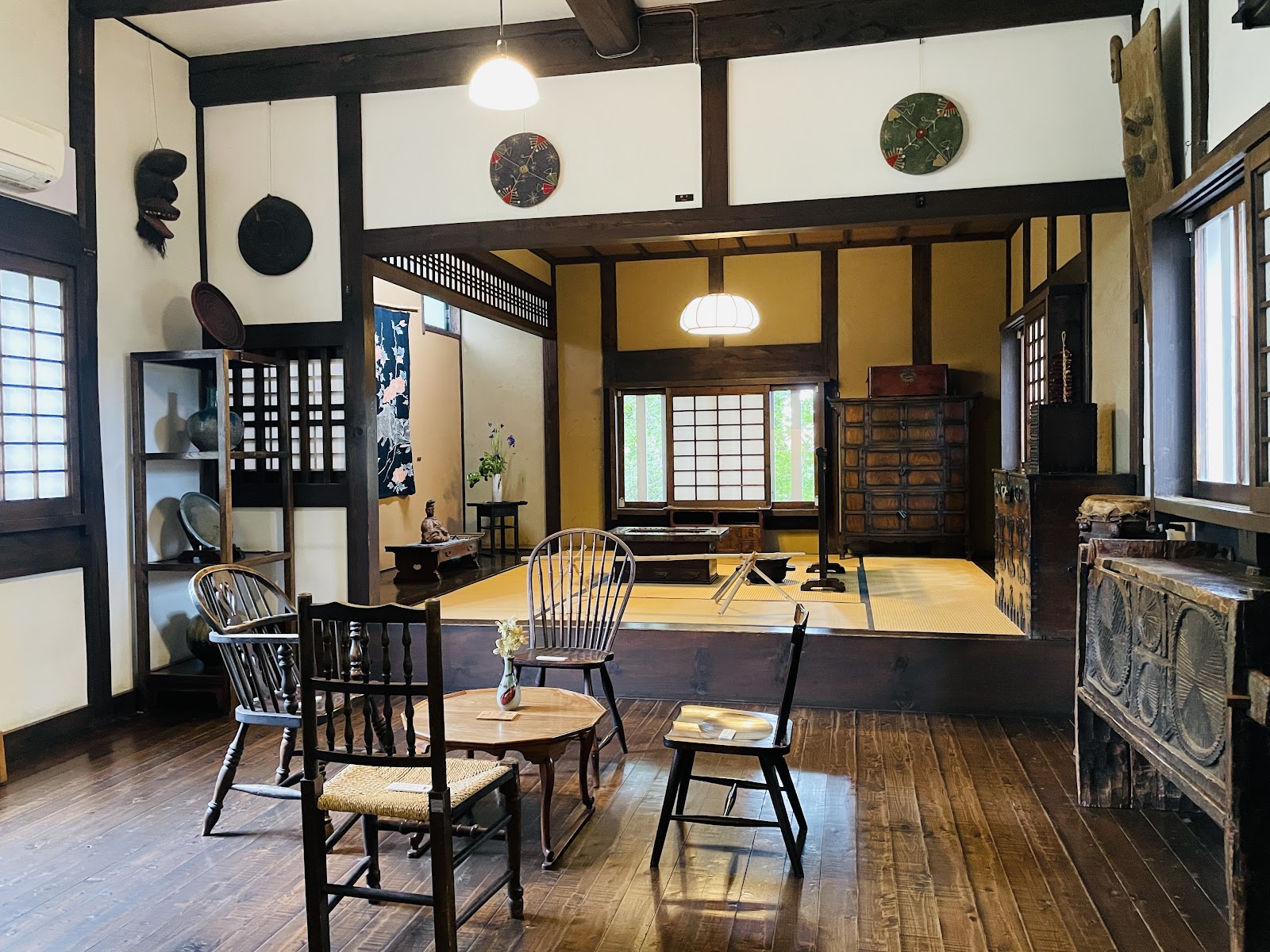
A serene storehouse museum devoted to mingei folk crafts — ceramics, textiles, furniture and everyday beauty.
The Matsumoto Folkcraft Museum (Matsumoto Mingeikan) is a quiet, deeply satisfying museum on the eastern edge of the city, dedicated to mingei — the Japanese folk-craft movement that celebrates the beauty of ordinary, handmade objects. For travelers interested in design, ceramics or the philosophy of craftsmanship, it is one of Matsumoto's most rewarding cultural stops, and a serene antidote to the bustle of the castle and central streets.
Matsumoto has a special connection to the mingei movement. The city became a significant center of folk crafts in the twentieth century, home to the Matsumoto furniture tradition and to craftspeople inspired by mingei founder Yanagi Soetsu and his circle. This museum grew from that milieu, founded to collect and display the kind of everyday functional objects — pottery, textiles, woodwork, basketry, lacquer, glass and furniture — that the movement held up as examples of honest, unpretentious beauty made by anonymous hands for daily use.
The building itself is part of the experience. Housed in a handsome kura (traditional storehouse) style structure with thick white walls and dark timber, it embodies the aesthetic it celebrates: solid, unshowy, quietly beautiful. Inside, the collection ranges across Japanese folk crafts and includes objects gathered from around the world, arranged to invite slow, appreciative looking rather than information overload. The atmosphere is contemplative, the lighting soft, and the emphasis is firmly on the objects and the sense of touch and use they evoke.
Wandering the displays, visitors come to see ordinary items — a glazed bowl, a woven basket, a wooden chest, a length of indigo cloth — with fresh eyes, appreciating the skill, proportion and restraint that mingei prizes. It is a small museum that can shift the way you look at everyday things, and it resonates strongly with contemporary interest in handmade goods, slow living and Japanese design.
The museum lies a little away from the center, in the Satoyamabe district on the eastern side of Matsumoto toward the Utsukushigahara Onsen area, which keeps it peaceful and uncrowded. Reach it by bus from JR Matsumoto Station heading toward Utsukushigahara Onsen, alighting near the museum, or by car. Admission is very modest, around 300 yen, and forty-five minutes to an hour is enough to take it in. It combines well with a trip to the nearby hot-spring district or a drive up toward the plateau. For anyone drawn to ceramics, textiles or the deeper idea that beauty lives in useful, well-made everyday objects, the Matsumoto Folkcraft Museum is a small gem that repays the short journey out from the center.
A local's tip
The storehouse-style building is part of the exhibit — this is a shrine to the mingei (folk craft) philosophy of finding beauty in everyday handmade objects.
Best time to visit
Anytime; quiet and contemplative
Getting there
In the eastern Satoyamabe district of Matsumoto; take a bus from JR Matsumoto Station toward Utsukushigahara Onsen and alight near the museum.
Good to know
- Shop
- Parking
- Restrooms
Plan the whole trip offline
Matsumoto Folkcraft Museum is one of many places in the Real Japan app — with turn-by-turn directions, nearby spots and full offline maps you can use with no signal.