A leafy city park of cherry trees and Meiji-era architecture beside Shinshu University.
Agata-no-Mori Park is a broad, tree-filled green space on the eastern side of Matsumoto, adjoining the campus of Shinshu University and named for the wooded rise, or mori, on which it sits. For local residents it is one of the city's most-loved everyday parks, a place for morning walks, family picnics, seasonal festivals and quiet study under the trees, and for visitors it offers an easy, uncommercial slice of Matsumoto life away from the castle crowds.
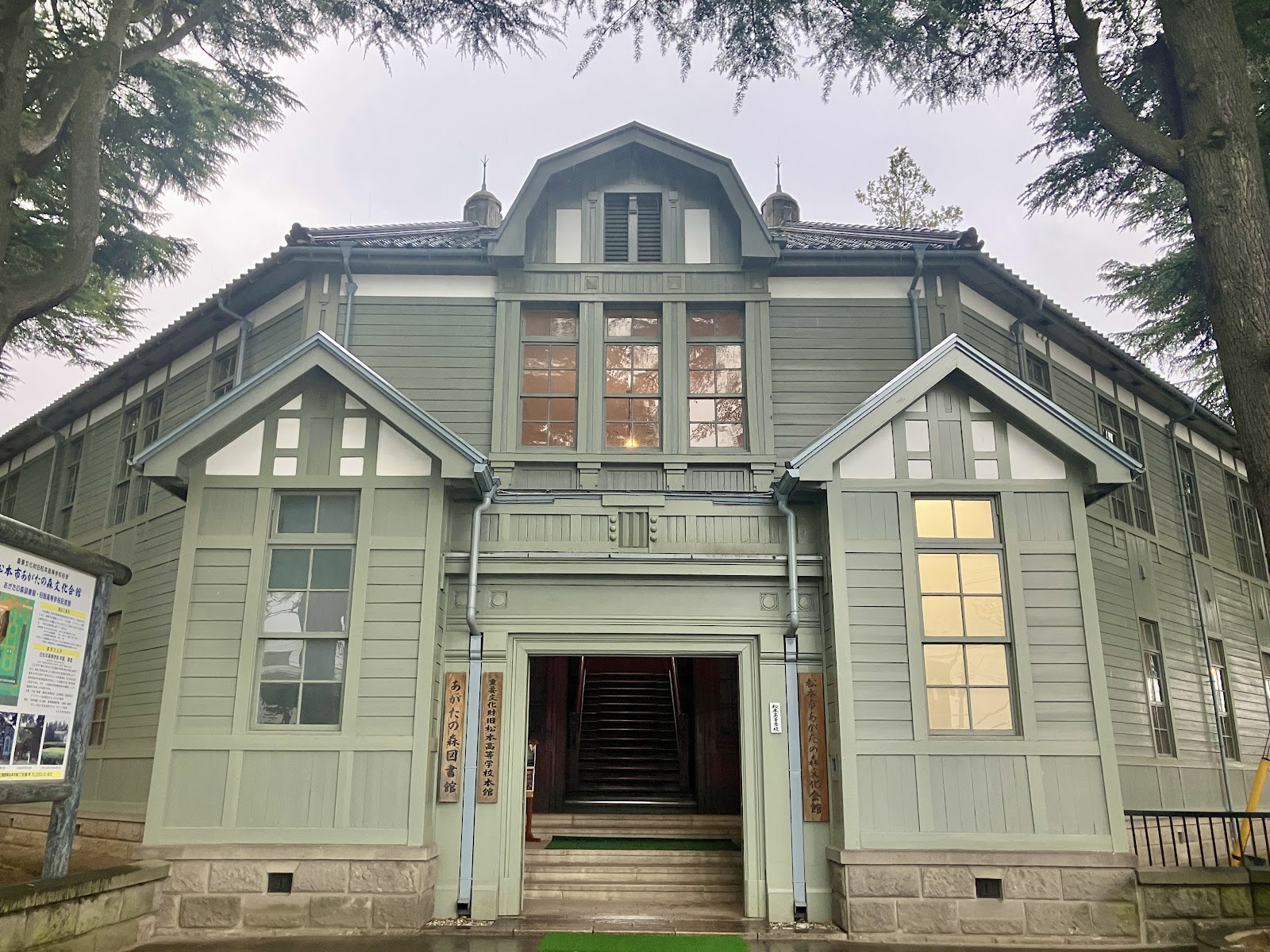
The park's centrepiece is the former Matsumoto Higher School, an elegant wooden building complex dating from the early 20th century. Built during the Taisho era when Japan was rapidly adopting Western educational models, its pale timber halls with tall windows and a graceful auditorium survive as a designated cultural property. The buildings are open to the public, and their airy classrooms and lecture halls give a tangible sense of student life a century ago; the site is also popular as a backdrop for film and television dramas set in the pre-war period.
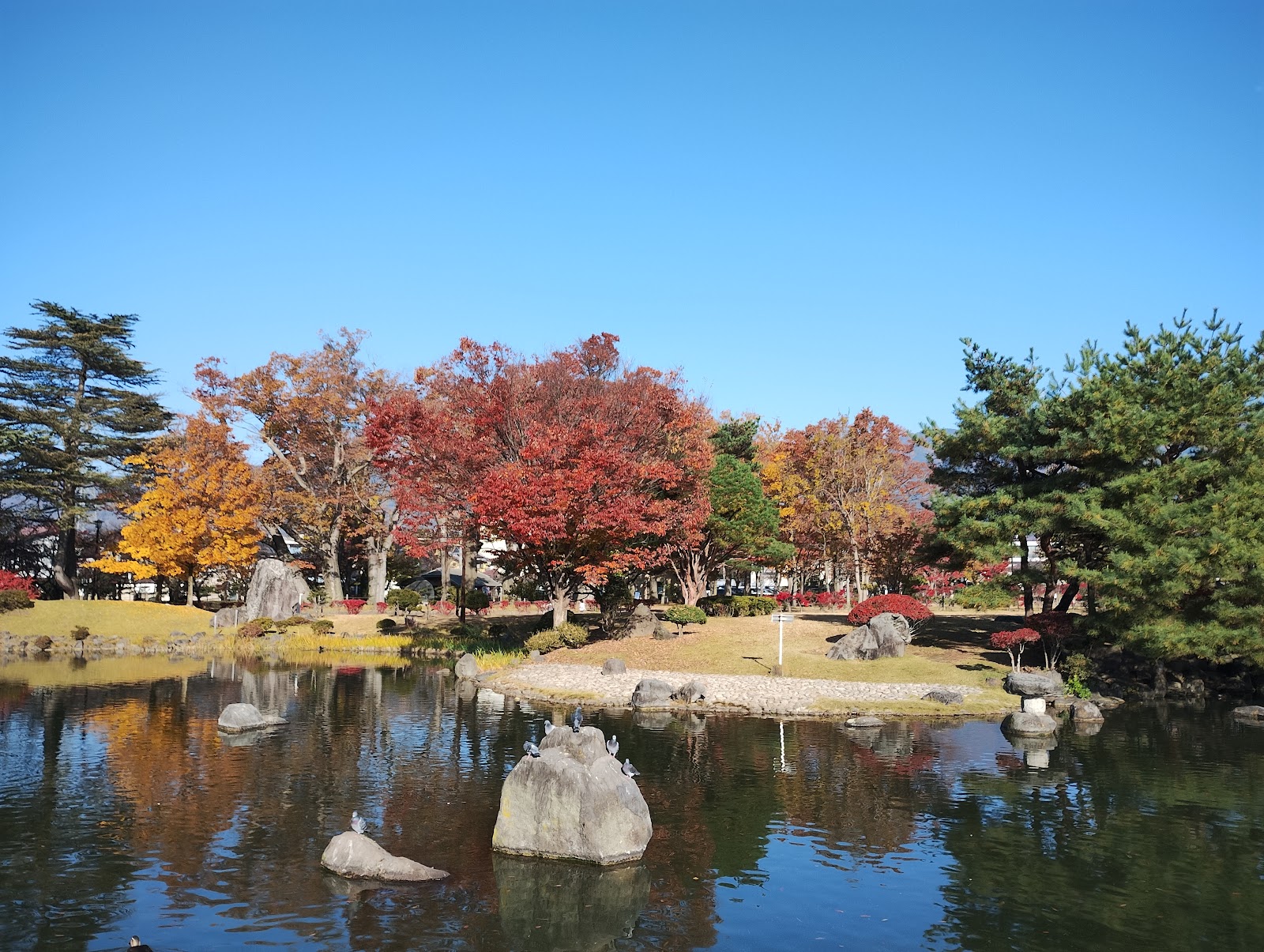
Around the historic buildings, the park spreads out in lawns, groves and tree-lined avenues. It is especially known for its cherry trees, and in late April the rows of blossom arching over the old schoolhouse make it one of the finest and least crowded hanami spots in the city. In autumn the same trees, along with maples and ginkgo, turn the park gold and red. Throughout the warmer months the open lawns host craft markets, food events and outdoor concerts, giving the space a relaxed, community feel.
Because it lies next to Shinshu University, the park has a youthful, unhurried atmosphere, with students crossing it between lectures and locals exercising along its paths. Paved, level walkways make it accessible for all ages, and there are benches, restrooms and open grass for children to run on. It is a genuinely local park rather than a manicured tourist garden, which is precisely its charm.
For travellers, Agata-no-Mori works well as a gentle counterpoint to Matsumoto's headline sights. After touring the castle and the historic merchant streets in the centre, a walk of around twenty minutes east, or a short hop on the Town Sneaker loop bus, brings you to a quieter, greener side of the city where you can rest under the trees, admire the Meiji-era architecture and, in season, enjoy the blossom. Entry to the park is free and it is open at all hours; the historic school buildings keep daytime hours and can usually be visited for little or no charge. Combined with the nearby university district's cafes and bookshops, it makes for a pleasant, low-key half-day that rounds out a fuller picture of everyday Matsumoto beyond its famous castle.
A local's tip
Time a visit for late April when the rows of cherry trees bloom over the historic Meiji-era buildings, or for the autumn craft fairs that fill the lawns.
Best time to visit
Late April for cherry blossom; autumn for foliage
Getting there
About a 20 minute walk east of Matsumoto Station, or a short bus ride on the Town Sneaker circular bus. The park adjoins Shinshu University's main campus.
Good to know
- Cafe
- Parking
- Restrooms
Plan the whole trip offline
Agata-no-Mori Park is one of many places in the Real Japan app — with turn-by-turn directions, nearby spots and full offline maps you can use with no signal.