Matsumoto's central townspeople's shrine, dedicated to the deities of war and of scholarship.
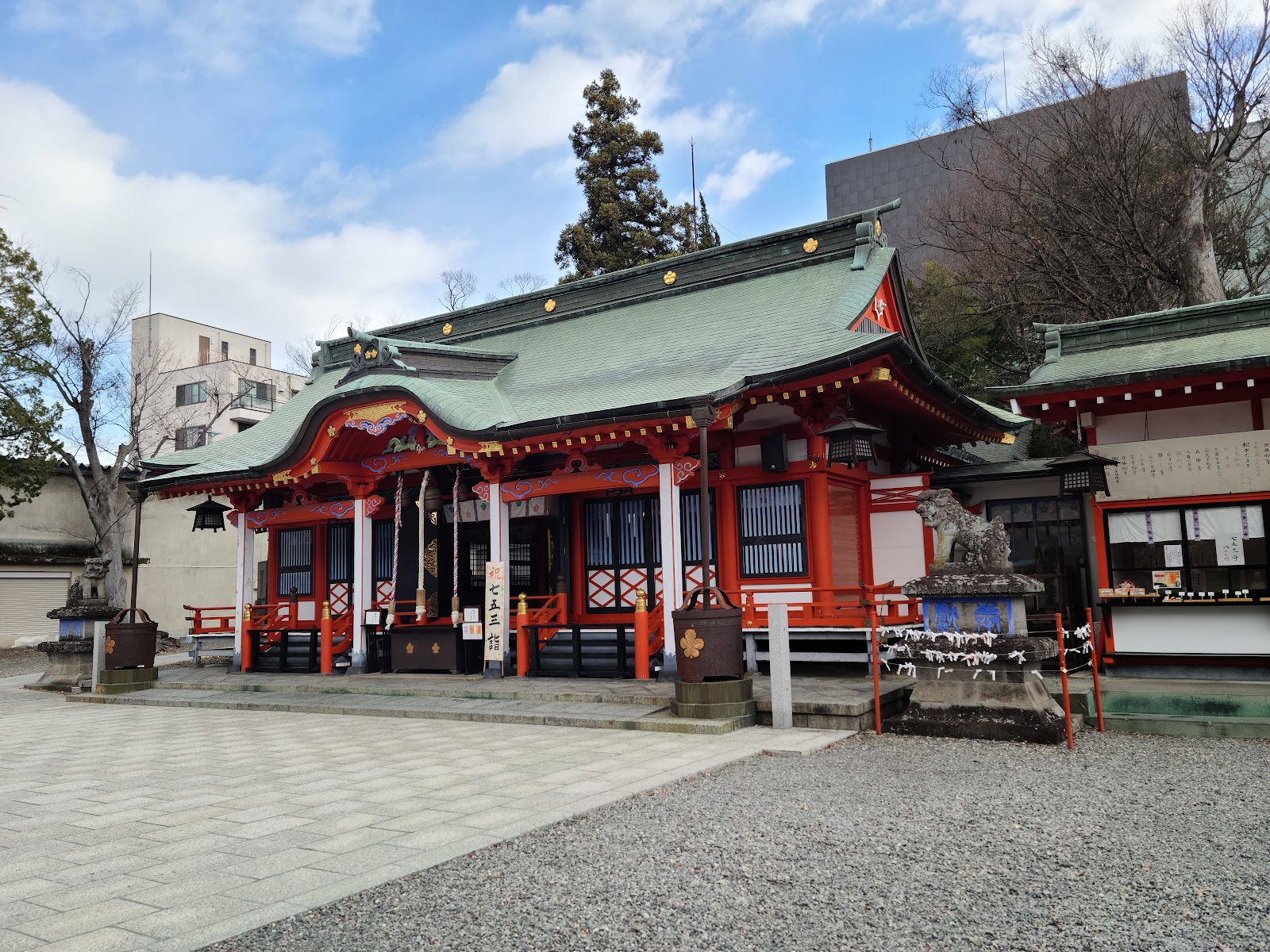
Fukashi Shrine sits in the heart of Matsumoto, a short walk from both the railway station and the black-walled castle, and has served as the guardian shrine of the townspeople for centuries. Its origins are traced to 1441, when it was founded during a period of local conflict, and it later flourished under the patronage of the lords of Matsumoto Castle. Today it is a calm pocket of greenery and vermilion woodwork surrounded by the modern city, including the striking glass-and-steel Matsumoto Performing Arts Centre next door.
The shrine enshrines two principal deities. One is Takeminakata, a god associated with martial valour and with the great Suwa Shrine to the south, reflecting the shrine's roots in an age of warring provinces. The other is Sugawara no Michizane, the Heian-era scholar and statesman who was deified after his death as Tenjin, the god of learning and scholarship. This second dedication gives Fukashi Shrine its popular name, Fukashi Tenjin, and draws a steady stream of students who come to pray for success in school and university entrance examinations. The votive plaques, or ema, hung here are often covered with wishes for passing exams, and the shrine sells distinctive amulets aimed at scholars.
The precinct is compact but atmospheric, with a main hall of classic Shinto proportions, a scattering of smaller auxiliary shrines, stone lanterns and mature trees that filter the light. Because it lies within easy walking distance of Matsumoto Castle, the retro shopping street of Nakamachi and the frog-themed Nawate street along the Metoba River, it makes a natural addition to a walking tour of the old town without requiring any detour.
Fukashi Shrine comes most alive during its summer festival, the Tenjin Matsuri, held in late July. During the two-day event, ornate festival floats known as fune, some shaped like boats, are pulled through the streets, taiko drums sound, and food stalls fill the approach, drawing families and visitors from across the city. It is one of Matsumoto's liveliest traditional events and offers a glimpse of the community spirit that has sustained the shrine for generations.
For most of the year, though, the appeal is quieter: a place to pause, make a small offering, and appreciate the contrast between centuries-old religious architecture and the contemporary cultural buildings that now stand beside it. There is no admission fee and the grounds are open at all hours, making it an easy, free stop for travellers exploring central Matsumoto on foot. Spring brings cherry blossom to the precinct, and the shrine's convenient location, only a dozen minutes from the station, means it can be slotted into even a brief visit to the city between the castle, the museums and the old merchant streets.
A local's tip
Students come here before exams to pray to Sugawara no Michizane, god of learning; buy a pencil-shaped amulet as an unusual, inexpensive souvenir.
Best time to visit
Morning; late July for the Tenjin Festival
Getting there
A 10 to 12 minute walk east from Matsumoto Station, or a short stroll from Matsumoto Castle and the Nawate and Nakamachi streets. It sits beside the Matsumoto Performing Arts Centre.
Good to know
- Parking
- Restrooms
Plan the whole trip offline
Fukashi Shrine is one of many places in the Real Japan app — with turn-by-turn directions, nearby spots and full offline maps you can use with no signal.