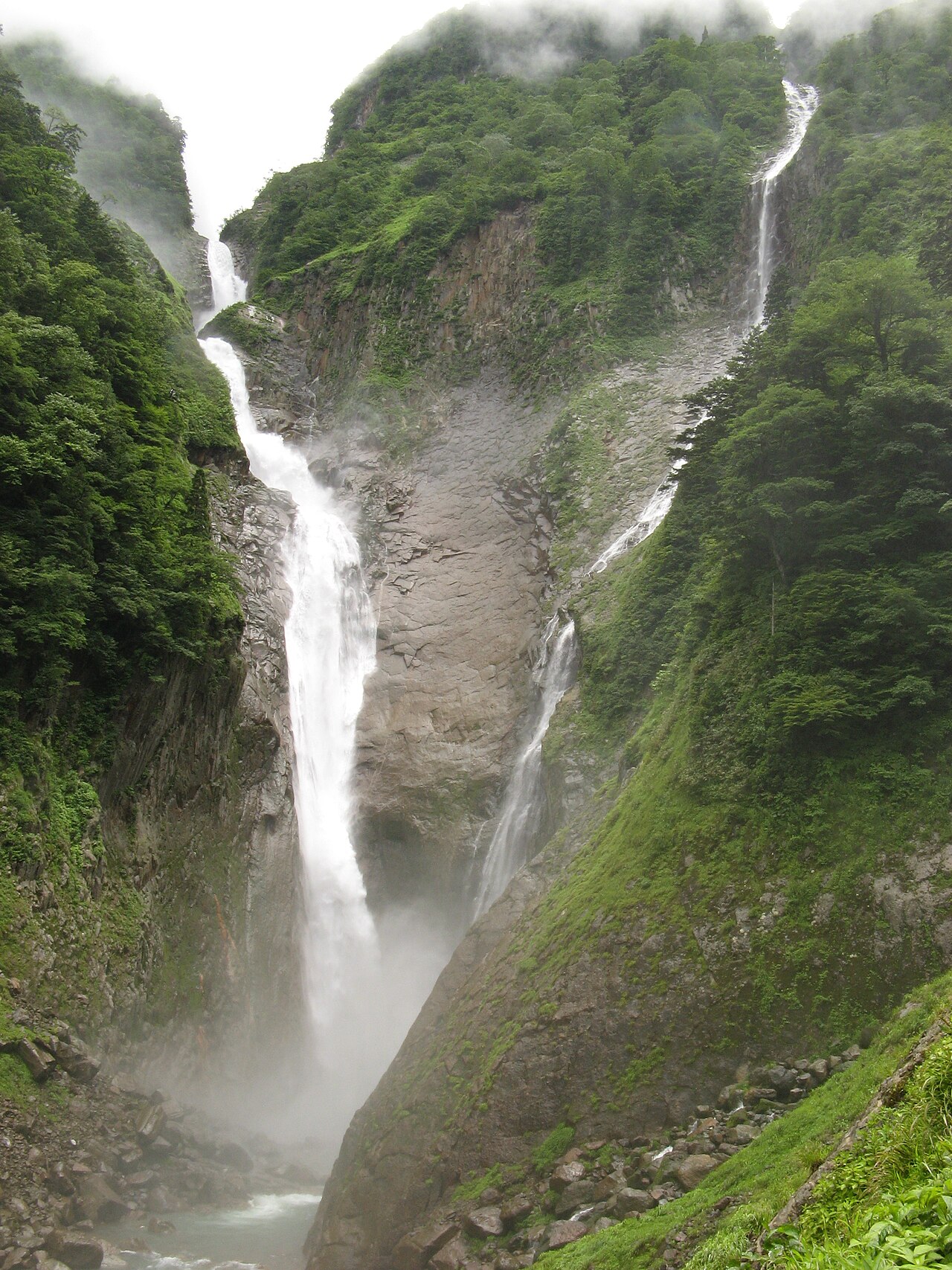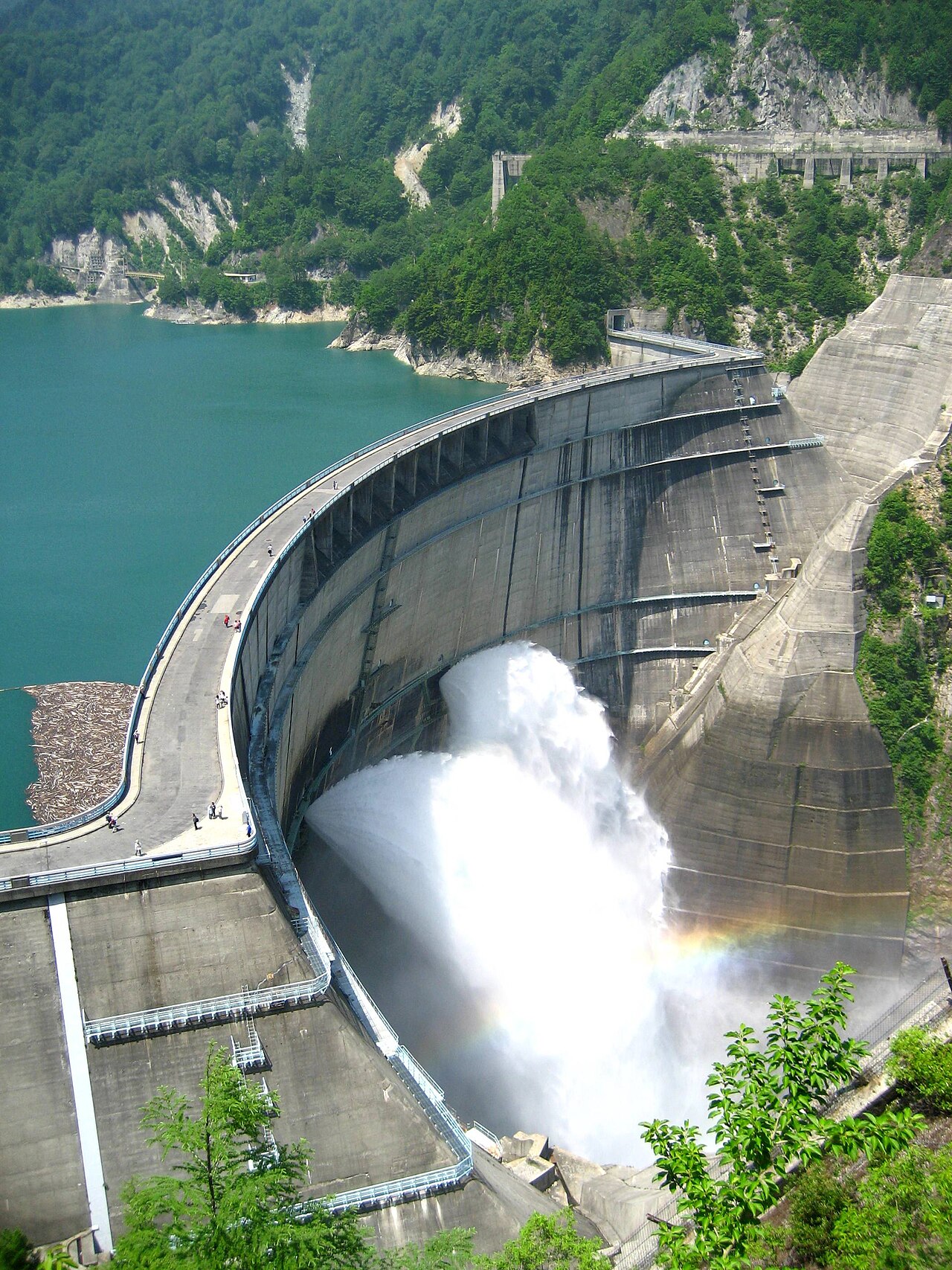
Japan's tallest dam, an arch of concrete high in the Northern Alps with a thundering summer water discharge.
Kurobe Dam is the crown jewel of the Tateyama Kurobe Alpine Route and one of the great engineering achievements of postwar Japan. Rising 186 meters, it is the tallest dam in the country, a graceful concrete arch wedged into a deep gorge of the Northern Japan Alps. Its construction in the late 1950s and early 1960s was a national epic: workers battled avalanches, freezing torrents, and treacherous rock to bore access tunnels and pour the enormous structure, and 171 lives were lost. The story became legend, immortalized in the film 'Kurobe no Taiyo,' and to Japanese visitors the dam carries the weight of that sacrifice and ambition.
Built to supply hydroelectric power to a fast-industrializing nation, the dam holds back the emerald waters of Lake Kurobe, cradled by steep, forested and snow-streaked peaks. The setting is spectacular in any season the route is open, but the signature spectacle is the kanko-horyu, the tourist water discharge, carried out from late June through mid-October. During these months the dam releases a colossal jet of water that plunges more than ten meters per second into the gorge below, throwing up clouds of spray in which rainbows frequently form. The roar and the mist, framed by alpine scenery, are unforgettable.
Several viewpoints let visitors take it all in. A staircase of over 200 steps climbs to the upper observation deck, which offers the classic panorama of the arched dam, the discharge, the turquoise lake, and the surrounding 3,000-meter peaks including Mount Tateyama. A lakeside promenade crosses the top of the dam itself, and in season sightseeing boats ply the reservoir, giving a fish-eye view of the towering wall. A memorial honors the workers who died building it.
Reaching Kurobe Dam is an adventure, because it lies deep in the mountains accessible only via the Tateyama Kurobe Alpine Route, a remarkable chain of cable cars, ropeways, trolley buses, and highland buses that traverses the range between Toyama and Nagano prefectures. From the Nagano side, visitors ride an electric bus through a long tunnel bored during construction to emerge at the dam; from the Toyama side, the journey climbs through the alpine highlands past Murodo and Mikurigaike. Either way, the dam is a highlight of a route that is itself one of Japan's great mountain journeys.
The route, and thus the dam, is open only from mid-April to the end of November; in winter the mountains are sealed by snow. Early summer offers lush greenery and the fresh discharge, while autumn drapes the surrounding slopes in red and gold. Because access requires multiple transfers and the altitude is high, dress warmly and in layers even in summer, and allow a full day for the crossing. For anyone drawn to grand engineering set against wild alpine beauty, Kurobe Dam is a bucket-list destination and the reason many travelers venture into Toyama's mountains at all.
A local's tip
Climb the 220-plus steps to the upper observation deck for the best view of the thundering discharge and the emerald reservoir.
Best time to visit
Late June to mid-October for the tourist water discharge
Getting there
Access via the Tateyama Kurobe Alpine Route; from the Toyama side by cable car and bus, or from the Nagano side via Ogizawa and the electric bus tunnel to the dam.
Good to know
- Shop
- Restrooms
- Restaurant
Plan the whole trip offline
Kurobe Dam is one of many places in the Real Japan app — with turn-by-turn directions, nearby spots and full offline maps you can use with no signal.