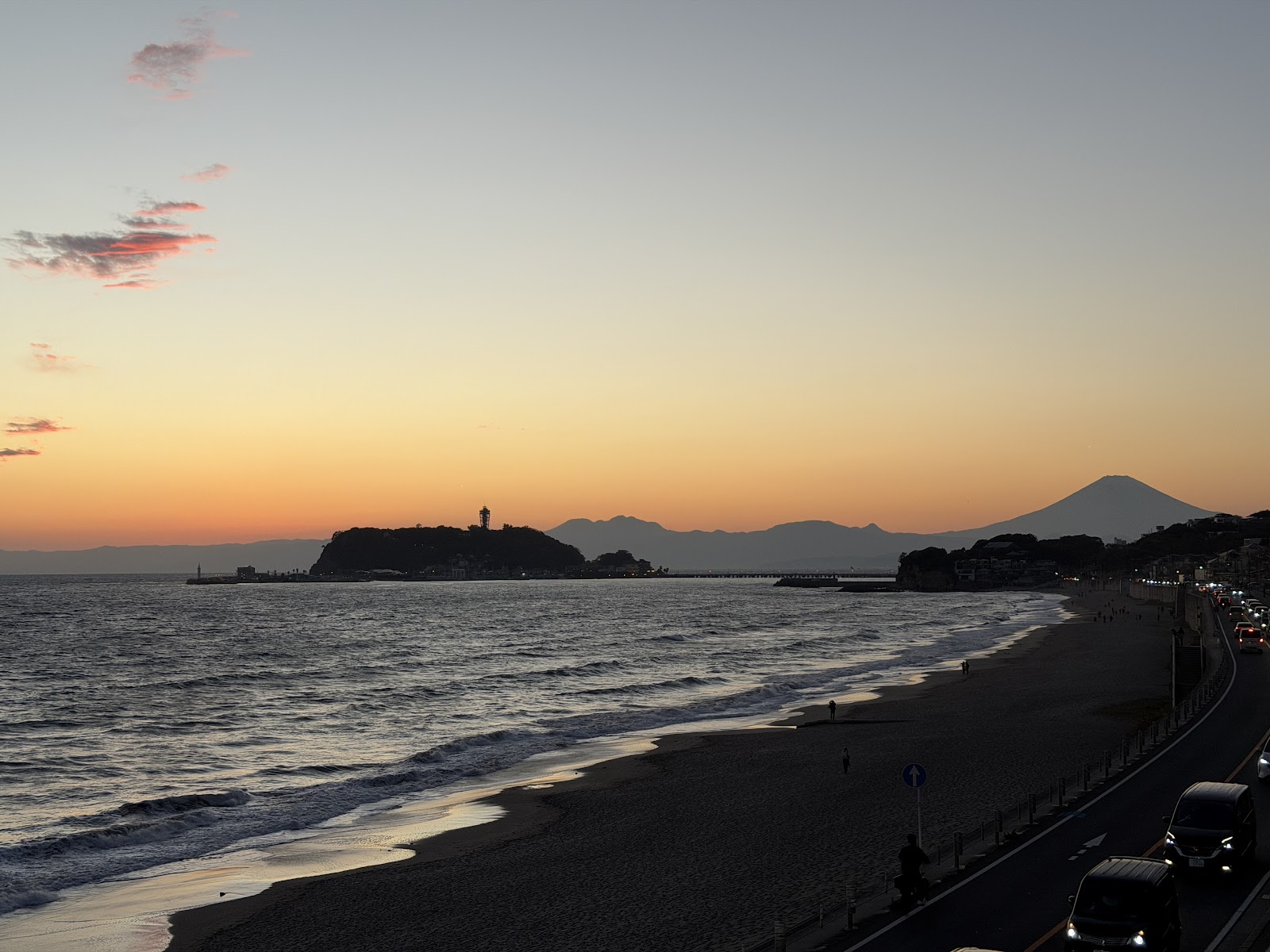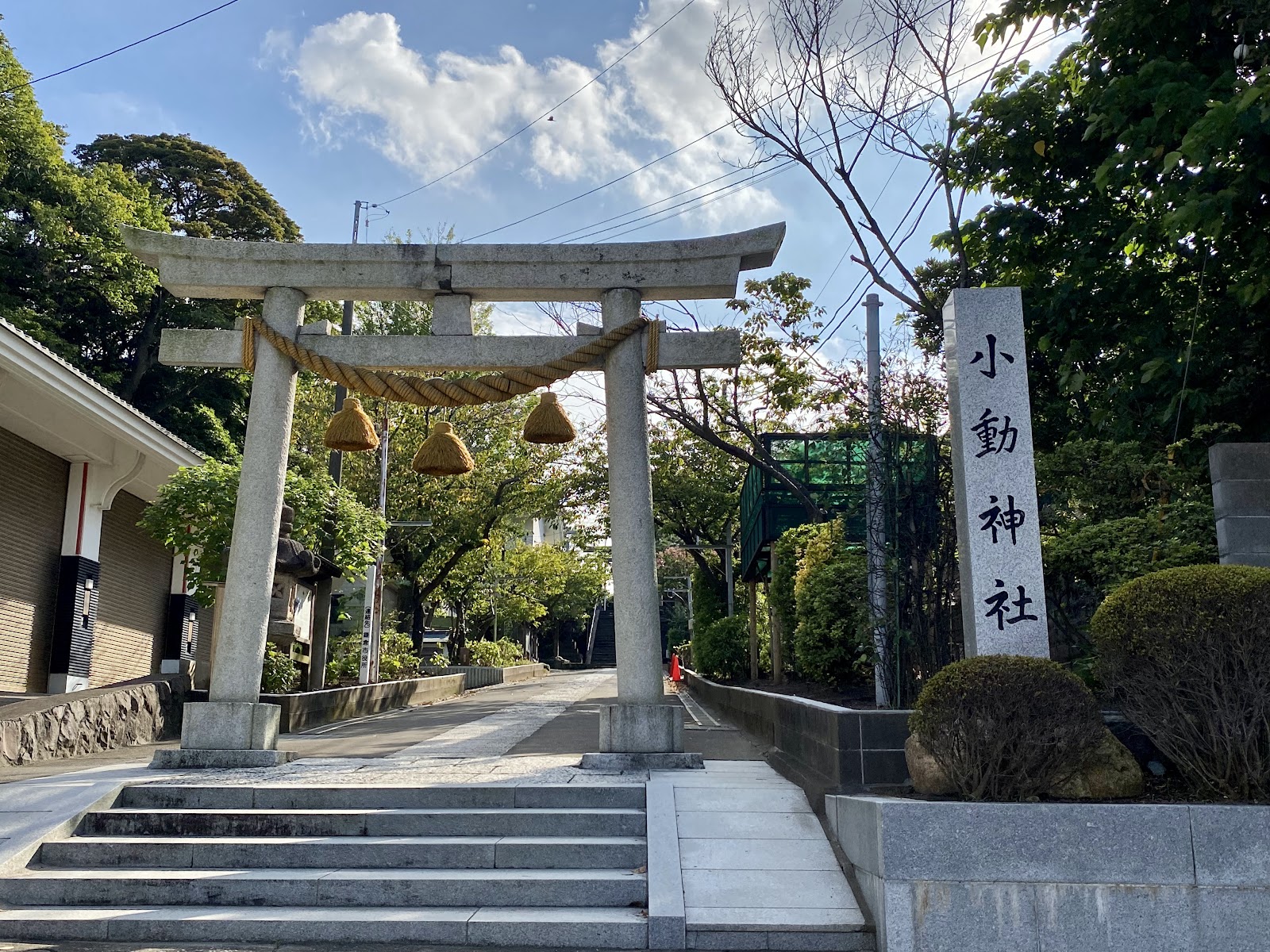
A photogenic clifftop shrine at Koshigoe with red-and-white torii and views of Enoshima and Mt Fuji over the sea.
Koyurugi Shrine sits atop the small coastal hill of Koyurugi-san in the seaside neighbourhood of Koshigoe, at the western edge of Kamakura where the town blurs into Enoshima's orbit. Perched just above the shoreline, it is one of the most quietly rewarding viewpoints in the area, combining a photogenic shrine, layered maritime history and a genuinely lovely outlook across the water toward Enoshima Island and, on clear days, Mt Fuji beyond.
The shrine's origins reach back to the late twelfth century. Local legend holds that it was founded when Sasaki Moritsuna, a loyal retainer of Minamoto no Yoritomo, was so moved by the beauty of the sea and mountains from this spot that he enshrined a deity here. Later history added another famous name: the warrior Nitta Yoshisada is said to have prayed at Koyurugi in 1333 during his campaign against the Kamakura shogunate, casting a sword into the sea to petition the gods for a favourable tide before his assault on the city. The hill is also marked by the concrete ruins of a coastal artillery battery from the modern wartime era, a reminder that this cape once guarded the approaches to Tokyo Bay.
Visually, the shrine is a delight. A striking sequence of red-and-white torii gates climbs the hillside, drawing photographers who frame the vermilion arches against the blue of the sea and sky. From the small clifftop the view opens westward across Sagami Bay to the wooded hump of Enoshima, crowned by its lighthouse tower, with Mt Fuji rising behind on transparent days. It is an especially fine place in the late afternoon, when the lowering sun sets the water aglow and silhouettes Enoshima and Fuji in golds and purples.
Because it stands only about a five-minute walk from Koshigoe Station, Koyurugi is wonderfully easy to reach and requires no hiking, making it suitable for almost anyone; the short rise to the shrine involves only a modest set of steps. Each July the shrine comes alive for a lively sea festival in which portable mikoshi shrines are carried into the surf, a spectacle rooted in the community's deep ties to the ocean. Outside festival days it is usually calm and uncrowded, a peaceful pause on the busy Enoden coast.
Seasonally, the clear, dry air of autumn and winter gives the best chance of seeing Mt Fuji sharply behind Enoshima, while the coastal setting means the shrine is pleasant year-round even when the mountain hides in summer haze. There are no restrooms, shops or parking at the shrine itself, though the shops and cafes of Koshigoe are close by. Note that the nearest station is served by the Enoden, a private railway not covered by the Japan Rail Pass, so pass holders should ride JR to Kamakura or Fujisawa and transfer, tapping through with an IC card. Allow around 30 minutes to climb through the torii, take in the view and explore the old battery ruins, ideally arriving in the golden hour before sunset.
A local's tip
Climb past the vivid red-and-white torii to the small clifftop behind the shrine, where the war-era cannon-battery ruins double as a quiet platform for framing Enoshima against Mt Fuji.
Best time to visit
Clear late afternoons for Enoshima and Mt Fuji at sunset
Getting there
Take the Enoden line to Koshigoe Station and walk about 5 minutes toward the coast; the shrine stands on the small hill of Koyurugi-san overlooking the sea. From Tokyo, ride JR to Kamakura or Fujisawa, then transfer to the Enoden.
Plan the whole trip offline
Koyurugi Shrine (Koyurugimisaki) is one of many places in the Real Japan app — with turn-by-turn directions, nearby spots and full offline maps you can use with no signal.