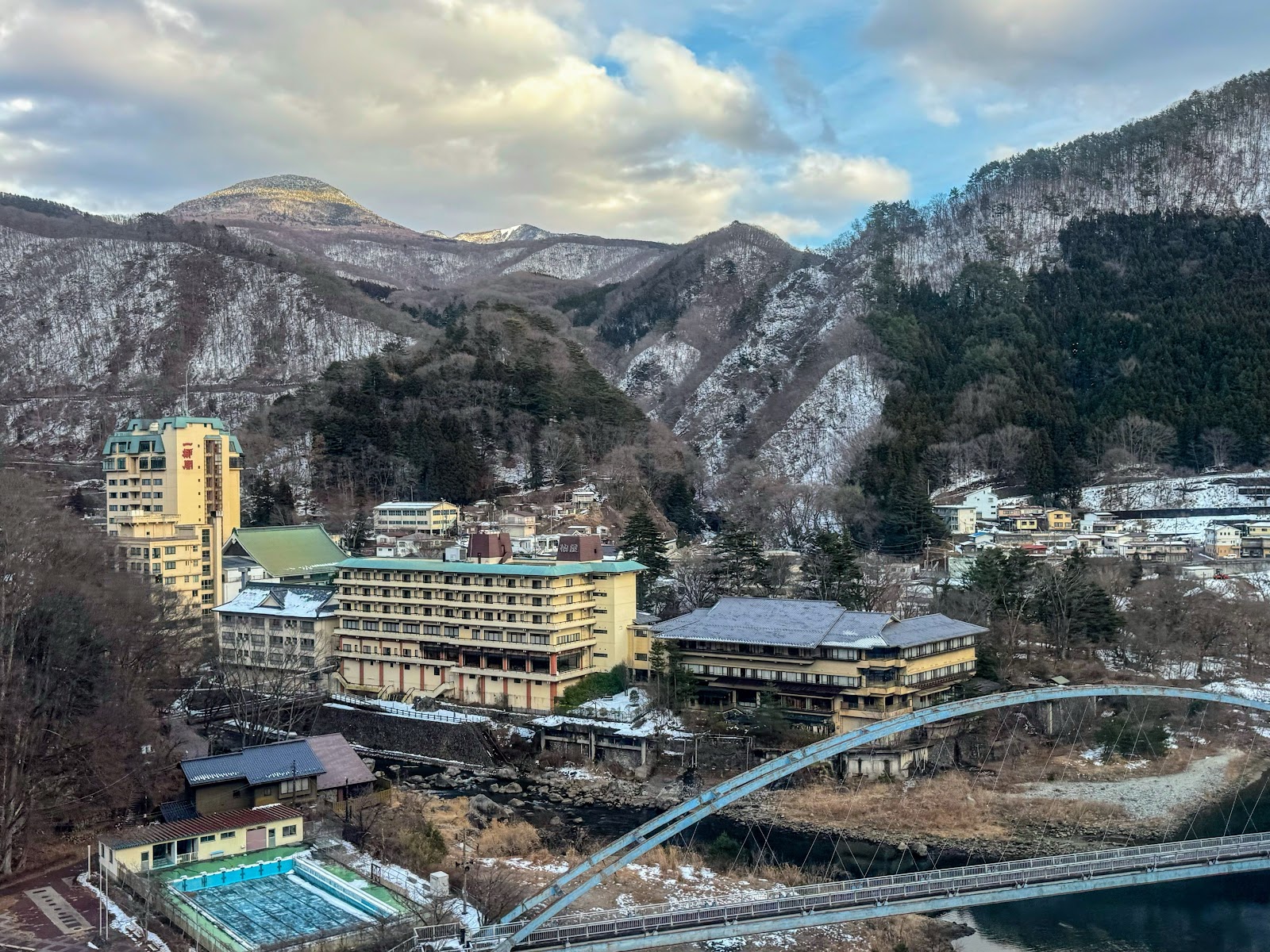
Quiet Edo-era hot-spring town at the meeting of the Kinu and Ojika rivers, a mellow alternative to bustling Kinugawa.
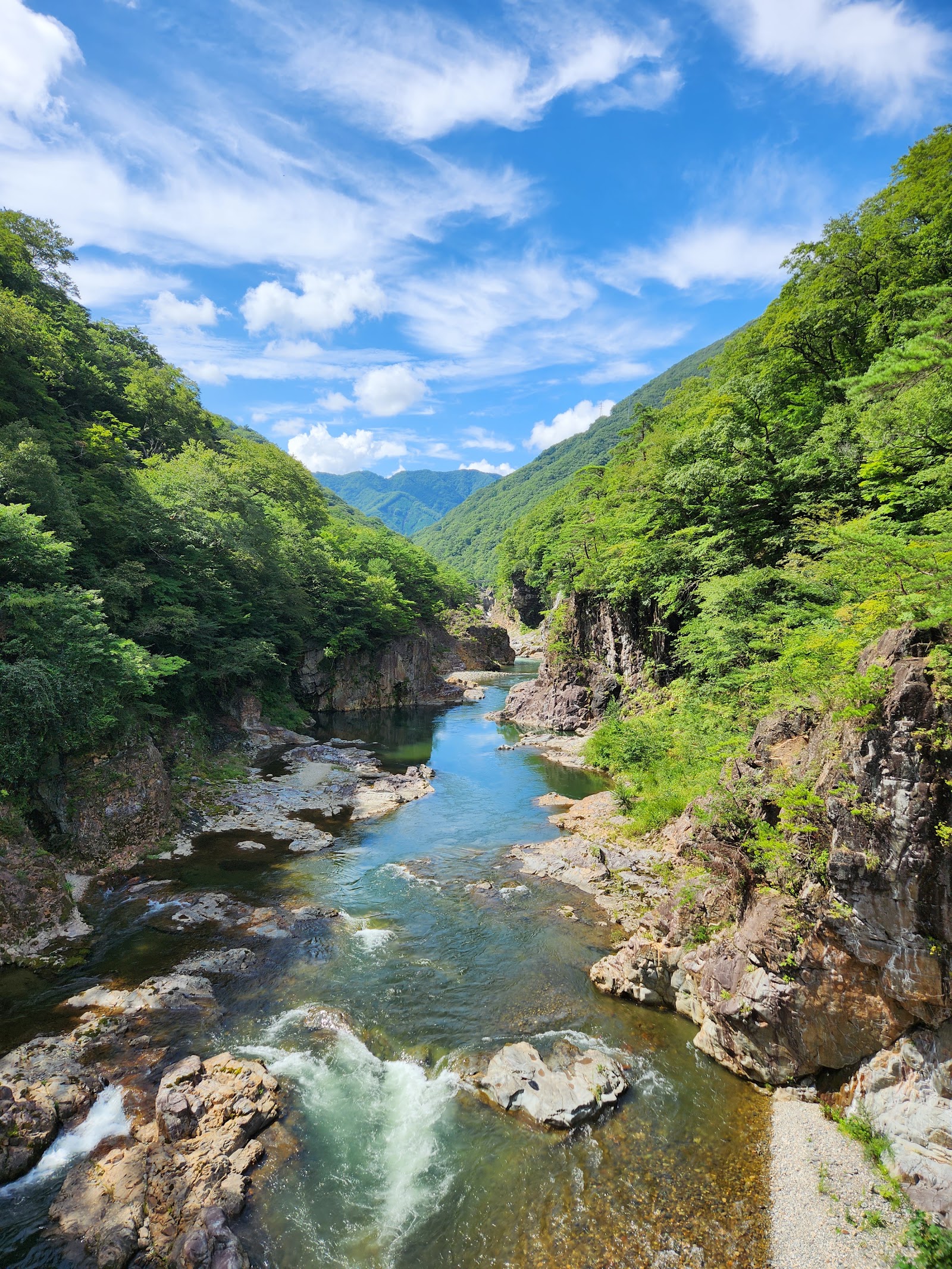
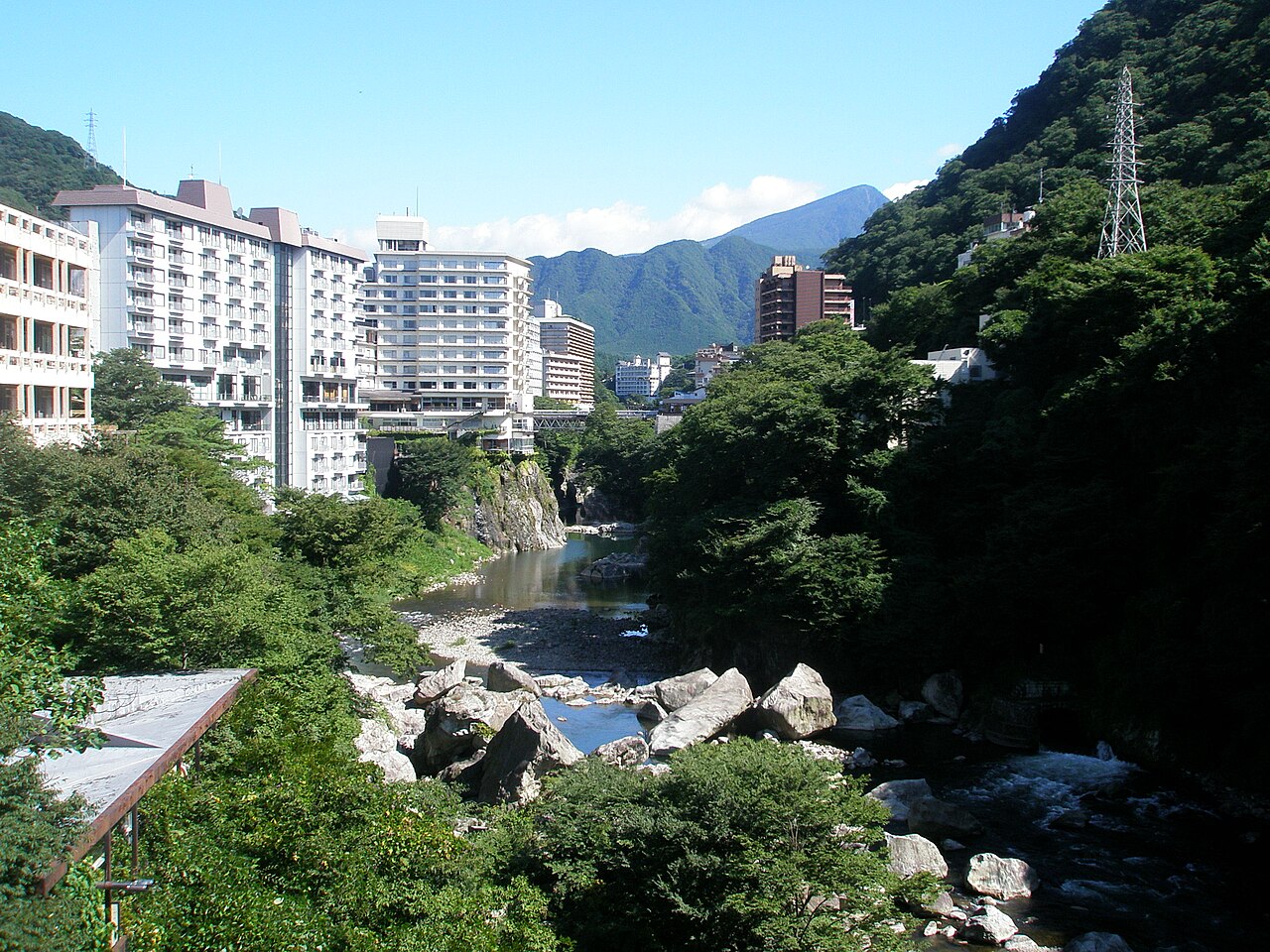
Kawaji Onsen is a quiet, older hot-spring town set about eight kilometres north of the much larger Kinugawa Onsen, in the mountainous northern reaches of Nikko City. It occupies a scenic spot near the point where the Kinu River and the Ojika River meet, and its small scale and riverside calm make it a mellow, low-key alternative to the high-rise resort strip downstream. Ryokan and a public bathhouse gather along the valley, framed by steep wooded slopes that turn spectacular in autumn.
The town has genuine historical depth. Its springs are said to have been discovered accidentally in the 1730s, after a flood of the Ojika River exposed hot water, and the settlement opened during the Edo period. It flourished both as a curative hot-spring stop and as a lodging town on the Aizu Nishi Kaido (the Aizu Highway), the old route linking the Nikko area with the Aizu region to the north. That double role as both spa and post town gave Kawaji a settled, traditional character that lingers today.
The waters are simple, weakly alkaline springs, celebrated locally under the nickname Bihada-no-Yu, or beautiful-skin water, and reputed to ease nerve and joint pain. The heart of a visit is a soak, whether at a ryokan or the accessible public bathhouse Kawaji Onsen Yakushi-no-Yu. Beyond bathing, visitors stroll to the river confluence, cross footbridges over the clear water, and use the town as a jumping-off point for the Ryuokyo Ravine and the remoter onsen further up the Kinugawa valley.
A nice historical detail is that Kawaji owes its very existence to a natural disaster: the flood that scoured the Ojika riverbed in the eighteenth century is what revealed the healing water in the first place, and the town grew up around that lucky discovery.
The visiting experience is peaceful and unhurried, suited to travellers who want an authentic small onsen rather than resort bustle. The riverside core is compact and largely flat, with restrooms, parking and a public bath, though the walk from the station descends gently toward the river. It pairs naturally with a rail journey deeper into the mountains, since the line continues north toward Aizu.
Autumn, particularly late October, is the finest time, when the maples above the two-river junction glow red and orange; summer offers cool riverside air and green gorges. Getting there is part of the appeal: ride the Tobu Kinugawa Line to its terminus and change to the connecting Yagan Railway Aizu-Kinugawa Line, continuing two stops to Kawaji-Onsen Station, from where the town is a short walk or local bus down toward the water. IC cards are accepted on the approach, and the small, walkable layout makes Kawaji an easy and rewarding detour beyond the crowds of Kinugawa.
A local's tip
Visit the public bathhouse Kawaji Onsen Yakushi-no-Yu, nicknamed the beautiful-skin water, and time your trip for late October when the maples over the Kinu and Ojika river junction are at their peak.
Best time to visit
Autumn colours at the river confluence
Getting there
Continue past Kinugawa Onsen on the Tobu Kinugawa Line to its terminus, then ride the connecting Yagan Railway Aizu-Kinugawa Line two stops to Kawaji-Onsen Station; from there the hot-spring town is a short walk or bus ride down toward the river confluence. About 8 km north of Kinugawa Onsen.
Good to know
- Parking
- Restrooms
- Public bath
Plan the whole trip offline
Kawaji Onsen is one of many places in the Real Japan app — with turn-by-turn directions, nearby spots and full offline maps you can use with no signal.